THE CLASSIC COLLECTION✦Bransford in ArcadiaCLASSIC FREE BOOKS
Bransford in Arcadia
Eugene Manlove Rhodes
THE CLASSIC COLLECTION · 1922
"Copper Streak Trail" by Eugene Manlove Rhodes is a novel written in the early 20th century that delves into the world of mining and the adventures of fortune seekers in Arizona. The story primarily follows Mr. Peter Johnson, a seasoned prospector who, alongside his partner, stumbles upon a rich copper find while on the hunt for fortune in the inhospitable Arizona desert. As Johnson navigates through harsh landscapes and encounters various characters, the narrative reflects themes of luck, camaraderie, and the harsh realities of frontier life. The opening of "Copper Streak Trail" introduces readers to Peter Johnson and his trusty horse, Midnight, as they set off on a journey through the rugged terrain of Arizona. Johnson's internal musings reveal his excitement and anxiety over a newfound copper hill that could change his fortunes. After a day filled with riding, he encounters two men at a remote ranch who invite him to share a meal, leading to a lighthearted competition of shooting skills that emphasizes camaraderie and tension amid his prospects. In this opening segment, the groundwork is set for both the thrilling adventure to come and the intricate relationships that will develop as Johnson pursues his dreams.
Introduction adapted from the source catalogue; source summaries may be automatically generated.
Free to read · English · 49,613 words · No account needed
MAKE TIME FOR A GOOD BOOK
On by default. Untick to stop anonymous reading totals. Each page counts after 10 seconds in view. How this works.
Anonymous counting is on unless you have switched it off.
"Far be it from me to--to--"
"Cavil or carp?"
"Exactly. Thank you. Beautiful line! Quite Kipling. Far from me to cavil or carp, Tum-tee-tum-tee-didy, Or shift the shuttle from web or warp. And all for my dark-eyed lydy! Far be it from me, as above. Nevertheless--"
"Why, then, the exertion?"
"Duty. Friendship. Francis Charles Boland, you're lazy."
"Ferdie," said Francis Charles, "you are right. I am."
"Too lazy to defend yourself against the charge of being lazy?"
"Not at all. The calm repose; that sort of thing--what?"
Mr. Boland's face assumed the patient expression of one misjudged.
"Laziness!" repeated Ferdie sternly. "'Tis a vice that I abhor. Slip me a
smoke."
Francis Charles fumbled in the cypress humidor at Ferdie's elbow; he leaned over the table and gently closed Ferdie's finger and thumb upon a cigarette.
"Match," sighed Ferdie.
Boland struck a match; he held the flame to the cigarette's end. Ferdie puffed. Then he eyed his friend with judicial severity.
"Abominably lazy! Every opportunity--family, education--brains, perhaps. Why don't you go to work?"
"My few and simple wants--" Boland waved his hand airily. "Besides, who am I that I should crowd to the wall some worthy and industrious person?--practically taking the bread from the chappie's mouth, you might say. No, no!" said Mr. Boland with emotion; "I may have my faults, but--"
"Why don't you go in for politics?"
"Ferdinand, little as you may deem it, there are limits."
"You have no ambition whatever?"
"By that sin fell the angels--and look at them now!"
"Why not take a whirl at law?"
Boland sat up stiffly. "Mr. Sedgwick," he observed with exceeding bitterness, "you go too far. Take back your ring! Henceforth we meet as str-r-r-rangers!"
"Ever think of writing? You do enough reading, Heaven knows."
Mr. Boland relapsed to a sagging sprawl; he adjusted his finger tips to touch with delicate nicety.
"Modesty," he said with mincing primness, "is the brightest jewel in my crown. Litter and literature are not identical, really, though the superficial observer might be misled to think so. And yet, in a higher sense, perhaps, it may almost be said, with careful limitations, that, considering certain delicate nuances of filtered thought, as it were, and making meticulous allowance for the personal equation--"
"Grisly ass! Well, then, what's the matter with the army?"
"My prudence is such," responded Mr. Boland dreamily--"in fact, my prudence is so very such, indeed--one may almost say so extremely such--not to mention the pertinent and trenchant question so well formulated by the little Peterkin--"
"Why don't you marry?"
"Ha!" said Francis Charles.
"Whachamean--'Ha'?"
"I mean what the poet meant when he spoke so feelingly of the
Your reading position is saved on this browser. Take it to another device with a library code. Reading pages adapt to text, rather than matching a printed edition.
Eugene Manlove Rhodes
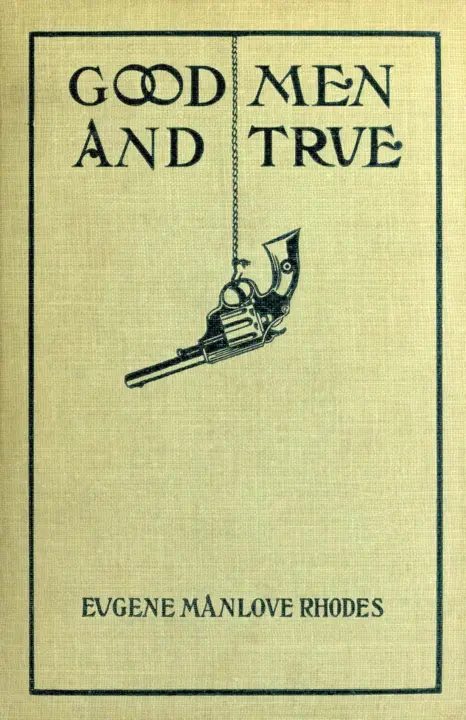
Eugene Manlove Rhodes
Eugene Manlove Rhodes
Eugene Manlove Rhodes
BEHIND THE BOOK
This eBook is for the use of anyone anywhere in the United States and most other parts of the world at no cost and with almost no restrictions whatsoever. You may copy it, give it away or re-use it under the terms of the Project Gutenberg License included with this eBook or online at www.gutenberg.org. If you are not located in the United States, you will have to check the laws of the country where you are located before using this eBook. Read the source licence.
The original source file, including credits and licence, is retained by this library. Request an original-format copy at no charge. Please include the book title and Project Gutenberg identifier #14545.
KEEP YOUR CURIOSITY GOING
Coulson Kernahan

Maurice Baring
Frances Wright
Cécile Tormay

Frederic Jesup Stimson

W. H. P. (William Henry Pope) Jarvis