THE CLASSIC COLLECTION✦An outlaw’s diary: the CommuneCLASSIC FREE BOOKS
An outlaw’s diary: the Commune
Cécile Tormay
THE CLASSIC COLLECTION · 1914
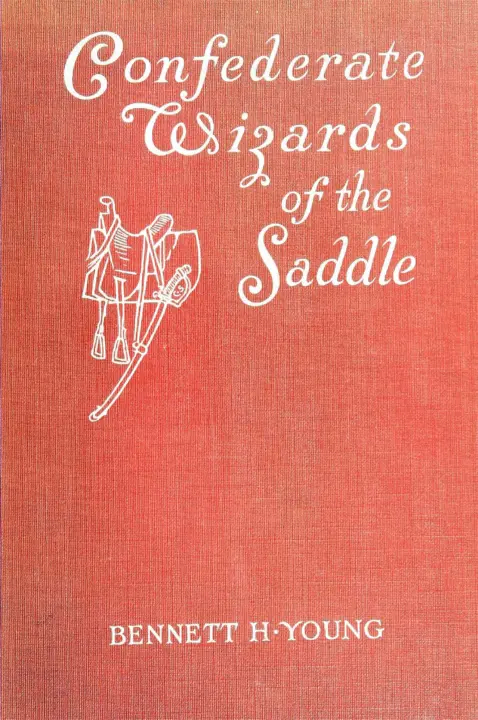
"Confederate Wizards of the Saddle" by Bennett H. Young is a historical account written in the early 20th century. The book provides a detailed narrative of significant cavalry operations during the American Civil War, particularly focusing on Confederate leaders like Nathan Bedford Forrest, John H. Morgan, and their daring raids and battles. Young, who participated in the conflict, aims to highlight the heroes of the Confederate cavalry and their remarkable endurance, skill, and bravery amidst the challenges they faced. At the start of the work, the author discusses the severe conditions of warfare during the spring and summer of 1864, detailing significant military movements and the valor of Confederate cavalry. Young sets the stage by referencing various battles and leaders, emphasizing the unique role that cavalry played in shaping military strategy during the war. The opening focuses on the Battle of Bryce’s Cross Roads, showcasing Forrest's tactical brilliance against overwhelming odds, particularly his ability to inspire and lead his troops effectively in a critical engagement against Federal forces. Through vivid descriptions and personal anecdotes, Young establishes the book as both a tribute and a historical recounting of the Confederate cavalry's contributions.
Introduction adapted from the source catalogue; source summaries may be automatically generated.
Free to read · English · 177,777 words · No account needed
MAKE TIME FOR A GOOD BOOK
On by default. Untick to stop anonymous reading totals. Each page counts after 10 seconds in view. How this works.
Anonymous counting is on unless you have switched it off.
With Federal forces about in every direction, in Frankfort, Lexington, Falmouth, Danville, Winchester, Cynthiana, it looked as if escape was well-nigh impossible. Morgan had now fully carried out his plans and so he turned his eyes toward Cynthiana, the county seat of Harrison County. It was twenty-two miles distant from Georgetown over a beautifully-graded macadam road. It was sixty-six miles from Cincinnati, and if Morgan could reach Cynthiana and capture it, this would still further disquiet and disturb Lexington and alarm the people of Cincinnati.
A force was sent to drive in the pickets at Lexington. This was promptly done, and the outposts went scurrying back to proclaim the near approach of these desperadoes, and while Lexington was vigorously defending itself from a present foe, Morgan was marching on Cynthiana.
The Federal authorities at Nashville, three hundred miles away, were frantic with fear, and Cincinnati was in the throes of chaos and fright. General J. T. Boyle was then in command of Kentucky with headquarters at Louisville, and he kept the wires burning, telling the story of Morgan’s performances. On the 10th of July he wired General Buell: “The rebels under Starnes, over two thousand, with three pieces of artillery, crossed from Sparta, Tennessee, into Kentucky, cut to pieces Major Jordan at Tompkinsville, and are moving on Glasgow.” General Buell, calmer, tried to allay the fears, and so he wired General Boyle: “Force of the enemy doubtless greatly exaggerated. A regiment of your cavalry, properly managed, will force him to cross the Cumberland or destroy him.” General Buell at this time did not seem to be acquainted with Morgan’s ways of doing things. By the 12th of July the situation appeared much more serious to General Boyle and so he wired General Buell: “Morgan has fifteen hundred men. His force is increasing. All the rebels in the State will join him if there is not a demonstration of force and power sent in cavalry. The State will be desolated unless this matter is attended to. The city is so endangered that I am bound to keep force here. Send me cavalry and other reinforcements. I know more of Kentucky than you can possibly know, and unless it is proposed to abandon Kentucky, I must have the force.” On the 15th of July he telegraphed General Buell: “The secessionists have lied for Morgan and magnified his forces. He has divided them up and is burning bridges on the Central Railroad between Paris and Lexington. Only the low and evil will join him.” On the 12th of July he telegraphed: “The whole State will be in arms if General Buell does not send me force to put it down. Morgan is devastating with fire and sword.” On the 13th of July Mr. Lincoln telegraphed General Halleck at Corinth, Mississippi: “They are having a stampede in Kentucky. Please look to it. A. Lincoln.” On the 13th of July Mr. Lincoln telegraphed General Boyle: “I have telegraphed him (Halleck) that you are in trouble.” On July 15th Richard Smith, at Cincinnati, telegraphed: “Danger of serious trouble here, external if not internal. Men enough for emergencies but no arms, no head. Military commander should be appointed for this post. Press this upon Stanton at once.” On the 19th of July General Boyle telegraphed: “The boldness of Morgan’s raid gives reason to believe that he has been reinforced and that they will fall upon Kentucky in her helpless condition.” The mayor of Cincinnati telegraphed that he had called a public meeting. He wired on July 18th: “Cynthiana surrounded at 5:30 P. M. Boyd Station, this side of Cynthiana, expects to be attacked any moment. Morgan reported to have twenty-five hundred men. We have no organized forces here.” On the 19th of July General Boyle, still more excited, wired the Secretary of War: “There is a concerted plan between the traitors at home and the rebels in arms. Morgan’s force has increased. It is estimated at from twenty-five hundred to three thousand. I do not believe it is so large. Every species of falsehood is being circulated by the traitors at home, producing consternation among the people to get the people to rise. Morgan proclaims Breckinridge is coming with thirty thousand men. Traitors throughout the State circulate it.” On July 24th Buell telegraphed General Boyle: “I approve of punishing the guilty, but it would not answer to announce the rule of ‘no quarter’ even for guerrillas. Neither will it be judicious to levy contributions on secessionists for opinions alone.... I approve of your preventing any avowed secessionist from being run for office,” and then so as not to show disregard of the military situation, with a touch of sarcasm, General Buell telegraphed the same day: “Is it true your troops surrendered to Morgan at Cynthiana?”
Your reading position is saved on this browser. Take it to another device with a library code. Reading pages adapt to text, rather than matching a printed edition.
BEHIND THE BOOK
This eBook is for the use of anyone anywhere in the United States and most other parts of the world at no cost and with almost no restrictions whatsoever. You may copy it, give it away or re-use it under the terms of the Project Gutenberg License included with this eBook or online at www.gutenberg.org. If you are not located in the United States, you will have to check the laws of the country where you are located before using this eBook. Read the source licence.
The original source file, including credits and licence, is retained by this library. Request an original-format copy at no charge. Please include the book title and Project Gutenberg identifier #70204.
KEEP YOUR CURIOSITY GOING
Cécile Tormay

Moritz Busch
John L. Ransom
Frances Wright
Cécile Tormay

Mabel Potter Daggett