THE CLASSIC COLLECTION✦An outlaw’s diary: the CommuneCLASSIC FREE BOOKS
An outlaw’s diary: the Commune
Cécile Tormay
THE CLASSIC COLLECTION · 1914
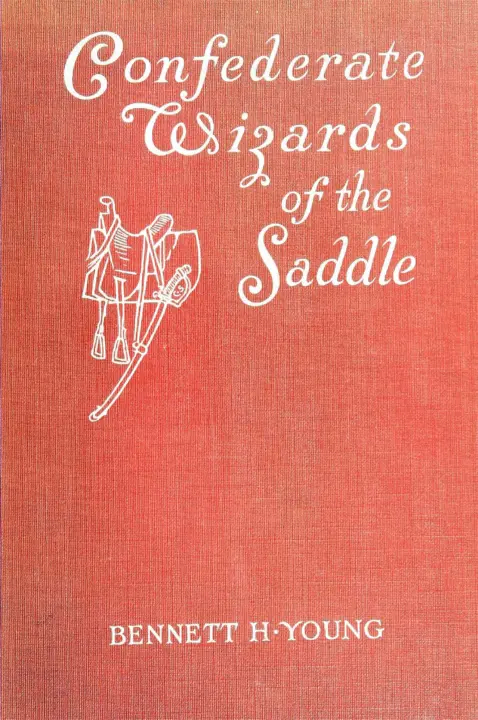
"Confederate Wizards of the Saddle" by Bennett H. Young is a historical account written in the early 20th century. The book provides a detailed narrative of significant cavalry operations during the American Civil War, particularly focusing on Confederate leaders like Nathan Bedford Forrest, John H. Morgan, and their daring raids and battles. Young, who participated in the conflict, aims to highlight the heroes of the Confederate cavalry and their remarkable endurance, skill, and bravery amidst the challenges they faced. At the start of the work, the author discusses the severe conditions of warfare during the spring and summer of 1864, detailing significant military movements and the valor of Confederate cavalry. Young sets the stage by referencing various battles and leaders, emphasizing the unique role that cavalry played in shaping military strategy during the war. The opening focuses on the Battle of Bryce’s Cross Roads, showcasing Forrest's tactical brilliance against overwhelming odds, particularly his ability to inspire and lead his troops effectively in a critical engagement against Federal forces. Through vivid descriptions and personal anecdotes, Young establishes the book as both a tribute and a historical recounting of the Confederate cavalry's contributions.
Introduction adapted from the source catalogue; source summaries may be automatically generated.
Free to read · English · 177,777 words · No account needed
MAKE TIME FOR A GOOD BOOK
On by default. Untick to stop anonymous reading totals. Each page counts after 10 seconds in view. How this works.
Anonymous counting is on unless you have switched it off.
“The operator in Cincinnati then called Frankfort. I answered and received about a dozen unimportant dispatches. He had no sooner finished than Lexington called Frankfort. Again I answered and received the following message:
“‘Lexington, July 15th, 1862.
“‘To General Finnell, Frankfort:
“‘I wish you to move the forces to Frankfort, on the line of the Lexington railroad, immediately, and have the cars follow and take them up as soon as possible. Further orders will await them at Midway. I will, in three or four hours, move forward on the Georgetown pike; will have most of my men mounted. Morgan left Versailles this morning with eight hundred and fifty men, moving in the direction of Georgetown.
“‘Brigadier-General Ward.’
“This being our position and intention exactly, it was thought proper to throw General Ward on some other track. So, in the course of half an hour, I manufactured and sent the following dispatch, which was approved by General Morgan:
“‘Midway, July 15th, 1862.
“‘Morgan, with upward of one thousand men, came within a mile of here, and took the old Franklin road, marching, we suppose, for Frankfort. This is reliable.
“‘Woolums—Operator.’
“In about ten minutes Lexington again called Frankfort, when I
received the following:
“‘Lexington, July 15th, 1862.
“‘To General Finnell, Frankfort:
“‘Morgan, with more than one thousand men, came within a mile of here, and took the old Frankfort road. This dispatch received from Midway, and is reliable. The regiment from Frankfort had better be recalled.
“‘Brigadier-General Ward.’
“I receipted for this message, and again manufactured a message to confirm the information General Ward received from Midway, and not knowing the tariff from Frankfort to Lexington, I could not send a formal message; so, appearing greatly agitated, I waited until the circuit was occupied, and broke in, telling them to wait a minute, and commenced calling Lexington. He answered with as much gusto as I called him. I telegraphed as follows:
“‘Frankfort to Lexington:
“‘Tell General Ward our pickets are just driven in. Great excitement. Pickets say force of enemy must be two thousand.
“‘Operator.’
“It was now 2 P. M., and as Colonel Morgan wished to be off for Georgetown, I ran a secret ground connection, and opened the circuit on the Lexington end. This was to leave the impression that the Frankfort operator was skedaddling, or that Morgan’s men had destroyed the telegraph.”
Your reading position is saved on this browser. Take it to another device with a library code. Reading pages adapt to text, rather than matching a printed edition.
BEHIND THE BOOK
This eBook is for the use of anyone anywhere in the United States and most other parts of the world at no cost and with almost no restrictions whatsoever. You may copy it, give it away or re-use it under the terms of the Project Gutenberg License included with this eBook or online at www.gutenberg.org. If you are not located in the United States, you will have to check the laws of the country where you are located before using this eBook. Read the source licence.
The original source file, including credits and licence, is retained by this library. Request an original-format copy at no charge. Please include the book title and Project Gutenberg identifier #70204.
KEEP YOUR CURIOSITY GOING
Cécile Tormay

Moritz Busch
John L. Ransom
Frances Wright
Cécile Tormay

Mabel Potter Daggett