THE CLASSIC COLLECTION✦An outlaw’s diary: the CommuneCLASSIC FREE BOOKS
An outlaw’s diary: the Commune
Cécile Tormay
THE CLASSIC COLLECTION · 1914
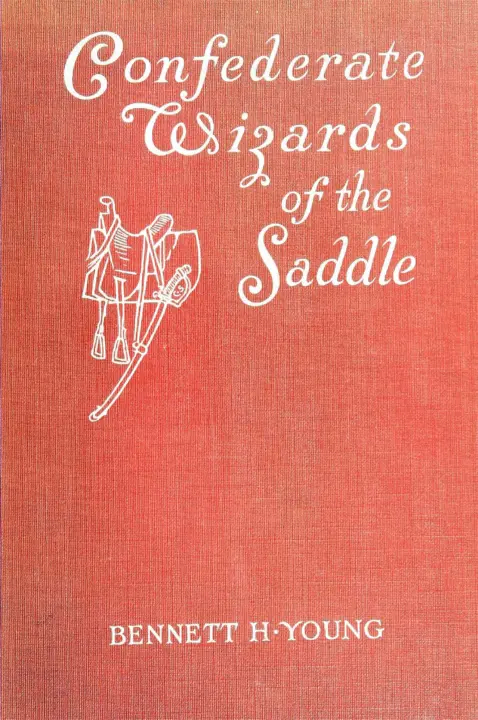
"Confederate Wizards of the Saddle" by Bennett H. Young is a historical account written in the early 20th century. The book provides a detailed narrative of significant cavalry operations during the American Civil War, particularly focusing on Confederate leaders like Nathan Bedford Forrest, John H. Morgan, and their daring raids and battles. Young, who participated in the conflict, aims to highlight the heroes of the Confederate cavalry and their remarkable endurance, skill, and bravery amidst the challenges they faced. At the start of the work, the author discusses the severe conditions of warfare during the spring and summer of 1864, detailing significant military movements and the valor of Confederate cavalry. Young sets the stage by referencing various battles and leaders, emphasizing the unique role that cavalry played in shaping military strategy during the war. The opening focuses on the Battle of Bryce’s Cross Roads, showcasing Forrest's tactical brilliance against overwhelming odds, particularly his ability to inspire and lead his troops effectively in a critical engagement against Federal forces. Through vivid descriptions and personal anecdotes, Young establishes the book as both a tribute and a historical recounting of the Confederate cavalry's contributions.
Introduction adapted from the source catalogue; source summaries may be automatically generated.
Free to read · English · 177,777 words · No account needed
MAKE TIME FOR A GOOD BOOK
On by default. Untick to stop anonymous reading totals. Each page counts after 10 seconds in view. How this works.
Anonymous counting is on unless you have switched it off.
Colonel Streight, with all his courage, was afraid of one man. That man was General Nathan Bedford Forrest. Dodge told Streight that Forrest had crossed the Tennessee River, and Streight knew well that if this was so, it meant trouble. The most precious hours of Streight’s life were the 24th, 25th and 26th of April. The delays made on those days were his undoing. The Confederates had not yet apprehended the Federal purposes. They knew where Dodge was, and they brought some cavalry down to impede his march, but they did not know that Streight was behind Dodge and that in a few hours, like a meteor, he was to be hurled down into their territory under orders to make a raid of more than one hundred and fifty miles into the very heart of the Confederacy, to destroy there what no money could replace, and which was absolutely vital to the maintenance of the Confederate armies at the front.
It was passing strange that the Federal government, with men wise in so many military ways, and so many West Point men—like Sherman, Halleck and Grant—would permit Streight’s enthusiasm to induce authority to enter upon such an expedition without the most complete preparation. Under the most favorable conditions, the odds were at least even, and the Federal soldiers were certainly entitled, in view of the risk they assumed, to the very best their government could give. Instead, Streight got the worst. He started short of horses and mules, and, although brave, intrepid and ambitious, he could not make a raid without reasonably good mounts. Streight was anxious to go. He felt that if he succeeded, he would become renowned, and forge at once to the front as the greatest of Federal cavalry leaders.
Still lacking animals, it was decided that Streight should move out in front of Dodge’s forces and pounce upon the unsuspecting planters and farmers in contiguous territory. Several hundred of his men were still unmounted. Russellville was the county seat of Franklin County, Alabama—eighteen miles south of Tuscumbia. By swinging down these eighteen miles, it would permit the scouts from his command to penetrate ten miles farther, and impressment was driven to the extremest limits. Some animals escaped, but many were taken. Turning directly east, Streight moved up to Moulton—twenty miles distant. This gave him still more territory for impressment and confiscation, so that when he reached Moulton he had only a few men who had not some sort of a beast to ride. Upon the day following, Streight left Moulton, and on the morning of the 29th of April, Forrest was just sixteen miles away at Courtland. By this time, Forrest had thoroughly divined Streight’s plan. He hurried in behind him and resolved to make escape impossible. Streight had left Moulton in the night, and by the time Forrest reached Moulton his trail was a little cold. Forrest told his soldiers that whatever else got wet, the cartridges were to be kept dry. As he rode out of Courtland, a cold, drizzling rain set in, but there was nothing could dampen the ardor and enthusiasm of the pursuers. They were man-hunting, and that always makes the drive furious. With hard riding, Streight had reached Sand Mountain. He had bravely struggled to get on, but bad roads, bad weather, inferior mounts, and the wagons and artillery held him up. He was not sure that Forrest was behind. He earnestly hoped he was not. Streight rested all night, while Forrest was riding most of the night. He had only twelve hundred men and Streight sixteen hundred. There was never a time when Forrest needed more faith in his men. He had that faith, and he knew that if he could put his followers to the test, they would be found always dependable. Nobody thought about leadership or suggested anything to Forrest. The men who rode with him believed that he knew everything, and all they asked was to be allowed to follow where he led. Forrest, rushing his men all the night of the 29th and the morning of the 30th, came close upon Streight’s command without their knowledge. Both men had started just at the dawn of day, and both were dreadfully in earnest. Streight’s men were already marching up the tortuous road to the crest of Sand Mountain. As the head of the column reached the summit, the bursting of a shell at the bottom and the driving in of the pickets told Streight that the man he feared was at his heels and had already begun to harass and harry. No sooner had the sound of the guns been heard than Streight, with the instincts of a soldier and the courage of a warrior, rushed back to the rear. He wanted to be where the danger was greatest and the conflict keenest. General Dodge had promised Streight to hold Forrest in check; and, if he got away, to pursue and nag him. He failed to keep his pledge.
Your reading position is saved on this browser. Take it to another device with a library code. Reading pages adapt to text, rather than matching a printed edition.
BEHIND THE BOOK
This eBook is for the use of anyone anywhere in the United States and most other parts of the world at no cost and with almost no restrictions whatsoever. You may copy it, give it away or re-use it under the terms of the Project Gutenberg License included with this eBook or online at www.gutenberg.org. If you are not located in the United States, you will have to check the laws of the country where you are located before using this eBook. Read the source licence.
The original source file, including credits and licence, is retained by this library. Request an original-format copy at no charge. Please include the book title and Project Gutenberg identifier #70204.
KEEP YOUR CURIOSITY GOING
Cécile Tormay

Moritz Busch
John L. Ransom
Frances Wright
Cécile Tormay

Mabel Potter Daggett