THE CLASSIC COLLECTION✦An outlaw’s diary: the CommuneCLASSIC FREE BOOKS
An outlaw’s diary: the Commune
Cécile Tormay
THE CLASSIC COLLECTION · 1914
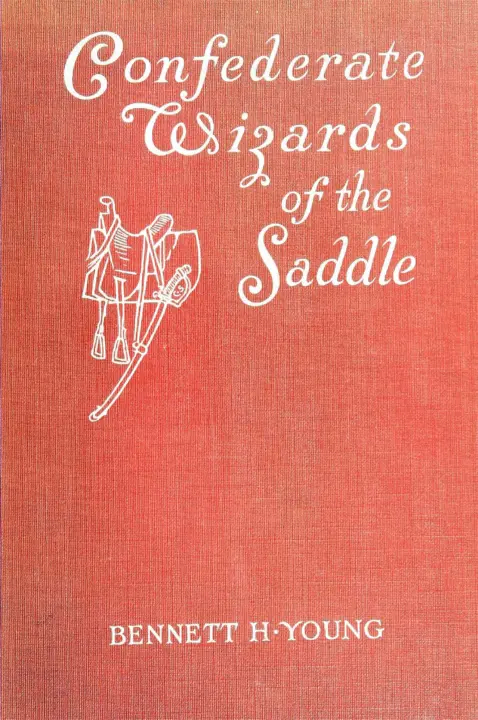
"Confederate Wizards of the Saddle" by Bennett H. Young is a historical account written in the early 20th century. The book provides a detailed narrative of significant cavalry operations during the American Civil War, particularly focusing on Confederate leaders like Nathan Bedford Forrest, John H. Morgan, and their daring raids and battles. Young, who participated in the conflict, aims to highlight the heroes of the Confederate cavalry and their remarkable endurance, skill, and bravery amidst the challenges they faced. At the start of the work, the author discusses the severe conditions of warfare during the spring and summer of 1864, detailing significant military movements and the valor of Confederate cavalry. Young sets the stage by referencing various battles and leaders, emphasizing the unique role that cavalry played in shaping military strategy during the war. The opening focuses on the Battle of Bryce’s Cross Roads, showcasing Forrest's tactical brilliance against overwhelming odds, particularly his ability to inspire and lead his troops effectively in a critical engagement against Federal forces. Through vivid descriptions and personal anecdotes, Young establishes the book as both a tribute and a historical recounting of the Confederate cavalry's contributions.
Introduction adapted from the source catalogue; source summaries may be automatically generated.
Free to read · English · 177,777 words · No account needed
MAKE TIME FOR A GOOD BOOK
On by default. Untick to stop anonymous reading totals. Each page counts after 10 seconds in view. How this works.
Anonymous counting is on unless you have switched it off.
Streight had come in contact with these companies of cavalry which had been recruited while refugeeing from Alabama. They would be thoroughly familiar with the route Streight intended to travel. Without the assistance of guides like these, such an expedition would be impossible. He had heard of the disloyalty of these people, and he was sure they would be glad to welcome his coming into their midst, and would in considerable numbers flock to his standard.
In a little while, Colonel Streight, who in sleep or waking pondered his plans, had so far worked out his project that he put it on paper and submitted it to his superior officers. They were delighted with the possibility of such an expedition, capable of doing such tremendous damage to the Confederacy, and his superiors concluded if Streight was willing to risk his life and his reputation, the Federal government could afford to risk a couple of thousand troops, as many mules and a cannon or two. His associates encouraged him in every way possible, commended and applauded him, and told him the government was ready to place at his disposal all the resources necessary to conduct such a campaign.
He was regarded by his superiors as the most daring and enterprising man of the hour, and not a word of caution was sounded in his ears. No echo of possible failure, or faintest warning escaped the lips of those with whom he counseled. If they questioned, naught of their doubts came to him.
In order that Streight’s command might start fresh and be prepared to make a great spurt, his brigade was organized at Nashville and it was proposed to transport it from there on eight or ten large steamers, down the Cumberland River to the Ohio, thence to the mouth of the Tennessee River and up the Tennessee for several hundred miles to Eastport, Mississippi, and from this point to enter upon the real work of the expedition. The fact was emphasized that under this system of transportation, men and horses would start on the campaign absolutely fresh and ready for a headlong rush of ten days. It was calculated that possibly even more time could be consumed in the daring work which had been assigned for this adventurous command. In these days, on both sides men were prepared to take boundless risks. Their hopes and not their fears were their guides. It was decided that Streight might choose his own troops. He selected his own, the 51st Indiana Regiment. He felt that it was reliable. To this he added the 73d Indiana, under Colonel Gilbert Hathaway, hardly less brave and resourceful than Streight, the 3d Ohio and the 80th Illinois, and two companies of Alabama cavalry, with a small battery. They made up a force of two thousand men. Nobody ever seemed to think it was necessary to advise with cavalry officers. Streight wanted to make the raid and he felt that he could accomplish what he had proposed and he consulted only with infantrymen. These officers, who had had no cavalry experience, decided that mules would be more reliable than horses, that they could do better service in the mountainous country through which the expedition would pass, in that they could live on less and were hardier. When they came to this conclusion, they made their great mistake. It was strange that men with the experience and judgment of the Federal officers who were advising Colonel Streight would permit him to start out with untrained animals. At Nashville, they gave him a few hundred mules, some two years old, many unbroken, and a number of them in the throes of distemper. As the expedition was to be one of spoliation, the impressment of horses was to be an essential for success. The troops and such mules as could be spared were placed on steamers and brought down the Cumberland River, to a landing called Palmyra, and there they marched through to Fort Henry on the Tennessee River. This march ought to have been done in a few hours, but it required four days. Streight’s men were sent out in every direction in squads and singly to scour the whole country and impress every mule that could be found. They spared nothing that could walk or which could be saddled, and they took everything of the horse or mule kind that was attainable in the territory through which they forayed. With all this diligence and impressment they were still short of mounts. They had saddles and bridles, but they had no animals on which their equipment could be placed. After re-embarking at Fort Henry, with a convoy of a brigade of marines, and several gunboats, Streight reached East Port, Mississippi, where he put his men ashore and dismissed the boats.
Your reading position is saved on this browser. Take it to another device with a library code. Reading pages adapt to text, rather than matching a printed edition.
BEHIND THE BOOK
This eBook is for the use of anyone anywhere in the United States and most other parts of the world at no cost and with almost no restrictions whatsoever. You may copy it, give it away or re-use it under the terms of the Project Gutenberg License included with this eBook or online at www.gutenberg.org. If you are not located in the United States, you will have to check the laws of the country where you are located before using this eBook. Read the source licence.
The original source file, including credits and licence, is retained by this library. Request an original-format copy at no charge. Please include the book title and Project Gutenberg identifier #70204.
KEEP YOUR CURIOSITY GOING
Cécile Tormay

Moritz Busch
John L. Ransom
Frances Wright
Cécile Tormay

Mabel Potter Daggett