THE CLASSIC COLLECTION✦An outlaw’s diary: the CommuneCLASSIC FREE BOOKS
An outlaw’s diary: the Commune
Cécile Tormay
THE CLASSIC COLLECTION · 1914
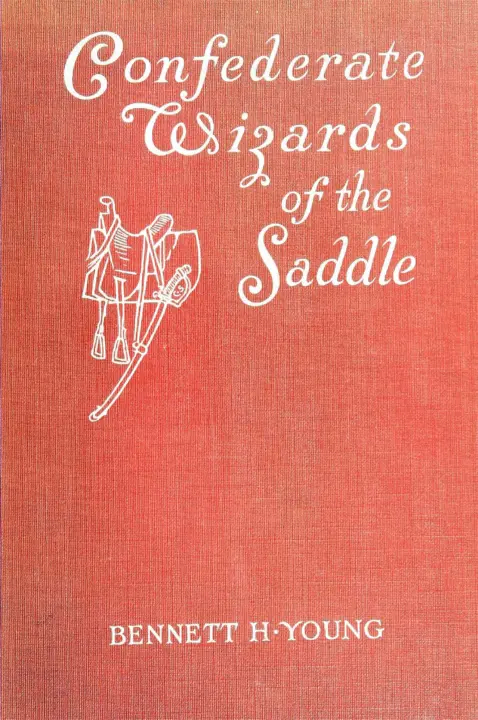
"Confederate Wizards of the Saddle" by Bennett H. Young is a historical account written in the early 20th century. The book provides a detailed narrative of significant cavalry operations during the American Civil War, particularly focusing on Confederate leaders like Nathan Bedford Forrest, John H. Morgan, and their daring raids and battles. Young, who participated in the conflict, aims to highlight the heroes of the Confederate cavalry and their remarkable endurance, skill, and bravery amidst the challenges they faced. At the start of the work, the author discusses the severe conditions of warfare during the spring and summer of 1864, detailing significant military movements and the valor of Confederate cavalry. Young sets the stage by referencing various battles and leaders, emphasizing the unique role that cavalry played in shaping military strategy during the war. The opening focuses on the Battle of Bryce’s Cross Roads, showcasing Forrest's tactical brilliance against overwhelming odds, particularly his ability to inspire and lead his troops effectively in a critical engagement against Federal forces. Through vivid descriptions and personal anecdotes, Young establishes the book as both a tribute and a historical recounting of the Confederate cavalry's contributions.
Introduction adapted from the source catalogue; source summaries may be automatically generated.
Free to read · English · 177,777 words · No account needed
MAKE TIME FOR A GOOD BOOK
On by default. Untick to stop anonymous reading totals. Each page counts after 10 seconds in view. How this works.
Anonymous counting is on unless you have switched it off.
Everybody knew that really great work had been cut out for the night. No order was required to tell the men of this. The long rest at Springfield of eight hours was a sure augury that a furious night march was in store. The men prepared themselves as best they could. At the hospitable little town of Springfield, in cavalry parlance, “square meals” were available. This meant that one could eat enough at a sitting to tide over forty-eight to seventy-two hours without hunger’s interference. A common sense of danger filled the minds of all the soldiers at this resting place. They knew that heavy work was expected, certainly a night’s ride, facing the winds that cut to the marrow and cold that struck into the joints, and maybe a battle or attack in the darkness. They had wrapped blankets about their bodies and covered their feet with strips of cloth. The strain was too great for a few, and here and there a man or so had succumbed to the terrific pressure of the elements and had fallen out of line; but in thirty-nine hundred men that such a small number were unable to meet these difficulties was a great tribute to both the physical and mental vigor of these horsemen. They warmed themselves and satisfied their appetites to the limit, and with the bravado of true cavaliers, they bade care flee away and fears begone as they mounted into their saddles. They were not afraid to face any emergency, even all that the dreadful night ahead had in store for man and beast.
The aid of the best available guides was secured. These bundled themselves up as if they were in Lapland. At eleven o’clock on the night of the 30th, General Morgan set out on his journey around his enemies. He counted darkness as his best ally. It was nine miles from Springfield to Lebanon and nine miles from Lebanon to St. Mary’s, where he must pass the Federal trocha, and then it was fifteen miles from St. Mary’s to the point where General Morgan could hope in safety to strike the turnpike from Lebanon to Campbellsville. This meant a loss of fifteen miles, with jaded horses and tired men. Before General Morgan left Springfield he had a strong line of skirmishers drive in the Federal pickets. These stacked rails for a mile through the fields and then fired them. The reflection of the flames on the sky caught the eyes of the Federal pickets. The Union commanders came to the conclusion that no men would dare march through the wind and cold of such a night and Morgan was where the flames were blazing, and that on the morrow, to get by, he must engage them in combat. The mud roads which the Confederates must follow to St. Mary’s and to Newmarket were uneven, frozen, ragged. The cold was so intense that it partially stupefied the beasts. The men were compelled to dismount to keep themselves from being frost bitten, and walk beside their stumbling steeds. It seemed as if humanity could not stand the dreadful punishment that nature was inflicting upon these intrepid men. The game was too fierce for a few, and these by sheer exhaustion fell by the wayside. The horses in sympathy with their masters hung their heads low. Icicles gathered on their manes and breasts, covered their bridles and halters, and dangled from their nostrils. Ice coated the beards and moustaches of the men. Half the time they walked by their steeds, stamping their feet, swinging their hands and beating their bodies to drive away the stupor which extreme cold imposes upon flesh and blood. There was no loud word spoken. Commands, if given, were uttered in soft tones, and all were directed to ride, walk or march in absolute silence. These things added much to the hardships of the night’s work. If they could have jollied each other, or cheered or enlivened the hours with badinage, it would have somewhat relieved the oppressiveness of the continually lengthening miles. The men obeyed the orders in patient submission to the severe calls of the moment, and uncomplainingly bore the burdens that patriotism exacted of them in the dire emergency that war’s fortunes had decreed they must endure. Man and beast seemed to be well-nigh overwhelmed with the chilling air. It was a long, long night, and one that no man who had undergone its terrors would ever forget. Morgan’s men had suffered many hardships and were yet to know many more, but with one voice they declared that this march around Lebanon to St. Mary’s and back to the Campbellsville Pike was the most fearful experience they had ever suffered, except, when ninety days later, they rode the sixty miles from Saylersville to Mount Sterling with Cluke, on March 20th, 1863.
Your reading position is saved on this browser. Take it to another device with a library code. Reading pages adapt to text, rather than matching a printed edition.
BEHIND THE BOOK
This eBook is for the use of anyone anywhere in the United States and most other parts of the world at no cost and with almost no restrictions whatsoever. You may copy it, give it away or re-use it under the terms of the Project Gutenberg License included with this eBook or online at www.gutenberg.org. If you are not located in the United States, you will have to check the laws of the country where you are located before using this eBook. Read the source licence.
The original source file, including credits and licence, is retained by this library. Request an original-format copy at no charge. Please include the book title and Project Gutenberg identifier #70204.
KEEP YOUR CURIOSITY GOING
Cécile Tormay

Moritz Busch
John L. Ransom
Frances Wright
Cécile Tormay

Mabel Potter Daggett