THE CLASSIC COLLECTION✦An outlaw’s diary: the CommuneCLASSIC FREE BOOKS
An outlaw’s diary: the Commune
Cécile Tormay
THE CLASSIC COLLECTION · 1914
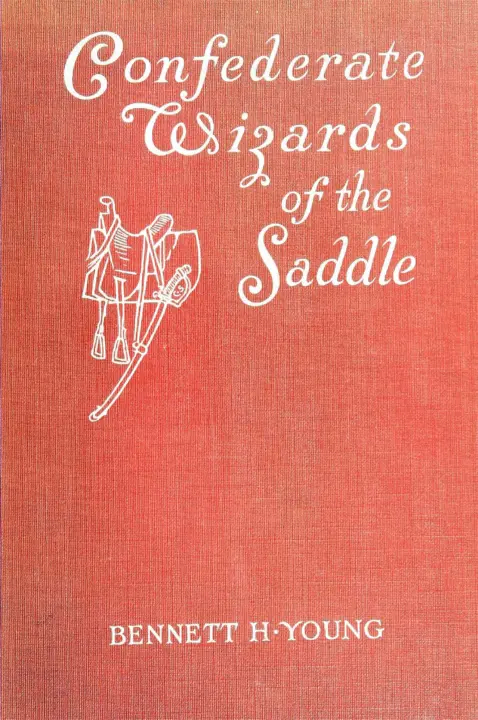
"Confederate Wizards of the Saddle" by Bennett H. Young is a historical account written in the early 20th century. The book provides a detailed narrative of significant cavalry operations during the American Civil War, particularly focusing on Confederate leaders like Nathan Bedford Forrest, John H. Morgan, and their daring raids and battles. Young, who participated in the conflict, aims to highlight the heroes of the Confederate cavalry and their remarkable endurance, skill, and bravery amidst the challenges they faced. At the start of the work, the author discusses the severe conditions of warfare during the spring and summer of 1864, detailing significant military movements and the valor of Confederate cavalry. Young sets the stage by referencing various battles and leaders, emphasizing the unique role that cavalry played in shaping military strategy during the war. The opening focuses on the Battle of Bryce’s Cross Roads, showcasing Forrest's tactical brilliance against overwhelming odds, particularly his ability to inspire and lead his troops effectively in a critical engagement against Federal forces. Through vivid descriptions and personal anecdotes, Young establishes the book as both a tribute and a historical recounting of the Confederate cavalry's contributions.
Introduction adapted from the source catalogue; source summaries may be automatically generated.
Free to read · English · 177,777 words · No account needed
MAKE TIME FOR A GOOD BOOK
On by default. Untick to stop anonymous reading totals. Each page counts after 10 seconds in view. How this works.
Anonymous counting is on unless you have switched it off.
Just at this time, Colonel Harry Gilmor, who enjoyed a wide reputation as a partisan leader in Northern Virginia and Maryland, had been surprised and made prisoner. The Federals, encouraged by this success, undertook to capture Major Richards and scatter Mosby’s men.
General Merritt, then in charge of the Federal cavalry operating in “Mosby’s Confederacy,” sent the same detail which had caught Gilmor to hunt down Richards and his followers. The party comprising this force numbered two hundred and fifty men and was in charge of Major Thomas Gibson of the 14th Pennsylvania Cavalry. This officer, in the past, had shown that he was not only brave but resourceful, and his superiors hoped as well as expected that he would do great things on this expedition. If he could catch Major Richards and a part of his command, it meant peace in the Federal rear, and the release of many thousands of men for action at the front. Promotion was sure to follow success, and the Federal leader dreamed of becoming a brigadier and winning a renown that would make him famous.
Attracted by the adventurous nature of the expedition and also lured by the hope of success in the work, two of Merritt’s staff officers, Captain Martindale and Lieutenant Baker, volunteered to aid in this scout. This command crossed the Shenandoah River at night. A few miles away from the river, at Paris, in Fauquier County, the force was divided. Major Gibson took with him the men of his own regiment, which comprised one-half of the command, and placed the other half, from the 1st New York Cavalry, in charge of Captain Snow. These forces separated with the understanding that they would make wide circuits through the country, would gather prisoners and seize horses, and meet at Upperville at daylight, six miles from Paris. A couple of deserters from the 12th Virginia regiment acted as guides for the two detachments. Through the report of a spy, Captain Snow learned that Major Richards had come that night to his father’s house, near Upperville, and the captain felt it would be a great feather in his cap if he could make the leader of Mosby’s command a prisoner. This was what Major Gibson had been chiefly sent to do, and the Federal captain calculated if he could do this, he would win the applause and gratitude of his countrymen. They reached “Green Garden,” the Richards’ ancestral home, at one o’clock in the morning. Without warning or signal of any kind the Federal soldiers surrounded the house and the leader knocked for admittance at the front door. Hearing was very acute in those days where Mosby’s men slept, and the knock, although at first not very heavy, awoke Major Richards, Captain Walker and Private Hipkins, who were together spending the night under the hospitable roof. The moon was shining with brilliance; not a cloud obscured its brightness. The ground was covered with snow. When the Confederates looked through the blinds, they saw the yard filled with Federal soldiers. On other occasions, when the odds were not so great, Major Richards and some of his companions had shot their way out, but he dared not try this experiment this time, for it meant almost certain death. To meet such emergencies, the Richards family had provided a trap door in the floor of the family room. Major Richards had only time to seize his pistols and his field glasses, and his companions hastily caught up their arms, and all went scurrying down through the trap door into the space under the sills. This trap door was in the lower floor and covered with an oil carpet, over which a bed was rolled. The Federals remained silent for a few moments, knocked again with more fury, and upon forcing themselves into the house, the men in blue found Major Richards’ uniform, his boots with the spurs attached, his white hat with its black ostrich plume, and they chuckled and said to themselves, “We have caught him at last.” Forcing the father of Major Richards to furnish them candles they searched the house over and over again. They went from cellar to garret and from garret to cellar. One officer suggested that in order to make sure of their game they burn the house, but another, with nobler instincts and better impulses, protested so vigorously that this plan was abandoned. For two hours they scrutinized every portion of the house, the outbuildings, the stables, the cabins, but all in vain, and they finally concluded that by some strange sport of chance their victims had escaped; and they mounted their horses and rode away to Upperville.
Your reading position is saved on this browser. Take it to another device with a library code. Reading pages adapt to text, rather than matching a printed edition.
BEHIND THE BOOK
This eBook is for the use of anyone anywhere in the United States and most other parts of the world at no cost and with almost no restrictions whatsoever. You may copy it, give it away or re-use it under the terms of the Project Gutenberg License included with this eBook or online at www.gutenberg.org. If you are not located in the United States, you will have to check the laws of the country where you are located before using this eBook. Read the source licence.
The original source file, including credits and licence, is retained by this library. Request an original-format copy at no charge. Please include the book title and Project Gutenberg identifier #70204.
KEEP YOUR CURIOSITY GOING
Cécile Tormay

Moritz Busch
John L. Ransom
Frances Wright
Cécile Tormay

Mabel Potter Daggett