THE CLASSIC COLLECTION✦An outlaw’s diary: the CommuneCLASSIC FREE BOOKS
An outlaw’s diary: the Commune
Cécile Tormay
THE CLASSIC COLLECTION · 1914
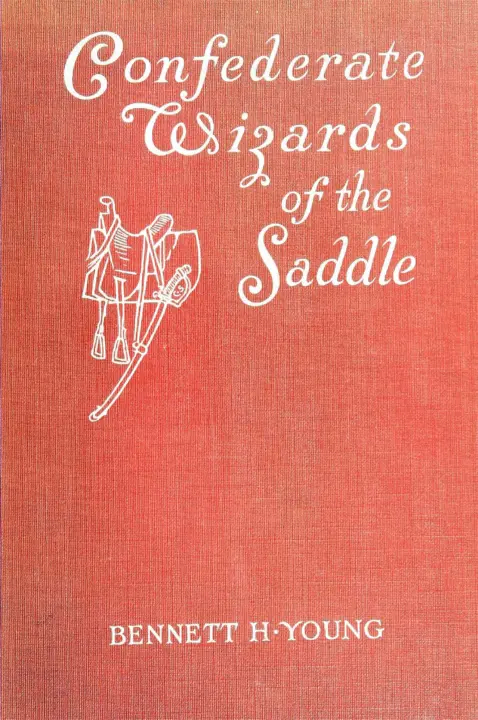
"Confederate Wizards of the Saddle" by Bennett H. Young is a historical account written in the early 20th century. The book provides a detailed narrative of significant cavalry operations during the American Civil War, particularly focusing on Confederate leaders like Nathan Bedford Forrest, John H. Morgan, and their daring raids and battles. Young, who participated in the conflict, aims to highlight the heroes of the Confederate cavalry and their remarkable endurance, skill, and bravery amidst the challenges they faced. At the start of the work, the author discusses the severe conditions of warfare during the spring and summer of 1864, detailing significant military movements and the valor of Confederate cavalry. Young sets the stage by referencing various battles and leaders, emphasizing the unique role that cavalry played in shaping military strategy during the war. The opening focuses on the Battle of Bryce’s Cross Roads, showcasing Forrest's tactical brilliance against overwhelming odds, particularly his ability to inspire and lead his troops effectively in a critical engagement against Federal forces. Through vivid descriptions and personal anecdotes, Young establishes the book as both a tribute and a historical recounting of the Confederate cavalry's contributions.
Introduction adapted from the source catalogue; source summaries may be automatically generated.
Free to read · English · 177,777 words · No account needed
MAKE TIME FOR A GOOD BOOK
On by default. Untick to stop anonymous reading totals. Each page counts after 10 seconds in view. How this works.
Anonymous counting is on unless you have switched it off.
When General Wheeler, on the 28th day of August, marched up almost to the gates of Nashville and terrified its defenders, he carried with him a motley crowd. The brigades of General Williams and General Anderson had not returned to General Wheeler. They moved east and did incalculable service for the cause in saving the salt works, in Southwestern Virginia, upon which the people and the armies of the Confederacy, west of the Mississippi River, depended for salt, which, next to bread, was the staff of life. But the defection, whether wise or unwise, reduced General Wheeler’s force, already scant enough, to only two thousand men, and thereby imperilled the success of the incursion and threatened the destruction of General Wheeler’s entire command, which at that time would have proven an irreparable loss to Hood’s army. The rise in the Tennessee River had forced General Wheeler to extend his line far east of where he had intended originally to go. These unexpected currents carried him miles beyond Knoxville and out of his chosen path, and the detour south and east of Knoxville to cross the rivers greatly stayed the work of wrecking the railroads between Nashville and the South. Once he was over the Tennessee and its tributaries, the Holston and the French Broad, General Wheeler turned his face westward. The country through which he was to march was in some parts unfriendly. At Clinton, Kingston and other points on his way, he found scattered Federal camps and supplies, but what he needed most now was horses. He had come three hundred miles, and three hundred more must he traverse before he could draw a long breath or be sure that he could, without disaster, reach General Hood’s quarters. Day by day, his beasts became more jaded. No animal, which could carry a man, was left behind, and what could not be taken from the enemy must be impressed from friend or foe along the road which he was passing. The extra shoe or pair of horseshoes with which every prudent cavalryman provides himself, where it is possible, when starting on these marches, had in most cases been exhausted. The company farrier or the comrade who could put on a horseshoe loomed up as the noblest benefactor of the hour. Some were already dismounted. Love, money and force were all beginning to be powerless to mount those who composed the columns. Then, too, ammunition was getting very scarce, and the few cartridges which now rattled in the partly emptied cartridge boxes were constant warnings to the commander to seek his base of operations. All these things spoke to General Wheeler with forceful emphasis, but he also remembered his work was not fully done. The long detour around Knoxville had changed his march, but it had not changed his plan or his purpose, and he could not be satisfied until he grappled again with the railroads which supplied Sherman and put out of commission some more bridges, trestles and cars and supply stations south of Nashville. The road by Sparta, McMinnville, Lebanon, Murfreesboro and intervening places was long, rough and rocky. It proved very trying to the speechless beasts who had now marched, counting the detours, an average of over thirty miles a day. The men had done the fighting, but the beasts had done the carrying, and the beasts in these raids always got the worst of it. The way home was not distressingly: beset with enemies until the vicinity of Nashville would be reached, but there was a sufficient sprinkle of foes to keep the southern riders aware that they were engaged in war, and no twenty-four hours passed without some evidence of the presence of the Federals. The march around Knoxville had mystified the Federal leaders. They were as surprised as General Wheeler that he had gone so far east, but now that he had turned north and westward, none had wisdom enough to prophesy where he would turn up in the very near future. General Wheeler had a wide, wide territory before him. He might strike in north of Nashville and pass around through West Tennessee, or he might follow the Louisville & Nashville Railroad north and destroy that great artery of commerce. Whither he would go, none could even guess, and when Grant at Washington, and Sherman at Atlanta, pleaded for some tidings of the aggressive Confederate and begged to know whither he had gone, the men watching Middle and East Tennessee could only answer, “We cannot tell where he is or into what place he will come.” As the posts became scarcer General Wheeler traveled the harder, and he soon put in an appearance at Sparta and then at McMinnville, the last only sixty miles from Nashville. He was getting close to the danger line. At this juncture, General Wheeler’s difficulties began to greatly enlarge. His fighting men, with the loss of Williams and Anderson, had been cut down, even with several hundred of recruits, to twenty-five hundred men.
Your reading position is saved on this browser. Take it to another device with a library code. Reading pages adapt to text, rather than matching a printed edition.
BEHIND THE BOOK
This eBook is for the use of anyone anywhere in the United States and most other parts of the world at no cost and with almost no restrictions whatsoever. You may copy it, give it away or re-use it under the terms of the Project Gutenberg License included with this eBook or online at www.gutenberg.org. If you are not located in the United States, you will have to check the laws of the country where you are located before using this eBook. Read the source licence.
The original source file, including credits and licence, is retained by this library. Request an original-format copy at no charge. Please include the book title and Project Gutenberg identifier #70204.
KEEP YOUR CURIOSITY GOING
Cécile Tormay

Moritz Busch
John L. Ransom
Frances Wright
Cécile Tormay

Mabel Potter Daggett