THE CLASSIC COLLECTION✦An outlaw’s diary: the CommuneCLASSIC FREE BOOKS
An outlaw’s diary: the Commune
Cécile Tormay
THE CLASSIC COLLECTION · 1914
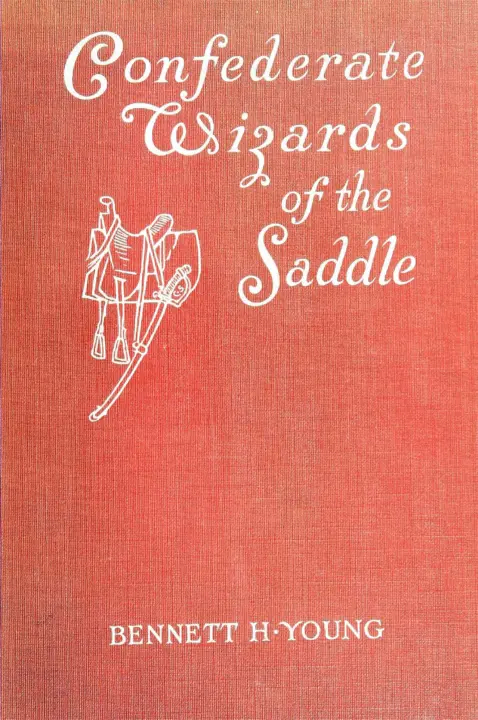
"Confederate Wizards of the Saddle" by Bennett H. Young is a historical account written in the early 20th century. The book provides a detailed narrative of significant cavalry operations during the American Civil War, particularly focusing on Confederate leaders like Nathan Bedford Forrest, John H. Morgan, and their daring raids and battles. Young, who participated in the conflict, aims to highlight the heroes of the Confederate cavalry and their remarkable endurance, skill, and bravery amidst the challenges they faced. At the start of the work, the author discusses the severe conditions of warfare during the spring and summer of 1864, detailing significant military movements and the valor of Confederate cavalry. Young sets the stage by referencing various battles and leaders, emphasizing the unique role that cavalry played in shaping military strategy during the war. The opening focuses on the Battle of Bryce’s Cross Roads, showcasing Forrest's tactical brilliance against overwhelming odds, particularly his ability to inspire and lead his troops effectively in a critical engagement against Federal forces. Through vivid descriptions and personal anecdotes, Young establishes the book as both a tribute and a historical recounting of the Confederate cavalry's contributions.
Introduction adapted from the source catalogue; source summaries may be automatically generated.
Free to read · English · 177,777 words · No account needed
MAKE TIME FOR A GOOD BOOK
On by default. Untick to stop anonymous reading totals. Each page counts after 10 seconds in view. How this works.
Anonymous counting is on unless you have switched it off.
By reason of recent rains further up the river, its currents were increased and quickened, and when the advance guard of the cavalrymen undertook to cross the river at the appointed ferry, to their dismay they discovered it was impassable at that point. Nothing daunted, however, by this unlooked-for obstacle, General Duke learned that there was a ford farther down the stream, where it was likely he could get his men and horses across, and rapidly and silently the cavalry trotted through the fields to the new ford. When this was reached it also presented most serious difficulties. It was an unused crossing, and it was impossible to get to the river except by a crooked bridle path along which the men could proceed only in single file. When the river was reached, it was found that the descent into the water was almost impossible. It was necessary to spur the horses into the stream over a bank several feet high. As a result, both men and horses were submerged in the water, and with the thermometer low in the scale, in the night time, and in the gloom of the darkness preceding the break of day, such a bath would have a fearfully chilling effect upon the ardor of any patriot. With several hundred horses tramping over the narrow path which led to the bank of the stream, the slush was churned deeper and deeper. Wet to the skin, with their clothes muddy and dripping, with their saddles, blankets and saddle pockets in the same condition, as these horsemen emerged from the stream on the north side, they found equal difficulties there. The ascent was steep and slippery and the pathway rough, and the shivering mounts with difficulty bore their riders to the open land.
Even the horses, with the vision of the misfortunes to their fellows ahead, were reluctant to make the plunge down into the river. The brutes saw the sad plight of those who were just in front, and watching them struggling in the water, they hesitated to follow in such difficult role. Spurring, pushing, driving, belaboring drove them one by one into the stream. The soldiers, shaking with cold, almost wished they were back by their happy firesides in central Kentucky, but they were game enough for any contingency war might develop, and as the leaders rode into the stream none hesitated, but all took the plunge. Those who were first over managed to build a few fires by which they might create some heat for their soaked and shivering bodies. So depressing was the temperature of the water and so great the strain on the nervous system that, after the plunge, quite a number of the command became so benumbed as to be unable to go forward. Notwithstanding the untiring efforts of General Duke, aided by the regimental officers, it was found impossible to get all the command over in time to enable the approach to Hartsville by daybreak. With part of the cavalry on one side and part on the other, General Duke, who was always prompt, at four o’clock in the morning took such men as had already passed the stream, consisting of Cluke’s, Chenault’s and Bennett’s regiments, and rode with accelerating haste to the appointed meeting place, a mile and a half from the camp of the enemy. He picketed the line of march from the ford to the junction point so that no Federal forces could prevent the remainder of the column which had been left behind from reaching those who had gone before. Six miles was between him and the spot where he had agreed to meet General Morgan, and after this union they would still be nearly three miles from Hartsville. The infantry was over, the artillery was over, and three-fifths of the cavalry, and when these were united, General Morgan decided that he could wait no more for the other regiment (Gano’s), but must take his chances with what men he had and rush the enemy. He knew full well it would not take long for the Federals to march double quick from Castalian Springs to Hartsville. This could be done under stress in two and a half hours, and when this force should reach Hartsville, General Morgan understood he would have an enemy in his rear three times as strong as his fighting men, and a body in front largely outnumbering the men he proposed carrying into the engagement. This was a period of tremendous physical and mental strain. It required supreme courage and unfailing nerve to enable even the greatest of leaders to calmly face such an emergency. The seven hundred infantry were now shut in by the river, which a short while before under great difficulties they had passed. If Colonel Harlan at Castalian Springs and the Hartsville garrison should unite, even the courage of the “Orphan Brigade” would be severely tested to face such tremendous odds. In a crisis, the cavalry might scatter and ride away, but the infantry would have no chance of crossing the Cumberland, or marching through the country on foot. Victory, and victory quick, was the only solution of the grave problems of the hour. Boldness, promptness, intrepidity, desperate courage might save the situation, and it was not without serious, but silent misgivings that General Morgan ordered the command forward. In his calm and unruffled countenance, in his self-possessed and undisturbed demeanor, none could detect the conflict and struggle that was filling his mind and heart. There were no preliminaries that required a moment’s delay. Instant and fierce fighting might win. Hesitation or doubt would bring certain disaster. In the silence and gloom of the night, led by the guides, familiar with every foot of the way, those who walked and those who rode pressed on to find the sleeping foe. Few commands were necessary. The column covered more than a mile, but the horsemen in front followed hard upon the guides, and the infantry with quickened steps, kept a pace that left no intervals between the mounted men who in the vanguard held the place of danger and honor.
Your reading position is saved on this browser. Take it to another device with a library code. Reading pages adapt to text, rather than matching a printed edition.
BEHIND THE BOOK
This eBook is for the use of anyone anywhere in the United States and most other parts of the world at no cost and with almost no restrictions whatsoever. You may copy it, give it away or re-use it under the terms of the Project Gutenberg License included with this eBook or online at www.gutenberg.org. If you are not located in the United States, you will have to check the laws of the country where you are located before using this eBook. Read the source licence.
The original source file, including credits and licence, is retained by this library. Request an original-format copy at no charge. Please include the book title and Project Gutenberg identifier #70204.
KEEP YOUR CURIOSITY GOING
Cécile Tormay

Moritz Busch
John L. Ransom
Frances Wright
Cécile Tormay

Mabel Potter Daggett