THE CLASSIC COLLECTION✦Heu-Heu, or The monsterCLASSIC FREE BOOKS
Heu-Heu, or The monster
H. Rider (Henry Rider) Haggard
THE CLASSIC COLLECTION · 1888
"Colonel Quaritch, V.C.: A Tale of Country Life" by H. Rider Haggard is a novel set in the late 19th century that explores themes of memory, social status, and the complexities of rural life in England. The story follows Colonel Harold Quaritch, a recently retired soldier, who grapples with his past and present while taking up residence in Honham Cottage, a property inherited from his late aunt. As he begins his new life, he reflects deeply on a woman he encountered years ago, Ida de la Molle, and begins to navigate the dynamics of local society and the legacy of the de la Molle family. The opening of the book introduces Colonel Quaritch as he contemplates his surroundings and his life choices. We learn that he has returned from military service, carrying memories of past battles and a haunting connection to Ida, the daughter of the local squire. Upon his arrival, he meets the squire, who invites him to dinner, setting into motion their budding acquaintance. As Quaritch reflects on his own solitude and the socioeconomic struggles of the landownership class, he becomes aware of the challenges facing the de la Molle family, particularly related to their dwindling fortunes and the prospect of losing their ancestral home. The intertwining narratives of Quaritch’s personal development and the local family's plight promise a rich exploration of love, loss, and the burden of history.
Introduction adapted from the source catalogue; source summaries may be automatically generated.
Free to read · English · 123,859 words · No account needed
MAKE TIME FOR A GOOD BOOK
On by default. Untick to stop anonymous reading totals. Each page counts after 10 seconds in view. How this works.
Anonymous counting is on unless you have switched it off.
Mr. Quest entered the house by a side door, and having taken off his hat and coat went into the drawing-room. He had still half an hour to spare before starting to catch the train.
“Well,” said Belle, looking up. “Why are you looking so pale?”
“I have had a trying day,” he answered. “What have you been doing?”
“Nothing in particular.”
“Reading the Bible, I see.”
“How do you know that?” she asked, colouring a little, for she had thrown a newspaper over the book when she heard him coming in. “Yes, I have been reading the Bible. Don’t you know that when everything else in life has failed them women generally take to religion?”
“Or drink,” he put in, with a touch of his old bitterness. “Have you seen Mr. Cossey lately?”
“No. Why do you ask that? I thought we had agreed to drop that
subject.”
As a matter of fact it had not been alluded to since Edward left the
house.
“You know that Miss de la Molle will not marry him after all?”
“Yes, I know. She will not marry him because you forced him to give up
the mortgages.”
“You ought to be much obliged to me. Are you not pleased?”
“No. I no longer care about anything. I am tired of passion, and sin and failure. I care for nothing any more.”
“It seems that we have both reached the same goal, but by different
roads.”
“You?” she answered, looking up; “at any rate you are not tired of money, or you would not do what you have done to get it.”
“I never cared for money itself,” he said. “I only wanted money that I might be rich and, therefore, respected.”
“And you think any means justifiable so long as you get it?”
“I thought so. I do not think so now.”
“I don’t understand you to-night, William. It is time for me to go to
dress for dinner.”
“Don’t go just yet. I’m leaving in a minute.”
“Leaving? Where for?”
“London; I have to go up to-night about some business.”
“Indeed; when are you coming back?”
“I don’t quite know—to-morrow, perhaps. I wonder, Belle,” he went on, his voice shaking a little, “if you will always think as badly of me as you do now.”
“I?” she said, opening her eyes widely; “who am I that I should judge you? However bad you may be, I am worse.”
Your reading position is saved on this browser. Take it to another device with a library code. Reading pages adapt to text, rather than matching a printed edition.
H. Rider (Henry Rider) Haggard
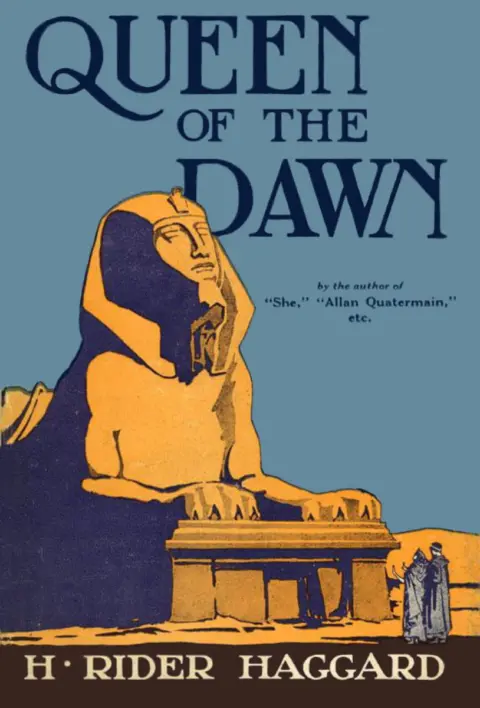
H. Rider (Henry Rider) Haggard
H. Rider (Henry Rider) Haggard
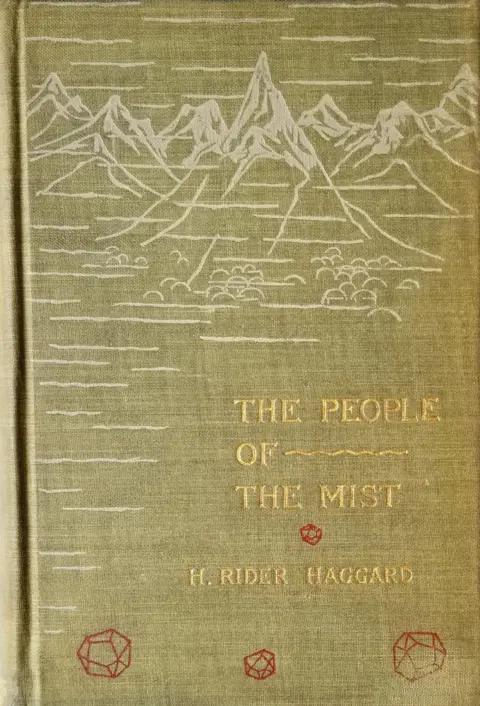
H. Rider (Henry Rider) Haggard
BEHIND THE BOOK
This eBook is for the use of anyone anywhere in the United States and most other parts of the world at no cost and with almost no restrictions whatsoever. You may copy it, give it away or re-use it under the terms of the Project Gutenberg License included with this eBook or online at www.gutenberg.org. If you are not located in the United States, you will have to check the laws of the country where you are located before using this eBook. Read the source licence.
The original source file, including credits and licence, is retained by this library. Request an original-format copy at no charge. Please include the book title and Project Gutenberg identifier #11882.
KEEP YOUR CURIOSITY GOING
Coulson Kernahan

Maurice Baring
Frances Wright
Cécile Tormay

Frederic Jesup Stimson

W. H. P. (William Henry Pope) Jarvis