THE CLASSIC COLLECTION✦Heu-Heu, or The monsterCLASSIC FREE BOOKS
Heu-Heu, or The monster
H. Rider (Henry Rider) Haggard
THE CLASSIC COLLECTION · 1888
"Colonel Quaritch, V.C.: A Tale of Country Life" by H. Rider Haggard is a novel set in the late 19th century that explores themes of memory, social status, and the complexities of rural life in England. The story follows Colonel Harold Quaritch, a recently retired soldier, who grapples with his past and present while taking up residence in Honham Cottage, a property inherited from his late aunt. As he begins his new life, he reflects deeply on a woman he encountered years ago, Ida de la Molle, and begins to navigate the dynamics of local society and the legacy of the de la Molle family. The opening of the book introduces Colonel Quaritch as he contemplates his surroundings and his life choices. We learn that he has returned from military service, carrying memories of past battles and a haunting connection to Ida, the daughter of the local squire. Upon his arrival, he meets the squire, who invites him to dinner, setting into motion their budding acquaintance. As Quaritch reflects on his own solitude and the socioeconomic struggles of the landownership class, he becomes aware of the challenges facing the de la Molle family, particularly related to their dwindling fortunes and the prospect of losing their ancestral home. The intertwining narratives of Quaritch’s personal development and the local family's plight promise a rich exploration of love, loss, and the burden of history.
Introduction adapted from the source catalogue; source summaries may be automatically generated.
Free to read · English · 123,859 words · No account needed
MAKE TIME FOR A GOOD BOOK
On by default. Untick to stop anonymous reading totals. Each page counts after 10 seconds in view. How this works.
Anonymous counting is on unless you have switched it off.
A look of doubt and cunning passed across the woman’s face. Evidently she feared that she had said too much. “Well, it’s a good a name as another,” she said. “Oh, don’t I wish that I could get a grip of him; I’d wring him,” and she twisted her long bony hands as washerwomen do when they squeeze a cloth.
“I’d back you to,” said Johnnie. “And now, adored Edithia, I’ve had enough of this blooming show, and I’m off. Perhaps I shall look in down Rupert Street way this evening. Ta-ta.”
“Well, you may as well stand a drink first,” said the adored one. “I’m pretty dry, I can tell you.”
“Certainly, with pleasure; I will order one. Waiter, a brandy-and-soda for this lady—six of brandy, if you please; she’s very delicate and wants support.”
The waiter grinned and brought the drink and the man Johnnie turned round as though to pay him, but really he went without doing so.
George watched him go, and then looked again at the lady, whose appearance seemed to fascinate him.
“Well, if that ain’t a master one,” he said to himself, “and she called herself his wife, she did, and then drew up like a slug’s horns. Hang me if I don’t stick to her till I find out a bit more of the tale.”
Thus ruminated George, who, be it observed, was no fool, and who had a hearty dislike and mistrust of Mr. Quest. While he was wondering how he was to go to work an unexpected opportunity occurred. The lady had finished her brandy-and-soda, and was preparing to leave, when the waiter swooped down upon her.
“Money please, miss,” he said.
“Money!” she said, “why you’re paid.”
“Come, none of that,” said the waiter. “I want a shilling for the
brandy-and-soda.”
“A shilling, do you? Then you’ll have to want, you cheating white-faced rascal you; my friend paid you before he went away.”
“Oh, we’ve had too much of that game,” said the waiter, beckoning to a constable, to whom, in spite of the “fair Edithia’s” very vigorous and pointed protestations, he went on to give her in charge, for it appeared that she had only twopence about her. This was George’s opportunity, and he interfered.
“I think, marm,” he said, “that the fat gent with you was a-playing of a little game. He only pretinded to pay the waiter.”
Your reading position is saved on this browser. Take it to another device with a library code. Reading pages adapt to text, rather than matching a printed edition.
H. Rider (Henry Rider) Haggard
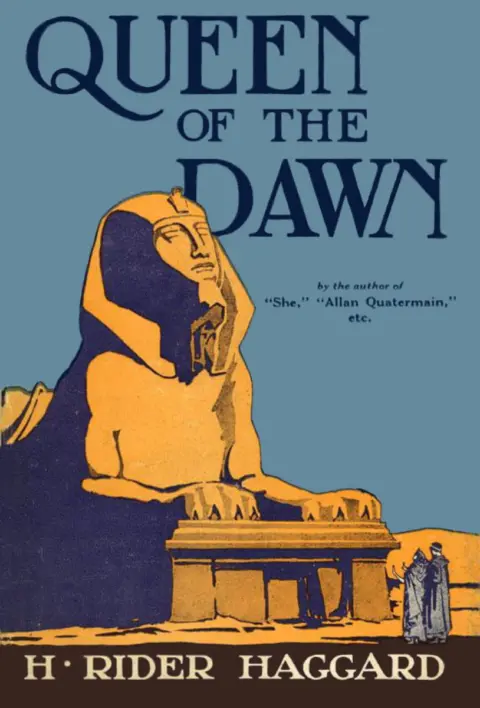
H. Rider (Henry Rider) Haggard
H. Rider (Henry Rider) Haggard
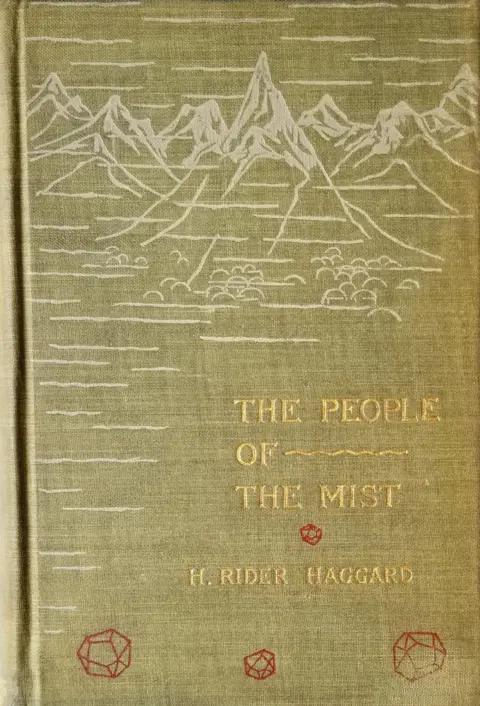
H. Rider (Henry Rider) Haggard
BEHIND THE BOOK
This eBook is for the use of anyone anywhere in the United States and most other parts of the world at no cost and with almost no restrictions whatsoever. You may copy it, give it away or re-use it under the terms of the Project Gutenberg License included with this eBook or online at www.gutenberg.org. If you are not located in the United States, you will have to check the laws of the country where you are located before using this eBook. Read the source licence.
The original source file, including credits and licence, is retained by this library. Request an original-format copy at no charge. Please include the book title and Project Gutenberg identifier #11882.
KEEP YOUR CURIOSITY GOING
Coulson Kernahan

Maurice Baring
Frances Wright
Cécile Tormay

Frederic Jesup Stimson

W. H. P. (William Henry Pope) Jarvis