THE CLASSIC COLLECTION✦Heu-Heu, or The monsterCLASSIC FREE BOOKS
Heu-Heu, or The monster
H. Rider (Henry Rider) Haggard
THE CLASSIC COLLECTION · 1888
"Colonel Quaritch, V.C.: A Tale of Country Life" by H. Rider Haggard is a novel set in the late 19th century that explores themes of memory, social status, and the complexities of rural life in England. The story follows Colonel Harold Quaritch, a recently retired soldier, who grapples with his past and present while taking up residence in Honham Cottage, a property inherited from his late aunt. As he begins his new life, he reflects deeply on a woman he encountered years ago, Ida de la Molle, and begins to navigate the dynamics of local society and the legacy of the de la Molle family. The opening of the book introduces Colonel Quaritch as he contemplates his surroundings and his life choices. We learn that he has returned from military service, carrying memories of past battles and a haunting connection to Ida, the daughter of the local squire. Upon his arrival, he meets the squire, who invites him to dinner, setting into motion their budding acquaintance. As Quaritch reflects on his own solitude and the socioeconomic struggles of the landownership class, he becomes aware of the challenges facing the de la Molle family, particularly related to their dwindling fortunes and the prospect of losing their ancestral home. The intertwining narratives of Quaritch’s personal development and the local family's plight promise a rich exploration of love, loss, and the burden of history.
Introduction adapted from the source catalogue; source summaries may be automatically generated.
Free to read · English · 123,859 words · No account needed
MAKE TIME FOR A GOOD BOOK
On by default. Untick to stop anonymous reading totals. Each page counts after 10 seconds in view. How this works.
Anonymous counting is on unless you have switched it off.
“Who is it? what’s the matter?” said the Colonel, lighting a fusee under her eyes. It was one of those flaming fusees, and burnt with a blue light, showing Ida’s tall figure and beautiful face, all stained with grief and tears, showing her wet macintosh, and the gate-post against which she had been leaning—showing everything.
“Why, Ida,” he said in amaze, “what are you doing here, crying too?”
“I’m not crying,” she said, with a sob; “it’s the rain that has made my
face wet.”
Just then the light burnt out and he dropped it.
“What is it, dear, what is it?” he said in great distress, for the sight of her alone in the wet and dark, and in tears, moved him beyond himself. Indeed he would have been no man if it had not.
She tried to answer, but she could not, and in another minute, to tell the honest truth, she had exchanged the gate-post for Harold’s broad shoulder, and was finishing her “cry” there.
Now to see a young and pretty woman weeping (more especially if she happens to be weeping on your shoulder) is a very trying thing. It is trying even if you do not happen to be in love with her at all. But if you are in love with her, however little, it is dreadful; whereas, if, as in the present case, you happen to worship her, more, perhaps, than it is good to worship any fallible human creature, then the sight is positively overpowering. And so, indeed, it proved in the present instance. The Colonel could not bear it, but lifting her head from his shoulder, he kissed her sweet face again and again.
“What is it, darling?” he said, “what is the matter?”
“Leave go of me and I will tell you,” she answered.
He obeyed, though with some unwillingness.
She hunted for her handkerchief and wiped her eyes, and then at last
she spoke:
“I am engaged to be married,” she said in a low voice, “I am engaged to
Mr. Cossey.”
Then, for about the first time in his life, Harold Quaritch swore violently in the presence of a lady.
“Oh, damn it all!” he said.
She took no notice of the strength of the language, perhaps indeed she re-echoed it in some feminine equivalent.
Your reading position is saved on this browser. Take it to another device with a library code. Reading pages adapt to text, rather than matching a printed edition.
H. Rider (Henry Rider) Haggard
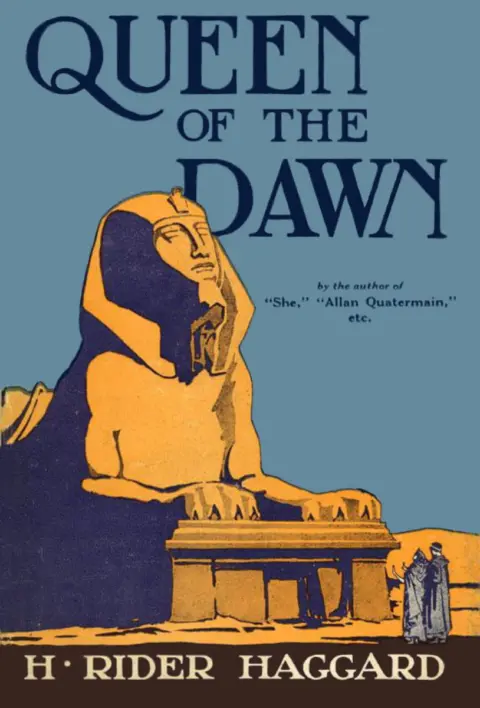
H. Rider (Henry Rider) Haggard
H. Rider (Henry Rider) Haggard
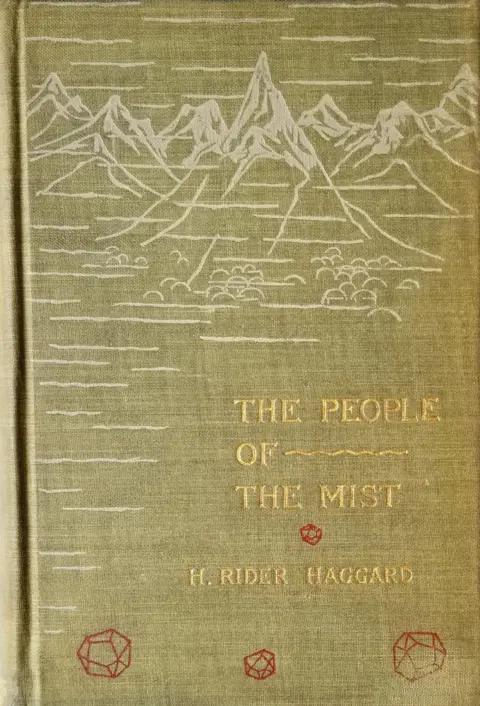
H. Rider (Henry Rider) Haggard
BEHIND THE BOOK
This eBook is for the use of anyone anywhere in the United States and most other parts of the world at no cost and with almost no restrictions whatsoever. You may copy it, give it away or re-use it under the terms of the Project Gutenberg License included with this eBook or online at www.gutenberg.org. If you are not located in the United States, you will have to check the laws of the country where you are located before using this eBook. Read the source licence.
The original source file, including credits and licence, is retained by this library. Request an original-format copy at no charge. Please include the book title and Project Gutenberg identifier #11882.
KEEP YOUR CURIOSITY GOING
Coulson Kernahan

Maurice Baring
Frances Wright
Cécile Tormay

Frederic Jesup Stimson

W. H. P. (William Henry Pope) Jarvis