
The Epic of Paul
William Cleaver Wilkinson
THE CLASSIC COLLECTION · 1886
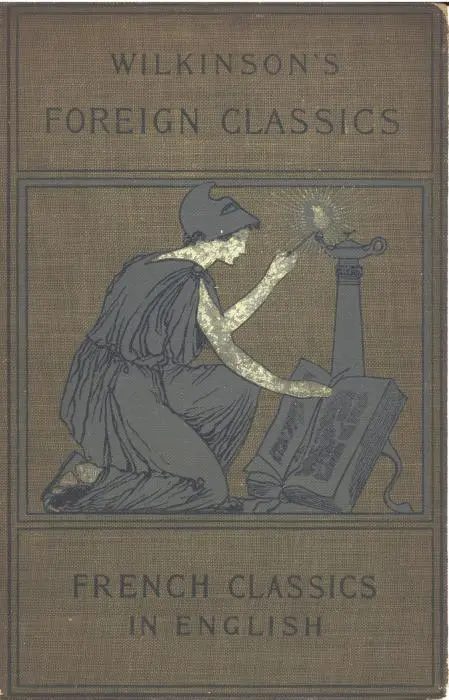
"Classic French Course in English" by William Cleaver Wilkinson is a literary guide published in the late 19th century. This work aims to introduce English-speaking readers to significant French literature, through selected extracts from notable authors, accompanied by critical insights and historical context. The book's intention is to foster appreciation for the richness of French literary tradition while providing a framework for understanding its major contributions. The opening of the text sets the stage by discussing the breadth and uniqueness of French literature, highlighting its brilliance and relevance across various fields, such as eloquence, philosophy, and comedy. Wilkinson emphasizes the particular challenges of compiling a coherent course on such a vast literature that continues to evolve. He lays the groundwork for future explorations of individual authors, suggesting that readers will gain a proportional and trustworthy understanding of French classics through selected extracts alongside authorial critiques, establishing the volume as a gateway to the appreciation of French cultural heritage.
Introduction adapted from the source catalogue; source summaries may be automatically generated.
Free to read · English · 79,104 words · No account needed
MAKE TIME FOR A GOOD BOOK
On by default. Untick to stop anonymous reading totals. Each page counts after 10 seconds in view. How this works.
Anonymous counting is on unless you have switched it off.
Of course, had it lain in the author's chosen line to do so, he might, with as much apparent truth, have pointed out, that to lock up uneasiness in the heart requires steadfastness no less--nay, more--than not to feel uneasiness.
The inflation of "philosophy" vaunting itself is thus softly eased of
its painful distention:--
No. 22. Philosophy triumphs easily over troubles passed and troubles to come, but present troubles triumph over it.
When Jesus once rebuked the fellow-disciples of James and John for blaming those brethren as self-seekers, he acted on the same profound principle with that disclosed in the following maxim:--
No. 34. If we had no pride, we should not complain of that of
others.
How impossible it is for that Proteus, self-love, to elude the presence of mind, the inexorable eye, the fast hand, of this incredulous Frenchman:--
No. 39. Interest [self-love] speaks all sorts of languages, and plays all sorts of parts, even that of disinterestedness.
No. 49. We are never so happy, or so unhappy, as we imagine.
No. 78. The love of justice is, in most men, only the fear of
suffering injustice.
What a subtly unsoldering distrust the following maxim introduces into the sentiment of mutual friendship!--
No. 83. What men have called friendship, is only a partnership, a mutual accommodation of interests, and an exchange of good offices: it is, in short, only a traffic, in which self-love always proposes to gain something.
No. 89. Every one complains of his memory, and no one complains of
his judgment.
How striking, from its artful suppression of strikingness, is the first following, and what a wide, easy sweep of well-bred satire it contains!--
No. 93. Old men like to give good advice, to console themselves for being no longer able to give bad examples.
No. 119. We are so much accustomed to disguise ourselves to others, that, at last, we disguise ourselves to ourselves.
No. 127. The true way to be deceived, is to think one's self
sharper than others.
The plain-spoken proverb, "A man that is his own lawyer, has a fool for his client," finds a more polished expression in the following:--
No. 132. It is easier to be wise for others, than to be so for
one's self.
How pitilessly this inquisitor pursues his prey, "the human soul, into all its useless hiding-places!--
No. 138. We would rather speak ill of ourselves, than not talk of
ourselves.
The following maxim, longer and less felicitously phrased than is usual with La Rochefoucauld, recalls that bitter definition of the bore,--"One who insists on talking about himself all the time that you are wishing to talk about yourself:"--
Your reading position is saved on this browser. Take it to another device with a library code. Reading pages adapt to text, rather than matching a printed edition.
William Cleaver Wilkinson
William Cleaver Wilkinson
William Cleaver Wilkinson
BEHIND THE BOOK
This eBook is for the use of anyone anywhere in the United States and most other parts of the world at no cost and with almost no restrictions whatsoever. You may copy it, give it away or re-use it under the terms of the Project Gutenberg License included with this eBook or online at www.gutenberg.org. If you are not located in the United States, you will have to check the laws of the country where you are located before using this eBook. Read the source licence.
The original source file, including credits and licence, is retained by this library. Request an original-format copy at no charge. Please include the book title and Project Gutenberg identifier #23033.
KEEP YOUR CURIOSITY GOING
Cécile Tormay

Moritz Busch
John L. Ransom
Frances Wright
Cécile Tormay

Mabel Potter Daggett