THE CLASSIC COLLECTION✦An outlaw’s diary: the CommuneCLASSIC FREE BOOKS
An outlaw’s diary: the Commune
Cécile Tormay
THE CLASSIC COLLECTION · 1922
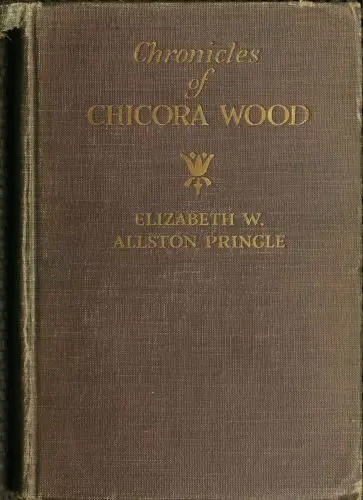
"Chronicles of Chicora Wood" by Elizabeth W. Allston Pringle is a memoir written in the early 20th century. The book provides a detailed account of the author's family and their plantation life in South Carolina, exploring themes of heritage, the passage of time, and the social complexities of the antebellum South. The narrative focuses on significant family members, particularly the author's father, Robert Francis Withers Allston, and reflects on both personal and historical challenges faced by the Allston family. The opening of the memoir introduces the reader to the author's contemplative and nostalgic perspective as she reflects on her family's legacy while seated on the piazza of Chicora Wood. Filled with vivid imagery of the natural surroundings and a deep sense of history, the author articulates a desire to preserve the memories of her ancestors and the beauty of their past. The first chapter delves into the lineage of the Allston family, emphasizing the struggles and triumphs of her father, a rice planter, as he navigates the complexities of land management, social responsibilities, and family legacy amidst the backdrop of a changing South. This rich narrative sets the stage for an exploration of the author's life and captivating family stories that lie ahead.
Introduction adapted from the source catalogue; source summaries may be automatically generated.
Free to read · English · 77,281 words · No account needed
MAKE TIME FOR A GOOD BOOK
On by default. Untick to stop anonymous reading totals. Each page counts after 10 seconds in view. How this works.
Anonymous counting is on unless you have switched it off.
My mother enjoyed her life here. It was much simpler than that at the plantation, with fewer servants, and that she much enjoyed. They had breakfast at six o’clock every morning, and as soon as breakfast was over, papa mounted his horse and rode to Waverly, where the boat met him. His horse was put in the stable and he rowed to Chicora, went over all the crop, the rice-fields first, landing on the bank opposite the house and walking round all the planted fields, seeing that the water was kept on the rice just at the right depth, that the fields which had been dried for hoeing were dry enough to begin on them with the hoe. There is a real science in rice-planting, and my father was thoroughly versed in it and most diligent in seeing after the treatment of each field. He was always followed by the trunk minder, Jacob, and in every field Jacob went down the bank to the water edge and drew out a stalk or two of rice for papa to examine the root growth, by which the water is managed. This accomplished, papa crossed to the house, where a horse was ready saddled. He mounted and rode all over the upland crop, corn, potatoes, oats, peas; went into the house, which Maum Mary kept fresh and clean, wrote a few letters, drank a glass of buttermilk and ate some fruit, got into his boat again, and returned to the seashore for a three-o’clock dinner, having done a tremendous day’s work; and he never failed, with all his work, to go into the garden and gather a bunch of roses and pink oleander to bring to mamma. Of course, his homecoming was the event of the day to my mother.
Soon papa’s aunt, Mrs. Blythe, came to be with them for the summer, which was a great pleasure to mamma. She was a woman of noble character and ample means, who was specially devoted to my father, having no children of her own, and recognizing in him a kindred nature. Aunt Blythe was a true specimen of the “grande dame” of the old South. She had been brought up to responsibility, to command herself and others; she was an old lady when mamma first knew her, but tall and stately in figure and beautiful in face. She brought her own barouche, horses, and coachman and footman, and her own maid and laundress--in short, a retinue. I never saw Aunt Blythe, as she died before I was born, but the tales of her generosity and her grandeur which were told by white and black placed her in the category of fairies and other benign spirits. I was named after Aunt Blythe, a rare instance of posthumous gratitude, I think; and my mother, in the way she did it, showed a sympathetic, romantic understanding of Aunt Blythe’s nature. She had been sought in marriage in her early youth by her first cousin, John Waties; but, when he approached her father and asked for his consent, he refused absolutely, as he disapproved of the marriage of cousins. So Aunt Blythe and her lover agreed not to be married during the father’s lifetime. Alas, alas! John Waties died very soon! He left all his property to his fiancée, which made her the rich woman of the family. This property included a large and valuable rice-plantation, with a large number of negroes. Aunt Blythe felt this a great trust and responsibility and most difficult to manage, for it was almost impossible to get an overseer who would treat the negroes with gentleness and justice. The men who sought the place of overseer in those days were invariably from the North, their one idea being to get as much work from the hands as possible, and, consequently, make as much money. Aunt Blythe could not live alone in this isolated spot, the barony of Friendfield (it is the plantation now owned by Doctor Baruch and kept by him as a game-preserve), and, after trying one overseer after another, and finding them cruel and regardless in their treatment of her people, she accepted one of her many suitors, Doctor Blythe, who had been a surgeon in the Revolutionary War. She was then able to live on her plantation and to see that her negroes were kindly and properly managed and looked after. Mamma became devoted to Aunt Blythe and wanted to name her second daughter after her, but my father wanted her named after his mother, who had died a few years before his marriage, so he named her Charlotte; but mamma wanted Aunt Blythe’s name in, so she asked to have the name Charlotte Frances--Aunt Blythe’s name was Elizabeth Frances--and papa consented, but he always called the beautiful little girl Charlotte, while mamma called her Frances. She died when she was about four, a grief my mother felt to the very end, with strange poignancy. When, some years after Aunt Blythe’s death, I made my appearance on the scene, mamma named me for her; but, instead of giving me the very pretty name of her excellent husband, she gave me the name of the man she loved, John Waties. So, instead of being Elizabeth Blythe Allston, I was named Elizabeth Waties Allston; not nearly so pretty a name, but it really made me the child of romance, I think. It was a beautiful thought and would have greatly pleased Aunt Blythe if she had known.
Your reading position is saved on this browser. Take it to another device with a library code. Reading pages adapt to text, rather than matching a printed edition.
BEHIND THE BOOK
This eBook is for the use of anyone anywhere in the United States and most other parts of the world at no cost and with almost no restrictions whatsoever. You may copy it, give it away or re-use it under the terms of the Project Gutenberg License included with this eBook or online at www.gutenberg.org. If you are not located in the United States, you will have to check the laws of the country where you are located before using this eBook. Read the source licence.
The original source file, including credits and licence, is retained by this library. Request an original-format copy at no charge. Please include the book title and Project Gutenberg identifier #56736.
KEEP YOUR CURIOSITY GOING
Cécile Tormay

Moritz Busch
John L. Ransom
Frances Wright
Cécile Tormay

Mabel Potter Daggett