THE CLASSIC COLLECTION✦An outlaw’s diary: the CommuneCLASSIC FREE BOOKS
An outlaw’s diary: the Commune
Cécile Tormay
THE CLASSIC COLLECTION · 1922
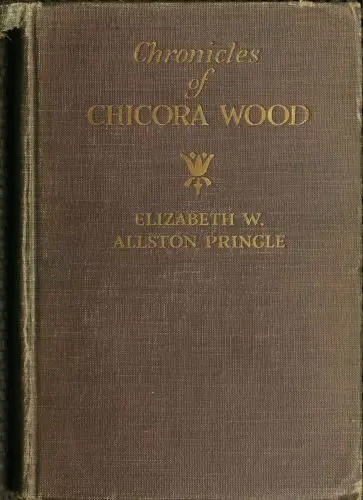
"Chronicles of Chicora Wood" by Elizabeth W. Allston Pringle is a memoir written in the early 20th century. The book provides a detailed account of the author's family and their plantation life in South Carolina, exploring themes of heritage, the passage of time, and the social complexities of the antebellum South. The narrative focuses on significant family members, particularly the author's father, Robert Francis Withers Allston, and reflects on both personal and historical challenges faced by the Allston family. The opening of the memoir introduces the reader to the author's contemplative and nostalgic perspective as she reflects on her family's legacy while seated on the piazza of Chicora Wood. Filled with vivid imagery of the natural surroundings and a deep sense of history, the author articulates a desire to preserve the memories of her ancestors and the beauty of their past. The first chapter delves into the lineage of the Allston family, emphasizing the struggles and triumphs of her father, a rice planter, as he navigates the complexities of land management, social responsibilities, and family legacy amidst the backdrop of a changing South. This rich narrative sets the stage for an exploration of the author's life and captivating family stories that lie ahead.
Introduction adapted from the source catalogue; source summaries may be automatically generated.
Free to read · English · 77,281 words · No account needed
MAKE TIME FOR A GOOD BOOK
On by default. Untick to stop anonymous reading totals. Each page counts after 10 seconds in view. How this works.
Anonymous counting is on unless you have switched it off.
Well, I start from de farm and de sheep travel so slow, and so tired, I never gone no fadder dan Mr. Blank way to Union Church; I stay dere dat night, an’ de next day I gone to Lynch’s Creek, an’ I wait dere, an no man nebber come for de sheep, an’ I just gone on an’ tek de sheep and cattle, and when de man cum for de sheep dey had to follow me about twenty miles, an’ den I tu’n Michael back an’ I mek time on, an’ when I get to de place, maussa send me to take charge of Morven, an’ I tek charge, an’ fust I build a house for Maggie, when ’e come, and I ben dere three week before Maggie cum. She had Pattie, and Kissie, and Pauline, and Aham; an’ Peter, an’ Peter Sweet’s Louisa was on de boat, in delicate state, an’ Maggie had to put dem to bed on de boat. An’ when I ben dere one month maussa come, an’ I been a clear ground when he come--he call fo’ me and Mr. Yates, the agent, and Mr. Balentine, the obershear; Mr. Yates sit near de fire, wid maussa, I stand behind, and maussa say: “Well, Anchum, I bring you here to try and make a crop for me, and Mr. Balentine, I want you to put everything in his charge--he is to order the work, and he is to do the punishment, and I want you to put the keys in his hands too.”
An’ den I say: “Maussa, I well onderstan’ de wuck, an’ I’ll tek charge of dat, but I don’t want to tek no key.” An’ maussa say I must. But when maussa gone, I slip de key back in Mr. Balentine’s hand an’ say, “I don’ want de key, you keep de key,” an’ maussa say to me: “You feed my horse and you feed Mr. Balentine’s horse too, and your daughter Patty milk the cow.” But I wouldn’t let Patty milk, ’cause I wouldn’t run ’cross Amy, him been a’milk, and I know what was going on, an’ I knows dem people been eat de meat out o’ de smoke-house, an’ I know dem would tu’n it on me--so I wait till we fin’ out, an’ Mr. Balentine gib dat man, Chance Grate, an’ he an’ Abram Hynes an’ himself were partners, and when Chance tuk some one else in the smoke-house without tell Abram he get mad an’ tu’n State evidence an’ tell me, an’ I must ask Mr. Balentine: “Y’ miss any meat?” An’ he say “No.” An I say: “Dat strange, ’cause Chance has got some; you’d better look.” An’ he gone in de smoke-house, an’ miss a lot. He had kill an’ cure fifty hog, and the meat ought to ben dere. When Mr. Balentine gone to count de meat he find half gone, den he gone with me to Chance house, an’ dere he find two hams an’ a shoulder, an’ Mr. Balentine give him a big licking, ’til he confess how he done it. Den I stop him, I hold ’e hand an’ I say: “Maussa only want de trut; he don’t allow lick after dat, not another cut.” Dere was two rice-barrel pack wid 300 bottle of ole wine in de cellar at Morven. I wucked and wucked and made a fine crop of peas, corn, and potatoes. Mr. Evans come up with ole miss to look at de crop, w’en I let her know I had housed de corn, one passel was shucked clean, an’ Mista Evans, when he look at it, estimate 1,000 bushel of corn. Howsumeber, in de fall in February we hear de Yankees was bombarding Chiraw; eberybody was trying to get away from dat side, as de bridge was burned by we people. Two soldiers cum one nite an’ ask me to let them spend de night--dey was what de people call de “Georgia Wild Cat.” Dey say: “Ole man, de Yankees will be here before nine to-morrow morning.” Dey hadn’t sooner gone away from de house next morning, when de whole place was surround wid soldier, and dey call on de men to surrender. What dey call de picket guard cum fust, and ax dat Daddy Hammedy fo’ de key, an’ when him hesitate, dem say, “I don’t want no key,” an’ he just rushed up and kicked de door in, an’ rushed in, and run up-stairs, and cum down with a bag full of silver, an’ forks and spoons an’ plate an’ dat man say: “Ole man, de man dat own dis place must be a hell of a rich man, he got such fine tings.” An’ I say: “Yes, sir, my master is a powerful rich man.” Den de oders run in an’ git more; den dey gone--den we tought dey was all gone, when on a sudden de whole place full of people, from every corner--dey seem to rise right out de ground; now dis was de infantry, an’ dey cum to station dere, and dey station dere for one week. Dem people just run dat grits-mill from de time day cum; dey just grind all de corn we mek, an’ in a half hour de smoke-house was empty, and dey kill and dey fetch in, and dey kill and dey fetch in, and dey kill and dey fetch in, an’ I got tired of it, I was sassy to them; I was wore out. Me an’ Hammedy was de only man on de place; I jus’ had to stey by de captain to perteck me and dese womens--den he put a guard an’ tell dem to shoot any soldier dat went to burn or trouble de people. By de time dey was gone dere was nothing left but de rough rice--400 bushels--an’ dey couldn’t manage dat; dey took all de corn, and if it hadn’t been for de rice we would have starved. The Yankees left on Tuesday, an’ de next Sunday Mr. Yates sent me word, I must take de people an’ left at once; we must take de road, man, woman, and chillun; we must be gone Monday night--that I must take de hands and march off at once. I send George Green to tell miss, say “Come at once,” and Tuesday miss cum, Daddy Eleck drive ’um, and Miss Bessie cum wid um, an’ Mista Evans ride ’long side, an’ miss say “What’s matter?” an’ I say: “Mr. Yates drive we, say we must lef’.” Then miss say, “Well, turn to work, repair de land and plant what you can”; but I say: “Miss, I want to go home.” Miss laugh and say: “Where is your home, Acrum?” I say: “Wherever you is, miss, dere is my home.” An’ miss say: “Well, if you go home now, ’tis too late to plant crop, so you had better plant your crop here, so by fall you can go after you gather the crop.” So we done so, an’ we mek a fine crop of corn and peas, an’ when de time cum for to move, all de people what didn’t have chillun tek dey fut an’ gone, an’ we big fambly couldn’t do dat, an’ I study, an’ I study an’ at las’ I say to Daddy Hammedy: “You an’ your son is carpenter, and you can mek a flat; I can tek a man an’ cut down some big dead pine, an’ haul dem in, an’ we got saw-mill, and we can mek flat, and so we done, an’ in two weeks after we done gather in de crop we had de flat done and ready to start on a Saturday; den we say we will move next week, and de people say let’s go now, and so we done, but de oxen and ting worry me. Ole miss had send Mr. Yates and Mr. Balentine away an’ got a young man name John Shaw in charge, and he done just what I say. Den I puswade March--he had a ole horse he pic’ up--to tek de oxen down to ole miss to Society Hill, wid de hoss, and he done so. We started Sunday evening at four o’clock, and we did not get down to Chicora until de next Sunday night in de night. Me and Daddy Hammedy, an’ his wife Mary Ann, an’ my wife Maggie, an’ his daughter Tyra, an’ granddaughter Cherry, my chillun--Patty, Elizabeth, Pauline, Kizzie, Aham, and the baby Kilpatrick, then York Blye and Mary, his wife, and Joseph, Betsy, March’s wife, Leah, and Hetty, and Flora, Phenix, and his wife Elizabeth, and his daughter Mary, and his daughter Miley, and Lucy. When I got off to Chicora everything been tear up, people don gone crazy; now, when I left my house maussa tell me no one was to stay in my house till I come. I come back and find Moses in my house. I gone right in an’ mek Moses come right out. Now Mauss Ben he done puty by me; I had nine head to feed, an’ Mauss Ben say he feed them all fo’ my wuck, so Mauss Ben feed my family fu’ dat year, and feed dem well, an’ we mek fine crop o’ rice. The fust contract was you fu’nish land and seed and animals an’ get two-thirds; I fu’nish wuck and get one-third. Every day I didn’t wuck was deduct’ from my share.
Your reading position is saved on this browser. Take it to another device with a library code. Reading pages adapt to text, rather than matching a printed edition.
BEHIND THE BOOK
This eBook is for the use of anyone anywhere in the United States and most other parts of the world at no cost and with almost no restrictions whatsoever. You may copy it, give it away or re-use it under the terms of the Project Gutenberg License included with this eBook or online at www.gutenberg.org. If you are not located in the United States, you will have to check the laws of the country where you are located before using this eBook. Read the source licence.
The original source file, including credits and licence, is retained by this library. Request an original-format copy at no charge. Please include the book title and Project Gutenberg identifier #56736.
KEEP YOUR CURIOSITY GOING
Cécile Tormay

Moritz Busch
John L. Ransom
Frances Wright
Cécile Tormay

Mabel Potter Daggett