THE CLASSIC COLLECTION✦An outlaw’s diary: the CommuneCLASSIC FREE BOOKS
An outlaw’s diary: the Commune
Cécile Tormay
THE CLASSIC COLLECTION · 1852
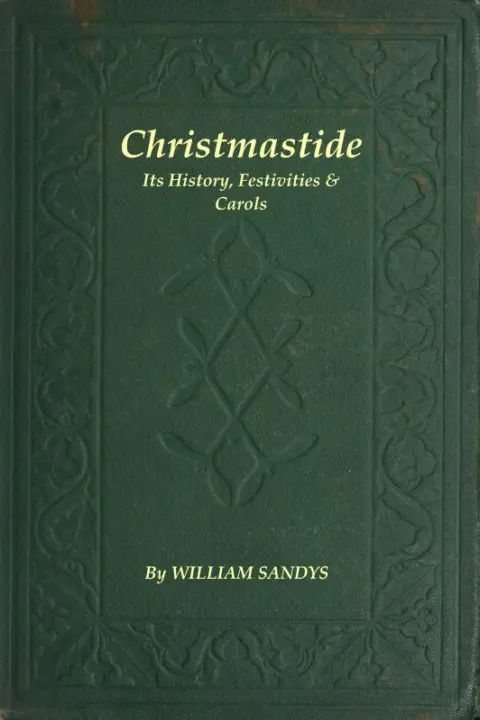
"Christmastide: Its History, Festivities, and Carols" by William Sandys is a historical account likely written in the mid-19th century. The book delves into the origins and customs surrounding the Christmas season, specifically focusing on English traditions from ancient to modern times. Sandys aims to explore both the ecclesiastical significance of Christmas and its transformation into a time of feasting and merriment, addressing the interplay of Christian and pagan traditions throughout history. At the start of the work, the author clarifies his intent to provide a popular and engaging recount of how Christmas has been celebrated in England, rather than a theological exposition. He reflects on the solemnity of the Nativity and its spiritual significance while contrasting this with the revelry and excesses that characterized Christmas feasts in the past. The opening sets the tone for a rich exploration of the historical festivities, customs, and the significance of various Christmas-related practices, paving the way for further detailed examination in subsequent chapters.
Introduction adapted from the source catalogue; source summaries may be automatically generated.
Free to read · English · 75,469 words · No account needed
MAKE TIME FOR A GOOD BOOK
On by default. Untick to stop anonymous reading totals. Each page counts after 10 seconds in view. How this works.
Anonymous counting is on unless you have switched it off.
“With a good old fashion, when Christmasse was come, To call in all his old neighbours with bagpipe and drum, With good chear enough to furnish every old roome, And old liquor, able to make a cat speak, and man dumb. Like an old courtier of the queen’s, And the queen’s old courtier.”
then comes the contrast,—
“With a new fashion, when Christmas is drawing on, On a new journey to London, straight we all must begone, And leave none to keep house, but our new porter, John, Who relieves the poor with a thump on the back with a stone. Like a young courtier of the king’s, And the king’s young courtier.”
In “‘Time’s Alteration; or, the Old Man’s Rehearsal,’ what brave dayes he knew a great while agone, when his old cap was new,” there is much in the same strain,—
“Black jacks to every man
Were fill’d with wine and beer;
No pewter pot nor can
In those days did appear:
Good cheer in a nobleman’s house
Was counted a seemly show;
We wanted no brawn nor souse,
When this old cap was new.“
But, ‘Old Christmas Returned,’ probably written at the time of the Restoration and prior to the last-named ballads, gives a more favourable view, and welcomes the return of Christmas.
“All you that to feasting and mirth are inclin’d, Come here is good news for to pleasure your mind; Old Christmas is come for to keep open house, He scorns to be guilty of starving a mouse; Then come, boys, and welcome for diet the chief, Plum-pudding, goose, capon, minc’d pies and roast beef.
A long time together he hath been forgot, They scarce could afford for to hang on the pot; Such miserly sneaking in England hath been, As by our forefathers ne’er us’d to be seen; But now he’s returned you shall have in brief, Plum-pudding, goose, capon, minc’d pies and roast beef.“
The last line forms the burden of every stanza. A few years later, in 1695, Poor Robin welcomes Christmas much in the same terms,—
“Now, thrice welcome, Christmas,
Which brings us good cheer,
Minc’d pies and plumb-porridge,
Good ale and strong beer;
With pig, goose, and capon,
The best that may be,
So well doth the weather
And our stomachs agree.”
Really, one may say with Terence, “jamdudum animus est in patinis,” and eating seems to be a happy invention, occupying a valuable portion of our existence. Old Tusser, long before, had recommended somewhat similar dishes for Christmas,—
Your reading position is saved on this browser. Take it to another device with a library code. Reading pages adapt to text, rather than matching a printed edition.
BEHIND THE BOOK
This eBook is for the use of anyone anywhere in the United States and most other parts of the world at no cost and with almost no restrictions whatsoever. You may copy it, give it away or re-use it under the terms of the Project Gutenberg License included with this eBook or online at www.gutenberg.org. If you are not located in the United States, you will have to check the laws of the country where you are located before using this eBook. Read the source licence.
The original source file, including credits and licence, is retained by this library. Request an original-format copy at no charge. Please include the book title and Project Gutenberg identifier #47956.
KEEP YOUR CURIOSITY GOING
Cécile Tormay

Moritz Busch
John L. Ransom
Frances Wright
Cécile Tormay

Mabel Potter Daggett