THE CLASSIC COLLECTION✦An outlaw’s diary: the CommuneCLASSIC FREE BOOKS
An outlaw’s diary: the Commune
Cécile Tormay
THE CLASSIC COLLECTION · 1852
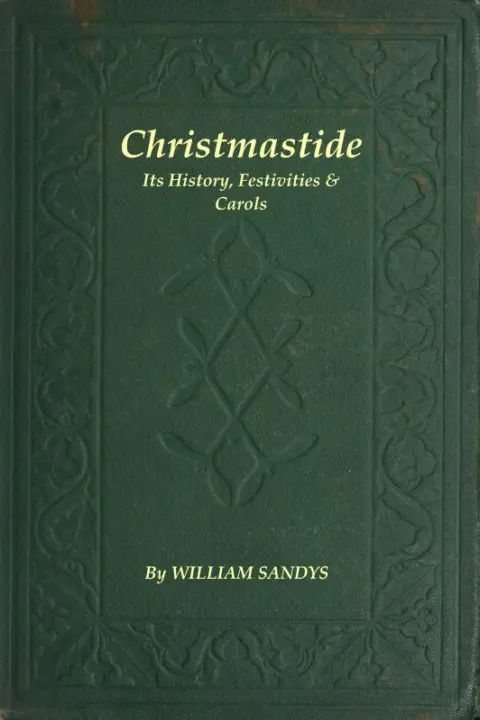
"Christmastide: Its History, Festivities, and Carols" by William Sandys is a historical account likely written in the mid-19th century. The book delves into the origins and customs surrounding the Christmas season, specifically focusing on English traditions from ancient to modern times. Sandys aims to explore both the ecclesiastical significance of Christmas and its transformation into a time of feasting and merriment, addressing the interplay of Christian and pagan traditions throughout history. At the start of the work, the author clarifies his intent to provide a popular and engaging recount of how Christmas has been celebrated in England, rather than a theological exposition. He reflects on the solemnity of the Nativity and its spiritual significance while contrasting this with the revelry and excesses that characterized Christmas feasts in the past. The opening sets the tone for a rich exploration of the historical festivities, customs, and the significance of various Christmas-related practices, paving the way for further detailed examination in subsequent chapters.
Introduction adapted from the source catalogue; source summaries may be automatically generated.
Free to read · English · 75,469 words · No account needed
MAKE TIME FOR A GOOD BOOK
On by default. Untick to stop anonymous reading totals. Each page counts after 10 seconds in view. How this works.
Anonymous counting is on unless you have switched it off.
A small portion of the log was to be carefully preserved to light that of the following year; and on the last day of its being in use, which, in some places, was on Candlemas Day, a small piece having been kept on purpose, the custom was to—
“Kindle the Christmas brand, and then
Till sunne-set let it burne;
Which quencht, then lay it up agen,
Till Christmas next returne.
Part must be kept, wherewith to teend
The Christmas log next yeare;
And where ’tis safely kept, the fiend
Can do no mischiefe there.“
The Souche de Noël, in some places on the Continent, was very similar
to our log.
As to minstrels, the waits of Southwark, according to the Citizen in the ‘Knight of the Burning Pestle,’ were as rare fellows as any in England, and two shillings would bring them all o’er the water with a vengeance, as if they were mad. In the commencement of the following reign a character in a play by Shirley introduces the city waits in a speech that, with one slight alteration, is applicable to the present panic felt by many persons respecting the possibility of foreign invasion: “We will have the city waites down with us, and a noise of trumpets; we can have drums in the country, and the train-band, and then let the [French] come an they dare.”
Burton, in his ‘Anatomy of Melancholy,’ mentions “The ordinary recreations which we have in winter, and in most solitary times busie our minds with, are cardes, tables, and dice, shovelboard, chesse-play, the philosopher’s game, small trunkes, shuttle-cocke, billiards, musicke, masks, singing, dancing, ulegames, frolicks, jests, riddles, catches, purposes, questions and commands, merry tales of errant knights, queenes, lovers, lords, ladies, giants, dwarfes, theeves, cheaters, witches, fayries, goblins, friers,” &c.
After the accession of Charles the First, Christmas was frequently observed with great splendour, and a variety of plays, masks, and pageants, in which the king and queen, with some of the courtiers, occasionally took part, until about the year 1641, when the civil disturbances interfered with all social enjoyments, and the spirit of fanaticism even endeavoured to abolish any commemoration of the Nativity of our Saviour. The king had his mask on Twelfth Day, and the queen hers on the Shrovetide following, and considerable sums were granted for the expenses, often exceeding £2000.
Your reading position is saved on this browser. Take it to another device with a library code. Reading pages adapt to text, rather than matching a printed edition.
BEHIND THE BOOK
This eBook is for the use of anyone anywhere in the United States and most other parts of the world at no cost and with almost no restrictions whatsoever. You may copy it, give it away or re-use it under the terms of the Project Gutenberg License included with this eBook or online at www.gutenberg.org. If you are not located in the United States, you will have to check the laws of the country where you are located before using this eBook. Read the source licence.
The original source file, including credits and licence, is retained by this library. Request an original-format copy at no charge. Please include the book title and Project Gutenberg identifier #47956.
KEEP YOUR CURIOSITY GOING
Cécile Tormay

Moritz Busch
John L. Ransom
Frances Wright
Cécile Tormay

Mabel Potter Daggett