
Through the Desert
Henryk Sienkiewicz
THE CLASSIC COLLECTION · 1895
"Children of the Soil" by Henryk Sienkiewicz is a novel written in the late 19th century. It delves into Polish life and societal dynamics, primarily focusing on its main character, Pan Stanislav Polanyetski, as he navigates family ties, financial obligations, and the intricacies of rural relationships. The narrative promises a blend of personal conflict and broader cultural insights, set against the backdrop of a changing Poland. The opening of the novel introduces Pan Stanislav returning to the village of Kremen after years abroad, evoking childhood memories and establishing a connection to his past. As he arrives, he encounters Panna Marynia Plavitski, the daughter of the estate's owner, and they engage in a tentative conversation laden with subtext regarding his visit's true purpose: to collect a debt from her father. This tension sets the stage for both a potential romantic connection and conflict, as Stanislav grapples with feelings for Marynia while confronting the financial demands on their relationship, suggesting a deeper exploration of familial duty versus personal desire moving forward.
Introduction adapted from the source catalogue; source summaries may be automatically generated.
Free to read · English · 262,923 words · No account needed
MAKE TIME FOR A GOOD BOOK
On by default. Untick to stop anonymous reading totals. Each page counts after 10 seconds in view. How this works.
Anonymous counting is on unless you have switched it off.
"Coming back, we will bring lots of bread," said Litka. "How strangely they look at us! What are they thinking of?"
"They are thinking very slowly," said Pan Stanislav; "and only after an hour or two will they say: 'Ah! here is some little girl with yellow hair and rosy dress and black stockings.'"
"And what will they think of Pan Stas?"
"They will think that I am some gypsy, for I have not yellow hair."
"No. Gypsies have no houses."
"And I have no house, Litka. I had the chance of one, but I sold it."
He uttered this last phrase in a certain unusual manner, and in general there was sadness in his voice. The little girl looked at him carefully; and all at once her sensitive face reflected his sadness, just as that water reflected her form. When they joined the rest of the company, from time to time she raised her sad eyes with an inquiring and disturbed expression. At last, pressing more firmly his hand, which she held, she asked,--
"What troubles Pan Stas?"
"Nothing, little child; I am looking around at the lake, and that is
why I do not talk."
"I was pleasing myself yesterday, thinking to show Pan Stas Thumsee."
"Though there are no rocks here, it is very beautiful But what house is
that on the other side?"
"We will take dinner there."
Pani Emilia was talking merrily with Vaskovski, who, carrying his hat in his hand, and seeking in his pockets for a handkerchief to wipe his bald head, gave his opinions about Bukatski,--
"He is an Aryan," concluded he; "and therefore in continual unrest, he is seeking peace. He is buying pictures and engravings at present, thinking that thus he will fill a void. But what do I see? This, those children of the century bear in their souls an abyss like this lake, for example; besides, the abyss in them is bottomless, and they think to fill it with pictures, strong waters, amateurship, dilettantism, Baudelaire, Ibsen, Maeterlinck, finally dilettante science. Poor birds, they are beating their heads against the sides of their cages! It is just I tried to fill this lake by throwing in a pebble."
"And what can fill life?"
"Every sincere idea, all great feelings, but only on condition that they begin in Christ. Had Bukatski loved art in the Christian way, it would have given him the peace which he is forced to seek."
"Have you told him that?"
Your reading position is saved on this browser. Take it to another device with a library code. Reading pages adapt to text, rather than matching a printed edition.
Henryk Sienkiewicz

Henryk Sienkiewicz

Henryk Sienkiewicz
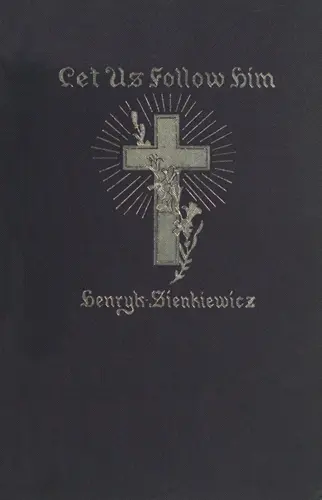
Henryk Sienkiewicz
BEHIND THE BOOK
This eBook is for the use of anyone anywhere in the United States and most other parts of the world at no cost and with almost no restrictions whatsoever. You may copy it, give it away or re-use it under the terms of the Project Gutenberg License included with this eBook or online at www.gutenberg.org. If you are not located in the United States, you will have to check the laws of the country where you are located before using this eBook. Read the source licence.
The original source file, including credits and licence, is retained by this library. Request an original-format copy at no charge. Please include the book title and Project Gutenberg identifier #44939.
KEEP YOUR CURIOSITY GOING
Coulson Kernahan

Maurice Baring
Frances Wright
Cécile Tormay

Frederic Jesup Stimson

W. H. P. (William Henry Pope) Jarvis