
Through the Desert
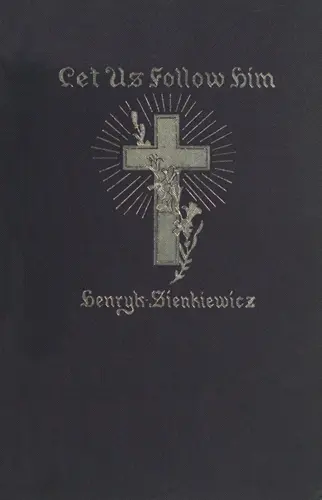
Henryk Sienkiewicz
THE CLASSIC COLLECTION · 1895
"Children of the Soil" by Henryk Sienkiewicz is a novel written in the late 19th century. It delves into Polish life and societal dynamics, primarily focusing on its main character, Pan Stanislav Polanyetski, as he navigates family ties, financial obligations, and the intricacies of rural relationships. The narrative promises a blend of personal conflict and broader cultural insights, set against the backdrop of a changing Poland. The opening of the novel introduces Pan Stanislav returning to the village of Kremen after years abroad, evoking childhood memories and establishing a connection to his past. As he arrives, he encounters Panna Marynia Plavitski, the daughter of the estate's owner, and they engage in a tentative conversation laden with subtext regarding his visit's true purpose: to collect a debt from her father. This tension sets the stage for both a potential romantic connection and conflict, as Stanislav grapples with feelings for Marynia while confronting the financial demands on their relationship, suggesting a deeper exploration of familial duty versus personal desire moving forward.
Introduction adapted from the source catalogue; source summaries may be automatically generated.
Free to read · English · 262,923 words · No account needed
MAKE TIME FOR A GOOD BOOK
On by default. Untick to stop anonymous reading totals. Each page counts after 10 seconds in view. How this works.
Anonymous counting is on unless you have switched it off.
But Marynia's illness was not lasting, and a week later she and her husband were able to visit the Bigiels, who had moved to their summer residence; for the weather, notwithstanding the early season, was fine, and in the city summer heats were almost beginning. Zavilovski, who had grown accustomed to them, went also, taking an immense kite, which he was to fly in company with Pan Stanislav and the children. The Bigiels, too, liked Zavilovski, since he was simple, and, except his shyness, a pleasant man, on occasions even childlike. Pani Bigiel maintained, moreover, that he had a peculiar head; which was in so far true, that he had a scar on his eyelid, and that his prominent chin gave him an expression of energy which was contradicted utterly by his upper face, which was delicate, almost feminine. At first Pani Bigiel sought in him an original; but he mastered everything, and therefore himself, too quickly. He was simply a great enthusiast of unequal temper, because he was timid; and he was not without hidden pride.
At dinner they mentioned the Osnovskis to him, and the projected Athenian-Roman-Florentine evenings, Panna Castelli, and the curiosity which he had roused in the ladies. When he heard this, he said,--
"Oh, it is well to know that; I shall not go there now for anything in
the world."
"You will make their acquaintance first at our house," said Marynia.
"I shall escape from the entrance," said he, clasping his hands.
"Why?" asked Pan Stanislav. "It is needful to have the courage not only of one's convictions, but of one's verses."
"Evidently," said Pani Bigiel. "What is there to be ashamed of? I should look people in the eyes boldly and say: I write; yes, I write."
"I write; yes, I write," repeated Zavilovski, raising his head and
laughing.
But Marynia continued: "You will make their acquaintance at our house; then you will leave your card with them, and after that we will visit them some evening."
"I cannot hide my head in snow," said he, "because there is none; but I'll find some place of hiding."
"But if I entreat you greatly?"
"Then I will go," answered Zavilovski, after a while, blushing
slightly; and he looked at her.
Her face, somewhat pale after protracted lying in bed, had become more delicate, and looked like the face of a maiden of sixteen. She seemed so wonderful to the young man that he could refuse her nothing.
In the evening, Pan Stanislav was to take him back to the city; but before that Marynia said to him,--
Your reading position is saved on this browser. Take it to another device with a library code. Reading pages adapt to text, rather than matching a printed edition.
Henryk Sienkiewicz

Henryk Sienkiewicz

Henryk Sienkiewicz
Henryk Sienkiewicz
BEHIND THE BOOK
This eBook is for the use of anyone anywhere in the United States and most other parts of the world at no cost and with almost no restrictions whatsoever. You may copy it, give it away or re-use it under the terms of the Project Gutenberg License included with this eBook or online at www.gutenberg.org. If you are not located in the United States, you will have to check the laws of the country where you are located before using this eBook. Read the source licence.
The original source file, including credits and licence, is retained by this library. Request an original-format copy at no charge. Please include the book title and Project Gutenberg identifier #44939.
KEEP YOUR CURIOSITY GOING
Coulson Kernahan

Maurice Baring
Frances Wright
Cécile Tormay

Frederic Jesup Stimson

W. H. P. (William Henry Pope) Jarvis