
Through the Desert
Henryk Sienkiewicz
THE CLASSIC COLLECTION · 1895
"Children of the Soil" by Henryk Sienkiewicz is a novel written in the late 19th century. It delves into Polish life and societal dynamics, primarily focusing on its main character, Pan Stanislav Polanyetski, as he navigates family ties, financial obligations, and the intricacies of rural relationships. The narrative promises a blend of personal conflict and broader cultural insights, set against the backdrop of a changing Poland. The opening of the novel introduces Pan Stanislav returning to the village of Kremen after years abroad, evoking childhood memories and establishing a connection to his past. As he arrives, he encounters Panna Marynia Plavitski, the daughter of the estate's owner, and they engage in a tentative conversation laden with subtext regarding his visit's true purpose: to collect a debt from her father. This tension sets the stage for both a potential romantic connection and conflict, as Stanislav grapples with feelings for Marynia while confronting the financial demands on their relationship, suggesting a deeper exploration of familial duty versus personal desire moving forward.
Introduction adapted from the source catalogue; source summaries may be automatically generated.
Free to read · English · 262,923 words · No account needed
MAKE TIME FOR A GOOD BOOK
On by default. Untick to stop anonymous reading totals. Each page counts after 10 seconds in view. How this works.
Anonymous counting is on unless you have switched it off.
Pan Stanislav, who visited Pani Emilia in Warsaw a number of times every week, was sincerely attached to both mother and daughter. In a city where woman's reputation is less respected than anywhere else in the world, scandal was created by this, without the least cause, of course; for Pani Emilia was as pure as an infant, and simply carried her exalted head in the sky as if she knew not that evil existed. She was even so pure that she did not understand the necessity of paying attention to appearances. She received gladly those whom Litka loved; but she refused a number of good offers of marriage, declaring that she needed nothing on earth except Litka. Bukatski alone insisted that Pani Emilia acted on his nerves. Pan Stanislav adapted himself to those azure heights surrounding that crystal woman, so that he never approached her with a thought dimmed by temptation.
Now he answered with simplicity Vaskovski's remark,--
"In truth, they both seem marvellous."
And, greeting them, he repeated more or less the same thing to Pani Emilia, as something that in the given case had attracted his attention. She smiled with pleasure,--likely because the praise included Litka,--and, gathering up her skirt for the road, she said,--
"I received a letter to-day, and have brought it to you."
"May I read it right away?"
"You may; I beg you to do so."
They set out by the forest road for Thumsee--Pani Emilia, Vaskovski, and Litka in advance, Pan Stanislav a little behind them, his head bent over the letter, which was as follows:--
MY DEAR EMILKA,--To-day I have received thy litany of questions, and will answer at once, for I am in haste to share my thoughts with thee. Pan Stanislav Polanyetski went from here on Monday; hence, two days ago. The first evening I received him as I receive every one, and nothing whatever came to my head; but the next day was Sunday. I had time to spare; and almost the entire afternoon we were not only together, but alone, for papa went to the Yamishes. What shall I say? Such a sympathetic, sincere, and, at the same time, honest man! From what he said of Litka and of thee, I saw at once that he has a good heart. We walked a long time by the pond in the garden. I bound up his hand, for he cut himself with the boat. He spoke so wisely that I forgot myself in listening to his words. Ah, my Emilka, I am ashamed to confess it, but my poor head was turned a little by that evening. Thou knowest, moreover, how alone I am and overworked, and how rarely I see men like him. It seemed to me that a guest had come from another world, and a better one. He not only pleased, but captivated me with his heartiness, so that I could not sleep, and was thinking all the time of him. It is true that in the morning he quarrelled with papa, and even I received a little; though God sees how much I would give that there might be no question of that kind between us. At the first moment it touched me greatly; and if that ugly man had known how much I cried in my chamber, he would have pitied me. But, afterward, I thought that he must be very sensitive; that papa was not right; and I am not angry now. I will say, also, in thy ear, that a certain voice whispers to me continually that he will not sell to any one the claim which he has on Kremen, if only to be able to come here again. That he parted in such anger with papa is nothing. Papa himself does not take it to heart; for those are his ways, not his convictions or feelings. Pan Stanislav has in me a true friend, who, after the sale of Magyerovka, will do everything to end all causes of misunderstanding, and in general all those nasty money questions. He will have to come then, even to take what belongs to him,--is it not true? It may be also that I please him a little. That a man as quick as he is should say something bitter gives no cause for wonder. Speak not of this when thou seest him, and do not scold him; God keep thee from that. I know not why I feel a certain confidence that he will do no injustice to me, or papa, or my beloved Kremen; and I think it would be well in the world if all were like him.
Your reading position is saved on this browser. Take it to another device with a library code. Reading pages adapt to text, rather than matching a printed edition.
Henryk Sienkiewicz

Henryk Sienkiewicz

Henryk Sienkiewicz
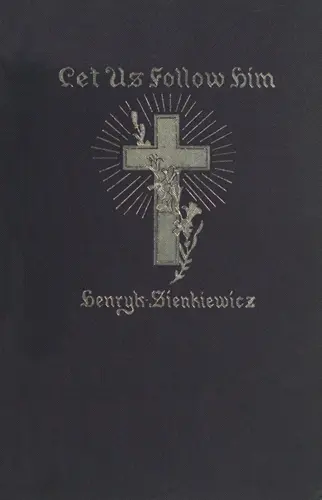
Henryk Sienkiewicz
BEHIND THE BOOK
This eBook is for the use of anyone anywhere in the United States and most other parts of the world at no cost and with almost no restrictions whatsoever. You may copy it, give it away or re-use it under the terms of the Project Gutenberg License included with this eBook or online at www.gutenberg.org. If you are not located in the United States, you will have to check the laws of the country where you are located before using this eBook. Read the source licence.
The original source file, including credits and licence, is retained by this library. Request an original-format copy at no charge. Please include the book title and Project Gutenberg identifier #44939.
KEEP YOUR CURIOSITY GOING
Coulson Kernahan

Maurice Baring
Frances Wright
Cécile Tormay

Frederic Jesup Stimson

W. H. P. (William Henry Pope) Jarvis