
Through the Desert
Henryk Sienkiewicz
THE CLASSIC COLLECTION · 1895
"Children of the Soil" by Henryk Sienkiewicz is a novel written in the late 19th century. It delves into Polish life and societal dynamics, primarily focusing on its main character, Pan Stanislav Polanyetski, as he navigates family ties, financial obligations, and the intricacies of rural relationships. The narrative promises a blend of personal conflict and broader cultural insights, set against the backdrop of a changing Poland. The opening of the novel introduces Pan Stanislav returning to the village of Kremen after years abroad, evoking childhood memories and establishing a connection to his past. As he arrives, he encounters Panna Marynia Plavitski, the daughter of the estate's owner, and they engage in a tentative conversation laden with subtext regarding his visit's true purpose: to collect a debt from her father. This tension sets the stage for both a potential romantic connection and conflict, as Stanislav grapples with feelings for Marynia while confronting the financial demands on their relationship, suggesting a deeper exploration of familial duty versus personal desire moving forward.
Introduction adapted from the source catalogue; source summaries may be automatically generated.
Free to read · English · 262,923 words · No account needed
MAKE TIME FOR A GOOD BOOK
On by default. Untick to stop anonymous reading totals. Each page counts after 10 seconds in view. How this works.
Anonymous counting is on unless you have switched it off.
"Has he not regained consciousness?"
"No," answered she, in a whisper.
"What does the doctor say?"
Panna Helena moved her thin hand in sign that all was uncertain yet.
"This is the fifth day," whispered she again.
"And the fever decreases," said Panna Ratkovski.
Svirski wished to offer his services in watching the sick man; but Panna Helena indicated with her eyes a young doctor, whom he was not able to distinguish at once in the darkness, but who, sitting in an armchair near the table, with a basin and pile of iodine wadding, was dozing from weariness, waiting till another should relieve him.
"We have two," said Panna Ratkovski, "and besides people from the hospital, who know how to nurse the sick."
"But you ladies are wonderfully wearied."
"It is a question here of the sick man," answered she, looking toward
the bed.
Svirski followed her glance. His eyes were better accustomed now to the gloom, and saw distinctly the face, motionless, with lips almost black. The long body was motionless also, only the fingers of his emaciated hand, lying on the coverlet, stirred with a monotonous movement, as if scratching.
"They will take him out in a couple of days, as God is in Heaven!" thought he, remembering his colleague, that "Slav" with whom Bukatski had disputed in his time, and who, when he had shot himself in the head, died only after two weeks of torture.
Wishing, however, to give comfort to the women, he said, in spite of that of which he was certain,--
"Wounds of this kind are either mortal at once, or are cured."
Panna Helena made no answer, but her face contracted nervously, and her lips grew pale. Evidently there was a terrible thought in her soul, that he also might die, and she did not wish to admit that she had had enough with that other suicide, and at the same time it was for her a question of something more than saving his life for Pan Ignas.
Svirski began to take farewell. He entered with a speech prepared for Panna Ratkovski, to whom he had resolved to acknowledge that he had judged her unjustly, and to express all the homage which he felt for her, and to beg for her friendship; but in presence of the real tragedy of those two women, and of the danger of death, and of that half corpse, he saw at once that everything which he intended to say would be poor and petty, and that it was not the time for such empty and personal matters.
Your reading position is saved on this browser. Take it to another device with a library code. Reading pages adapt to text, rather than matching a printed edition.
Henryk Sienkiewicz

Henryk Sienkiewicz

Henryk Sienkiewicz
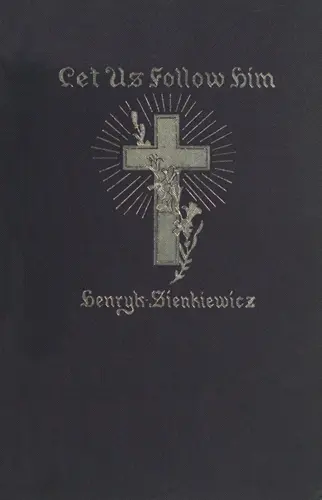
Henryk Sienkiewicz
BEHIND THE BOOK
This eBook is for the use of anyone anywhere in the United States and most other parts of the world at no cost and with almost no restrictions whatsoever. You may copy it, give it away or re-use it under the terms of the Project Gutenberg License included with this eBook or online at www.gutenberg.org. If you are not located in the United States, you will have to check the laws of the country where you are located before using this eBook. Read the source licence.
The original source file, including credits and licence, is retained by this library. Request an original-format copy at no charge. Please include the book title and Project Gutenberg identifier #44939.
KEEP YOUR CURIOSITY GOING
Coulson Kernahan

Maurice Baring
Frances Wright
Cécile Tormay

Frederic Jesup Stimson

W. H. P. (William Henry Pope) Jarvis