
Through the Desert
Henryk Sienkiewicz
THE CLASSIC COLLECTION · 1895
"Children of the Soil" by Henryk Sienkiewicz is a novel written in the late 19th century. It delves into Polish life and societal dynamics, primarily focusing on its main character, Pan Stanislav Polanyetski, as he navigates family ties, financial obligations, and the intricacies of rural relationships. The narrative promises a blend of personal conflict and broader cultural insights, set against the backdrop of a changing Poland. The opening of the novel introduces Pan Stanislav returning to the village of Kremen after years abroad, evoking childhood memories and establishing a connection to his past. As he arrives, he encounters Panna Marynia Plavitski, the daughter of the estate's owner, and they engage in a tentative conversation laden with subtext regarding his visit's true purpose: to collect a debt from her father. This tension sets the stage for both a potential romantic connection and conflict, as Stanislav grapples with feelings for Marynia while confronting the financial demands on their relationship, suggesting a deeper exploration of familial duty versus personal desire moving forward.
Introduction adapted from the source catalogue; source summaries may be automatically generated.
Free to read · English · 262,923 words · No account needed
MAKE TIME FOR A GOOD BOOK
On by default. Untick to stop anonymous reading totals. Each page counts after 10 seconds in view. How this works.
Anonymous counting is on unless you have switched it off.
"You are right, perfectly right," said Osnovski. And he sat down at the
writing-desk.
"Irony of life, irony of life!" thought Pan Stanislav; "bloody irony is this which has met Pan Ignas. What is such a person as Panna Castelli, with her bearing of a swan, and her instincts of a chambermaid,--that 'chosen of God,' as Vaskovski said only yesterday? What is Pani Bronich, and Osnovski, with faith in his wife, and the nervous attacks of that wife, caused by the mere contact with evil, of such a pure soul, and the indignation of Pani Mashko? Nothing but a ridiculous human comedy, in which some are deceiving others, and others deceiving themselves; nothing but deceived and deceivers; nothing but mistakes, blindness, and errors, and lies of life, and victims of error, victims of deceit, victims of illusions; a complication without issue; a ridiculous, farcical, and desperate irony, covering the feelings, the passions, and hopes of people, just as snow covers fields in winter--and that is life."
These thoughts were for Pan Stanislav more grievous because, rising on a basis purely personal, they became at once a kind of reckoning with his conscience. He was enough of an egoist to refer everything to himself; and he was not fool enough not to see that in that most ironical human comedy he was playing a rôle immensely abject. His position was of that sort that he wished with all the power of his breath to hiss that Panna Castelli; and still he understood that if there was any one who was not free to judge her, it was he. In what was he better? In what was he less vile? She had betrayed a man for a fool; he had betrayed his wife for a brainless puppet. She had followed her instincts of a milliner; he had followed his instincts of an ape. But she had trampled on artificial phrases merely, with which she deceived herself and others; he had trampled on principles. She had betrayed confidence, and broken her word; he had betrayed confidence also, and broken more than a word,--he had broken an oath. And in view of this what can he say? Has he the right to condemn her? If there is no way to justify her, if he is ready to acknowledge that it would be unjust and deserving of indignation for a person like her to become the wife of Pan Ignas, with what right is he the husband of Marynia? If he can find even one word of condemnation for Panna Castelli,--and it is impossible not to find it,--and he wishes to be consistent, he should separate from Marynia, which he will never have either the will or the power to do. There is a vicious circle for you. Pan Stanislav had passed many bitter moments because of his success; but this moment was so grievous that it even filled him with amazement. By degrees it became simply a torture. At last, through the simple instinct of self-preservation, he began to seek for something to give him even momentary relief. But in vain did he say to himself that such people as Kopovski would not have taken his position to heart so. That was the same consolation to him as if he had thought that a cat or a horse would not have taken it to heart so either. In vain he remembered the words of Balzac: "Infidelity, when undiscovered, is nothing; when discovered, it is a trifle." "That's a lie," repeated he, gritting his teeth, "a pleasant nothing, which burns so!" He understood, it is true, that behind the fact itself there may be something which heightens or lessens its criminality; and he understood also that in his case all the circumstances are of a kind to make the fault immense and unpardonable. "Here," thought he, "it takes from me the right of judging, the right of serving with may conscience. Those women sacrificed a man of the loftier kind for an idiot; they trampled him; they pushed him into misfortune, into tragedy, which may break him; they did this in a mean and abject manner, and I cannot, even in my soul, brand such a woman as Panna Castelli." And never before had the truth become to him so nearly tangible that as a man for certain crimes is deprived of a share in public life, so he now had become deprived of a share in moral life. He had had remorse enough already, but now he saw still new desolations, which he had not noted at first. The more he thought over the tragedy of Pan Ignas, and took in its extent with growing clearness, the more he was seized by a dull alarm, and a kind of prescience that in virtue of a higher and mysterious logic, something terrible must happen in his fate as well. For the man who bears in his system the germs of mortal disease, death is a question of time simply.
Your reading position is saved on this browser. Take it to another device with a library code. Reading pages adapt to text, rather than matching a printed edition.
Henryk Sienkiewicz

Henryk Sienkiewicz

Henryk Sienkiewicz
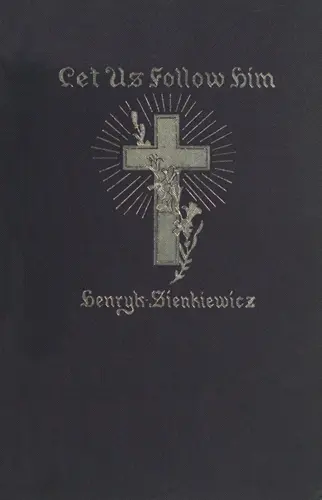
Henryk Sienkiewicz
BEHIND THE BOOK
This eBook is for the use of anyone anywhere in the United States and most other parts of the world at no cost and with almost no restrictions whatsoever. You may copy it, give it away or re-use it under the terms of the Project Gutenberg License included with this eBook or online at www.gutenberg.org. If you are not located in the United States, you will have to check the laws of the country where you are located before using this eBook. Read the source licence.
The original source file, including credits and licence, is retained by this library. Request an original-format copy at no charge. Please include the book title and Project Gutenberg identifier #44939.
KEEP YOUR CURIOSITY GOING
Coulson Kernahan

Maurice Baring
Frances Wright
Cécile Tormay

Frederic Jesup Stimson

W. H. P. (William Henry Pope) Jarvis