
Through the Desert
Henryk Sienkiewicz
THE CLASSIC COLLECTION · 1895
"Children of the Soil" by Henryk Sienkiewicz is a novel written in the late 19th century. It delves into Polish life and societal dynamics, primarily focusing on its main character, Pan Stanislav Polanyetski, as he navigates family ties, financial obligations, and the intricacies of rural relationships. The narrative promises a blend of personal conflict and broader cultural insights, set against the backdrop of a changing Poland. The opening of the novel introduces Pan Stanislav returning to the village of Kremen after years abroad, evoking childhood memories and establishing a connection to his past. As he arrives, he encounters Panna Marynia Plavitski, the daughter of the estate's owner, and they engage in a tentative conversation laden with subtext regarding his visit's true purpose: to collect a debt from her father. This tension sets the stage for both a potential romantic connection and conflict, as Stanislav grapples with feelings for Marynia while confronting the financial demands on their relationship, suggesting a deeper exploration of familial duty versus personal desire moving forward.
Introduction adapted from the source catalogue; source summaries may be automatically generated.
Free to read · English · 262,923 words · No account needed
MAKE TIME FOR A GOOD BOOK
On by default. Untick to stop anonymous reading totals. Each page counts after 10 seconds in view. How this works.
Anonymous counting is on unless you have switched it off.
Pani Aneta was amused to perfection; but it became disagreeable to Osnovski that he had raised in his own house reminiscences which were not agreeable to Pani Bronich, hence he added,--
"But why all our talk? Aunt knows how I have always loved Nitechka, and how from the core of my heart I wished her to be worthy of Ignas."
But this was pouring oil on the flames, for Pani Bronich, hearing this blasphemy, lost the last of her cool blood, and exclaimed,--
"Nitechka worthy of Ignas? Such a--"
Happily the entrance of Pani Mashko interrupted further conversation. Aunt Bronich was silent, as if indignation had stopped the words in her mouth; Pani Aneta began to inquire of Pani Mashko what the rest of the company were doing, and where she had left them.
"Pan Kopovski, Lineta, and Stefania remained in the conservatory," answered Pani Mashko; "the two ladies are painting orchids, and Pan Kopovski amused us."
"How?" asked Osnovski.
"With conversation; we laughed heartily. He told us that his acquaintance, Pan Vyj, who very likely is a great man at heraldry, told him in all seriousness that there is a family in Poland with the escutcheon, 'Table legs.'"
"If there is one," muttered Osnovski, humorously, "it is the family of the Kopovskis, beyond doubt."
"And did Steftsia remain, too, in the conservatory?" asked Pani Aneta.
"Yes; they are sketching together."
"Dost wish to go to them?"
"Let us go."
But at that moment the servant brought letters, which Pan Osnovski looked over, and delivered. "For Anetka, for Anetka!" said he; "this little literary woman has an enormous correspondence always. For you," added he, turning to Pani Mashko; "for aunt; and this is for Steftsia,--somehow a known hand, quite familiar. The ladies will permit me to carry her this letter."
"Of course; go," said Pani Aneta, with animation; "and we will read
ours."
Osnovski took the letter and went in the direction of the conservatory, looking at it, and repeating, "Whence do I know this hand?--as if--I know that I have seen this hand."
In the conservatory he found three young people, sitting under a great arum at a yellow iron table, on which the orchid was standing. Both ladies were painting it in albums. Kopovski, a little behind them, dressed in a white-flannel costume and black stockings, was looking over the shoulders of the young ladies into the albums, smoking meanwhile a slender cigarette, which he had taken from an elegant cigarette-case lying near the flower-pot.
Your reading position is saved on this browser. Take it to another device with a library code. Reading pages adapt to text, rather than matching a printed edition.
Henryk Sienkiewicz

Henryk Sienkiewicz

Henryk Sienkiewicz
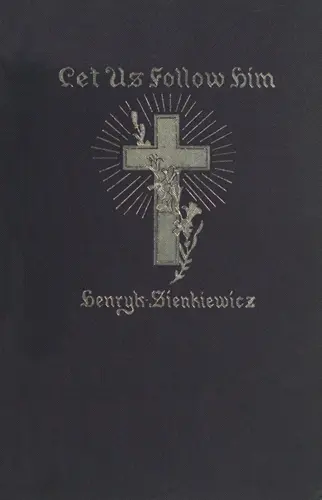
Henryk Sienkiewicz
BEHIND THE BOOK
This eBook is for the use of anyone anywhere in the United States and most other parts of the world at no cost and with almost no restrictions whatsoever. You may copy it, give it away or re-use it under the terms of the Project Gutenberg License included with this eBook or online at www.gutenberg.org. If you are not located in the United States, you will have to check the laws of the country where you are located before using this eBook. Read the source licence.
The original source file, including credits and licence, is retained by this library. Request an original-format copy at no charge. Please include the book title and Project Gutenberg identifier #44939.
KEEP YOUR CURIOSITY GOING
Coulson Kernahan

Maurice Baring
Frances Wright
Cécile Tormay

Frederic Jesup Stimson

W. H. P. (William Henry Pope) Jarvis