
Through the Desert
Henryk Sienkiewicz
THE CLASSIC COLLECTION · 1895
"Children of the Soil" by Henryk Sienkiewicz is a novel written in the late 19th century. It delves into Polish life and societal dynamics, primarily focusing on its main character, Pan Stanislav Polanyetski, as he navigates family ties, financial obligations, and the intricacies of rural relationships. The narrative promises a blend of personal conflict and broader cultural insights, set against the backdrop of a changing Poland. The opening of the novel introduces Pan Stanislav returning to the village of Kremen after years abroad, evoking childhood memories and establishing a connection to his past. As he arrives, he encounters Panna Marynia Plavitski, the daughter of the estate's owner, and they engage in a tentative conversation laden with subtext regarding his visit's true purpose: to collect a debt from her father. This tension sets the stage for both a potential romantic connection and conflict, as Stanislav grapples with feelings for Marynia while confronting the financial demands on their relationship, suggesting a deeper exploration of familial duty versus personal desire moving forward.
Introduction adapted from the source catalogue; source summaries may be automatically generated.
Free to read · English · 262,923 words · No account needed
MAKE TIME FOR A GOOD BOOK
On by default. Untick to stop anonymous reading totals. Each page counts after 10 seconds in view. How this works.
Anonymous counting is on unless you have switched it off.
And the whole affair was so turned by Pani Aneta that Pan Ignas and Castelka descended to the second place, but in the first appeared the cruelty and malice of Yozio. Osnovski, however, began to justify himself, and, opening his arms, said,--
"Anetka! How canst thou even suppose that I wanted to do anything disagreeable to thee? I know, besides, how honest and cordial thy wishes were; but terror takes hold of me when I think of the future of Ignas, for I love him. I should wish from the soul of my heart that God had given him such a person as thou art. My dearest little bird, thou knowest that I would rather lose my tongue than say one bitter thing to thee. I came to thee so just to talk and take counsel, for I know that in that dear head of thine there is always some cure for everything."
When he had said this, he began to kiss her hands and then her arms and face with great affection, and with increasing enthusiasm; but she turned her head aside, twisting away from his kisses, and saying,--
"Ah, how Yozio is sweating!"
He was, in fact, almost always in perspiration, for he played whole days at tennis, raced on horseback, rowed, wandered through fields and forests, to grow thin as far as was possible.
"Only tell me that thou art not angry," said he, dropping her hand, and looking into her eyes tenderly.
"Well, I am not; but what help can I give? Let them go as quickly as possible to Scheveningen, and let Kopovski stay here with Steftsia."
"See, thou hast found a plan. Let them go at the beginning of August. But hast thou noticed that somehow Steftsia is not very--somehow Kopovski has not pleased her heart so far?"
"Steftsia is secretive as few are. Yozio doesn't know women."
"Thou art right surely in that. But I even see that she doesn't like Castelka. Maybe, also, she is angry in her heart with Kopovski, too."
"What!" inquired Aneta, with animation, "has Yozio seen anything with
reference to Castelka?
"Koposio laughs at her, for he has good teeth; but if I should see anything, he wouldn't be in Prytulov. Maybe, too, Castelka is coquetting with him, because such is her nature--without knowing it. That itself is bad, but that it should go as far as looking at each other seriously, I don't believe.
"But it is necessary to examine Koposio as to Steftsia. Knowest what, Yozio? I will go this very day with him on horseback to Lesnichovka, and I will talk with him rather seriously. Go thou in another direction!"
Your reading position is saved on this browser. Take it to another device with a library code. Reading pages adapt to text, rather than matching a printed edition.
Henryk Sienkiewicz

Henryk Sienkiewicz

Henryk Sienkiewicz
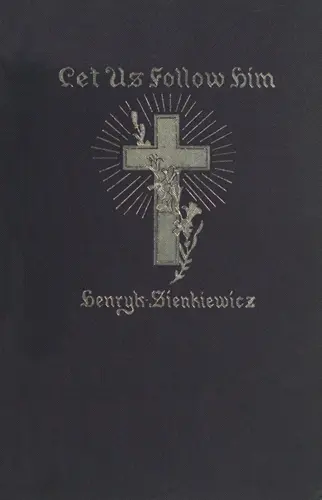
Henryk Sienkiewicz
BEHIND THE BOOK
This eBook is for the use of anyone anywhere in the United States and most other parts of the world at no cost and with almost no restrictions whatsoever. You may copy it, give it away or re-use it under the terms of the Project Gutenberg License included with this eBook or online at www.gutenberg.org. If you are not located in the United States, you will have to check the laws of the country where you are located before using this eBook. Read the source licence.
The original source file, including credits and licence, is retained by this library. Request an original-format copy at no charge. Please include the book title and Project Gutenberg identifier #44939.
KEEP YOUR CURIOSITY GOING
Coulson Kernahan

Maurice Baring
Frances Wright
Cécile Tormay

Frederic Jesup Stimson

W. H. P. (William Henry Pope) Jarvis