
Through the Desert
Henryk Sienkiewicz
THE CLASSIC COLLECTION · 1895
"Children of the Soil" by Henryk Sienkiewicz is a novel written in the late 19th century. It delves into Polish life and societal dynamics, primarily focusing on its main character, Pan Stanislav Polanyetski, as he navigates family ties, financial obligations, and the intricacies of rural relationships. The narrative promises a blend of personal conflict and broader cultural insights, set against the backdrop of a changing Poland. The opening of the novel introduces Pan Stanislav returning to the village of Kremen after years abroad, evoking childhood memories and establishing a connection to his past. As he arrives, he encounters Panna Marynia Plavitski, the daughter of the estate's owner, and they engage in a tentative conversation laden with subtext regarding his visit's true purpose: to collect a debt from her father. This tension sets the stage for both a potential romantic connection and conflict, as Stanislav grapples with feelings for Marynia while confronting the financial demands on their relationship, suggesting a deeper exploration of familial duty versus personal desire moving forward.
Introduction adapted from the source catalogue; source summaries may be automatically generated.
Free to read · English · 262,923 words · No account needed
MAKE TIME FOR A GOOD BOOK
On by default. Untick to stop anonymous reading totals. Each page counts after 10 seconds in view. How this works.
Anonymous counting is on unless you have switched it off.
Not all eyes, however, looked at this amusement of hers in that way, and, above all, Pani Aneta looked at it differently; from time to time she told her husband directly that Castelli was coquetting with Kopovski; to "Yozio" himself this seemed at times to be true, and he had the wish to send Kopovski away from Prytulov politely. This Pani Aneta would not permit: "Since he is paying attention to Steftsia, we have no right to hinder that poor girl's fortune." Osnovski was sorry to lose that dear Steftsia on Kopovski; but since, in fact, she had no property, and since Aneta wished the match, he would not oppose it.
But he was not able to control himself from astonishment and indignation at Castelka: "To have such a man as Ignas, and coquet with such a fool; to act so, a woman must be a soulless puppet surely." At first he could not understand it. On the hypothesis, however, that Aneta must have been mistaken, he began to observe the young lady diligently; and since, aside from his personal relation to his wife, he was not by any means dull-witted, he saw a number of things which, in view of his friendship for Pan Ignas, disquieted him greatly. He did not admit, it is true, that anything might take place to change the position; but he asked himself what Ignas's future would be with a woman who knew so little how to value him, and who was so slightly developed morally that she not only found pleasure in the society of such a brainless fop, but allowed herself to turn his head, and allure him.
"Anetka judges others by herself," thought Osnovski, "and has really deceived herself, ascribing certain deep feelings to Castelka. Castelka is a puppet; and, if spirits like Anetka and Ignas do not come, nothing rouses her." In this way that unfortunate man, affected with the daltonism of love, while discovering truth on one side, fell into greater and greater error on the other. On "Castelka," therefore, he looked more justly every day, and needed no excessive effort to convince himself that in the relations of that "ideal" "Nitechka" with Kopovski there were jests, it is true, there was much contradiction, teasing, even ridicule; but there was also such an irresistible weakness, and such an attraction, as women with the souls of milliners have for nice and nicely dressed young men. The phenomenal stupidity of Kopovski seemed to increase in country air; but as a recompense the sun gilded his delicate complexion, through which his eyes became more expressive, his teeth whiter, while the beard on his face was lighter, and gleamed like silk. Indeed, brightness shone not only from his youth and beauty, but also from his linen, from his neckties, from his exquisite and simple costumes. In the morning, dressed for lawn-tennis, in English flannel, he had in him the freshness of morning and the dreaminess of sleep. His slender, finished form appeared as if fondlingly through the soft cloth; and how could that bony Pan Ignas, with his insolent Wagner jaw and his long legs, be compared, in the eyes of those ladies, with that "mignon" who called to mind at once the gods of Greece and the fashion sheets, the glyptotheks of Italy and the table d'hôtes of Biarritz or Ostend. One should be such an original as that still-water Steftsia to insist, unless from malice, that he was an insufferable puppet. Castelka, it is true, laughed when Svirski said that Kopovski, especially when some question was put to him on a sudden, had an expression in which were evident the sixteen "quarterings" of stupidity in his escutcheon, both on the male and female side. In truth, he had a somewhat absent look, and, in general, could not understand at first what people said to him. But he was so joyous, he seemed so good-natured, and, in spite of a way of thinking which was not over elevated, he was so well-bred, beautiful, and fresh that everything might be forgiven him.
Your reading position is saved on this browser. Take it to another device with a library code. Reading pages adapt to text, rather than matching a printed edition.
Henryk Sienkiewicz

Henryk Sienkiewicz

Henryk Sienkiewicz
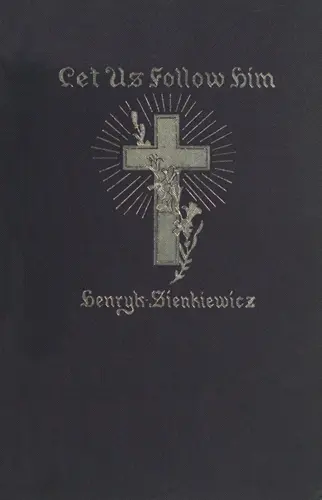
Henryk Sienkiewicz
BEHIND THE BOOK
This eBook is for the use of anyone anywhere in the United States and most other parts of the world at no cost and with almost no restrictions whatsoever. You may copy it, give it away or re-use it under the terms of the Project Gutenberg License included with this eBook or online at www.gutenberg.org. If you are not located in the United States, you will have to check the laws of the country where you are located before using this eBook. Read the source licence.
The original source file, including credits and licence, is retained by this library. Request an original-format copy at no charge. Please include the book title and Project Gutenberg identifier #44939.
KEEP YOUR CURIOSITY GOING
Coulson Kernahan

Maurice Baring
Frances Wright
Cécile Tormay

Frederic Jesup Stimson

W. H. P. (William Henry Pope) Jarvis