
Through the Desert
Henryk Sienkiewicz
THE CLASSIC COLLECTION · 1895
"Children of the Soil" by Henryk Sienkiewicz is a novel written in the late 19th century. It delves into Polish life and societal dynamics, primarily focusing on its main character, Pan Stanislav Polanyetski, as he navigates family ties, financial obligations, and the intricacies of rural relationships. The narrative promises a blend of personal conflict and broader cultural insights, set against the backdrop of a changing Poland. The opening of the novel introduces Pan Stanislav returning to the village of Kremen after years abroad, evoking childhood memories and establishing a connection to his past. As he arrives, he encounters Panna Marynia Plavitski, the daughter of the estate's owner, and they engage in a tentative conversation laden with subtext regarding his visit's true purpose: to collect a debt from her father. This tension sets the stage for both a potential romantic connection and conflict, as Stanislav grapples with feelings for Marynia while confronting the financial demands on their relationship, suggesting a deeper exploration of familial duty versus personal desire moving forward.
Introduction adapted from the source catalogue; source summaries may be automatically generated.
Free to read · English · 262,923 words · No account needed
MAKE TIME FOR A GOOD BOOK
On by default. Untick to stop anonymous reading totals. Each page counts after 10 seconds in view. How this works.
Anonymous counting is on unless you have switched it off.
Those present began to greet Pani Mashko; and she, ruddy from the walk, fell to explaining joyously, while removing her hat from her ash-colored hair, that really Pan Plavitski had brought her away almost by force; for, awaiting the return of her husband, she did not like to leave home. Pan Plavitski pacified her by saying that her husband, not finding her at home, would guess where she was, and for the flight and the lonely walk he would not be angry, for that was not the city, where people raise scandal for any cause (here he smoothed his white shirt-front with the mien of a man who would not be at all astonished if scandal were roused touching him); "but the country has its own rights, and permits us to disregard etiquette."
When he had said this, he looked slyly at Pani Mashko, rubbed his
hands, and added,--
"Ha, ha! the country has its rights; I said well, has its rights, and so there is no place for me like the country."
Pani Mashko laughed, feeling that the laugh was becoming, and that some one might admire her. But Bigiel, who, being himself a strict reasoner, demanded logic from all, turned to Plavitski, and said,--
"If there is no place like the country, why do you not move out of the
city in summer?"
"How do you say?" asked Plavitski. "Why do I not move out? Because in the city, on one side of the street there is sun, and on the other shade. If I wish to warm myself, I walk in the sun; if it is hot for me, I walk in the shade. There is no place in summer like the city. I wanted to go to Karlsbad, but--"
Here he was silent for a moment; and, remembering only then that what he was giving to understand might expose a young woman to the evil tongues of people, he looked with a gloomy resignation on those present, and added,--
"Is it worth while to think of that pair of years left of any life, that are of no value to me, or to any one?"
"Here it is!" cried Marynia. "If papa will not go to Karlsbad, he will drink Millbrun with us in Buchynek."
"In what Buchynek?" asked Plavitski.
"True, we must announce la grande nouvelle."
And she began to tell that Buchynek had been found and rented and probably would be bought; and that in three days she and her husband would move into that Buchynek for the whole summer.
Pani Mashko, hearing the narrative, raised her eyes to Pan Stanislav in
wonder, and inquired,--
Your reading position is saved on this browser. Take it to another device with a library code. Reading pages adapt to text, rather than matching a printed edition.
Henryk Sienkiewicz

Henryk Sienkiewicz

Henryk Sienkiewicz
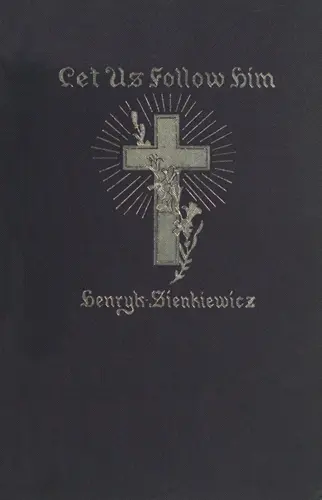
Henryk Sienkiewicz
BEHIND THE BOOK
This eBook is for the use of anyone anywhere in the United States and most other parts of the world at no cost and with almost no restrictions whatsoever. You may copy it, give it away or re-use it under the terms of the Project Gutenberg License included with this eBook or online at www.gutenberg.org. If you are not located in the United States, you will have to check the laws of the country where you are located before using this eBook. Read the source licence.
The original source file, including credits and licence, is retained by this library. Request an original-format copy at no charge. Please include the book title and Project Gutenberg identifier #44939.
KEEP YOUR CURIOSITY GOING
Coulson Kernahan

Maurice Baring
Frances Wright
Cécile Tormay

Frederic Jesup Stimson

W. H. P. (William Henry Pope) Jarvis