
Through the Desert
Henryk Sienkiewicz
THE CLASSIC COLLECTION · 1895
"Children of the Soil" by Henryk Sienkiewicz is a novel written in the late 19th century. It delves into Polish life and societal dynamics, primarily focusing on its main character, Pan Stanislav Polanyetski, as he navigates family ties, financial obligations, and the intricacies of rural relationships. The narrative promises a blend of personal conflict and broader cultural insights, set against the backdrop of a changing Poland. The opening of the novel introduces Pan Stanislav returning to the village of Kremen after years abroad, evoking childhood memories and establishing a connection to his past. As he arrives, he encounters Panna Marynia Plavitski, the daughter of the estate's owner, and they engage in a tentative conversation laden with subtext regarding his visit's true purpose: to collect a debt from her father. This tension sets the stage for both a potential romantic connection and conflict, as Stanislav grapples with feelings for Marynia while confronting the financial demands on their relationship, suggesting a deeper exploration of familial duty versus personal desire moving forward.
Introduction adapted from the source catalogue; source summaries may be automatically generated.
Free to read · English · 262,923 words · No account needed
MAKE TIME FOR A GOOD BOOK
On by default. Untick to stop anonymous reading totals. Each page counts after 10 seconds in view. How this works.
Anonymous counting is on unless you have switched it off.
Meanwhile Svirski talked on. "There is no breeze," said he; "not a twig in motion. A genuine summer day! Have you noticed that in the season of heat, and in time of such calm, the whole world seems as if sunk in meditation. I remember that Bukatski found always in this something mystical, and said that he would like to die on such a sunny day,--to sit thus in an armchair, then fall asleep, and dissipate into light."
"Still, he did not die in summer," remarked Bigiel.
"No, but in spring, and in good weather. Besides, taking things in general, he did not suffer, and that is beyond all."
Here he was silent a while, and then added,--
"As to death, we may and should be reconciled to it, and death has never made me indignant; but why pain exists, that, as God lives, passes human understanding."
No one took up the consideration, so Svirski, shaking the ashes from
his cigar, said,--
"But never mind that. After dinner, and with black coffee, it is possible to find a more agreeable subject."
"Tell us of Pan Ignas," said Pani Bigiel.
"He pleases me. In all that he does and says the lion's claw is evident, and, in general, his nature is uncommon, immensely vital. During those two days in Prytulov we became acquainted a little more nearly, and grew friendly. You have no idea how Osnovski has grown to like the man; and I told Osnovski openly that I feared that Pan Ignas might not be happy with those ladies."
"But why?" asked Marynia.
"That is difficult to say, since one has no facts; but it is felt. Why? Because his nature is utterly different from theirs. You see, that all the loftier aspirations, which for Pan Ignas are the soul of his life, are for those ladies merely an ornament,--something like lace on a dress worn for guests, while on common days the person who owns it goes about in a dressing-gown; and that is a great difference. I fear lest they, instead of soaring with his flight, try to make him jog along by their side, at their own little goose-trot, and convert that which is in him into small change for their every-day social out-go. And there is something in him! I do not presuppose that catastrophes of any kind are to come, for I have not the right to refuse them ordinary petty honesty, but there may be non-happiness. I say only this much: you all know Pan Ignas, and you know that he is wonderfully simple; but still, according to me, his love for Castelka is too difficult and exclusive. He puts into it all his soul; and she is ready to give a little bit--so! The rest she would like to keep for social relations, for comforts, for toilets, for visits, for luxuries, for five o'clocks, for lawn-tennis with Kopovski,--in a word, for that mill in which life is ground into bran."
Your reading position is saved on this browser. Take it to another device with a library code. Reading pages adapt to text, rather than matching a printed edition.
Henryk Sienkiewicz

Henryk Sienkiewicz

Henryk Sienkiewicz
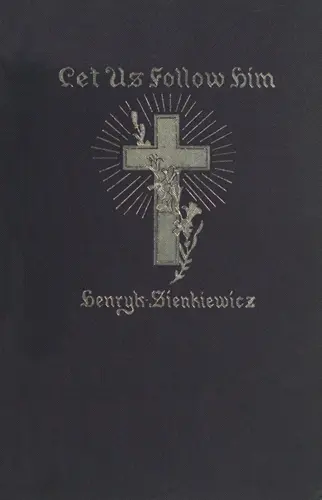
Henryk Sienkiewicz
BEHIND THE BOOK
This eBook is for the use of anyone anywhere in the United States and most other parts of the world at no cost and with almost no restrictions whatsoever. You may copy it, give it away or re-use it under the terms of the Project Gutenberg License included with this eBook or online at www.gutenberg.org. If you are not located in the United States, you will have to check the laws of the country where you are located before using this eBook. Read the source licence.
The original source file, including credits and licence, is retained by this library. Request an original-format copy at no charge. Please include the book title and Project Gutenberg identifier #44939.
KEEP YOUR CURIOSITY GOING
Coulson Kernahan

Maurice Baring
Frances Wright
Cécile Tormay

Frederic Jesup Stimson

W. H. P. (William Henry Pope) Jarvis