
Through the Desert
Henryk Sienkiewicz
THE CLASSIC COLLECTION · 1895
"Children of the Soil" by Henryk Sienkiewicz is a novel written in the late 19th century. It delves into Polish life and societal dynamics, primarily focusing on its main character, Pan Stanislav Polanyetski, as he navigates family ties, financial obligations, and the intricacies of rural relationships. The narrative promises a blend of personal conflict and broader cultural insights, set against the backdrop of a changing Poland. The opening of the novel introduces Pan Stanislav returning to the village of Kremen after years abroad, evoking childhood memories and establishing a connection to his past. As he arrives, he encounters Panna Marynia Plavitski, the daughter of the estate's owner, and they engage in a tentative conversation laden with subtext regarding his visit's true purpose: to collect a debt from her father. This tension sets the stage for both a potential romantic connection and conflict, as Stanislav grapples with feelings for Marynia while confronting the financial demands on their relationship, suggesting a deeper exploration of familial duty versus personal desire moving forward.
Introduction adapted from the source catalogue; source summaries may be automatically generated.
Free to read · English · 262,923 words · No account needed
MAKE TIME FOR A GOOD BOOK
On by default. Untick to stop anonymous reading totals. Each page counts after 10 seconds in view. How this works.
Anonymous counting is on unless you have switched it off.
One of these he committed right there, kneeling down to the prayer, which Marynia repeated aloud. He could not avoid saying it; and in saying it, he merely played a pitiful comedy, for he could not pray.
After the prayer was finished and a second good-night given, he could not sleep. It seemed to him that, when coming from Mashko's, he had embraced with his mind his action and all its moral consequences. Meanwhile it turned out that he had not. It came to his head now that it is possible not to believe in God, but not permitted to make sport of Him. To commit, for example, a perfidy, to return home to-morrow, or the following day, after having committed adultery, and kneel down to prayer, that would be too much. He felt that it was necessary to choose either religious feeling and sincere faith, or Pani Mashko. To reconcile these was not possible. And all at once he saw that everything which he had worked out and elaborated in himself purposely for years, that all that immense calm, resulting from the solution of life's chief enigma,--in a word, that which composed the essence of his spiritual existence,--must be rejected outright. On the other hand, he understood equally well that, from to-morrow forward, he must give the lie to his own social principles, to his recognition of the family as the basis of social existence. It is not permitted to proclaim such principles, and seduce other men's wives in secret. It was necessary to choose here too. As to Marynia, perfidy against her had been committed already. With one sweep, then, his relations with God, with society, with his wife, had gone to ruin; the ceiling of that spiritual house, reared with great labor, and in which he had been dwelling, had tumbled on his head. And that chilling cold of evil filled him with wonder. He had not expected that, on cutting a single thread, the whole fabric would unravel so quickly; and with astonishment he asked himself how there can exist in the world opportunism of that kind, which reconciles faith-breaking in life with honesty and honor? For that is what is done. He knew many so-called decent people, married men, loving their wives, as it were, religious,--and at the same time pursuing every woman they met. These same men, who would account to their wives every deviation from duty as a crime, permitted themselves conjugal infidelity without a scruple. He remembered how one of his acquaintances, pushed to the wall on this point, wriggled out humorously with the well-known street witticism that he was not a Swedish match. Absolute infidelity was obliterated, and among men passed as something permitted, almost customary. That thought brought Pan Stanislav a moment of consolation, but a short one, for he was consistent, if not in his actions, at least in his reasoning. True! The world is not composed of thieves and hypocrites alone, but in great part of thoughtless and frivolous people; and this opportunism, reconciling adultery with honor and honesty, is nothing else than frivolity. For in what can custom excuse a man, who recognizes the immorality and stupidity of that custom? For a fool, infidelity may be a joke, thought Pan Stanislav; for a man who thinks seriously, it is scoundrelism, as much opposed to ethics as a crime, as the signing of other men's names to notes, as the breaking of an oath, as the breaking of a word, as swindling in trade, or in cards. Religion may forgive the sin of adultery as a momentary fall; but adultery which excuses itself beforehand, excludes religion, excludes society, excludes honesty, excludes honor. Pan Stanislav, who, in his reasonings with himself, was always consistent and in general utterly unsparing, did not withdraw before this last induction. But he was frightened when he saw the precipice. If he did not withdraw, he would break his neck; but at the same time he began to fret at his own weakness. He knew himself well enough, with sorrow and with contempt also for his own weakness; he knew in advance that when he should see Pani Mashko, the human beast would get the upper hand of his soul. To withdraw? But he had repeated that to himself, and determined it after every temptation; and afterward, in presence of each succeeding one, passion had run away with his will at breakneck speed, just as a wild horse runs away with a rider. At the very remembrance of this he wanted to curse. If he had been unhappy at home, if his passion had grown up on the ground of great love, he would have had some excuse for it; but he did not love Pani Mashko,--he only desired her. He could never give himself an account of this dualism in the nature of man,--he knew only that he desired and would desire after every meeting, after every thought of her.
Your reading position is saved on this browser. Take it to another device with a library code. Reading pages adapt to text, rather than matching a printed edition.
Henryk Sienkiewicz

Henryk Sienkiewicz

Henryk Sienkiewicz
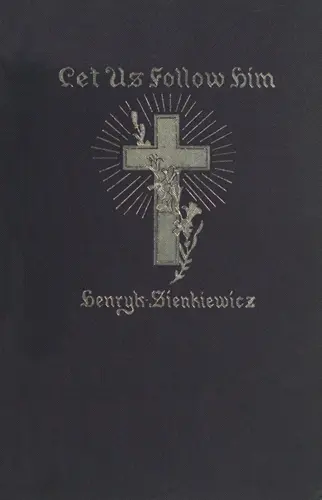
Henryk Sienkiewicz
BEHIND THE BOOK
This eBook is for the use of anyone anywhere in the United States and most other parts of the world at no cost and with almost no restrictions whatsoever. You may copy it, give it away or re-use it under the terms of the Project Gutenberg License included with this eBook or online at www.gutenberg.org. If you are not located in the United States, you will have to check the laws of the country where you are located before using this eBook. Read the source licence.
The original source file, including credits and licence, is retained by this library. Request an original-format copy at no charge. Please include the book title and Project Gutenberg identifier #44939.
KEEP YOUR CURIOSITY GOING
Coulson Kernahan

Maurice Baring
Frances Wright
Cécile Tormay

Frederic Jesup Stimson

W. H. P. (William Henry Pope) Jarvis