
Through the Desert
Henryk Sienkiewicz
THE CLASSIC COLLECTION · 1895
"Children of the Soil" by Henryk Sienkiewicz is a novel written in the late 19th century. It delves into Polish life and societal dynamics, primarily focusing on its main character, Pan Stanislav Polanyetski, as he navigates family ties, financial obligations, and the intricacies of rural relationships. The narrative promises a blend of personal conflict and broader cultural insights, set against the backdrop of a changing Poland. The opening of the novel introduces Pan Stanislav returning to the village of Kremen after years abroad, evoking childhood memories and establishing a connection to his past. As he arrives, he encounters Panna Marynia Plavitski, the daughter of the estate's owner, and they engage in a tentative conversation laden with subtext regarding his visit's true purpose: to collect a debt from her father. This tension sets the stage for both a potential romantic connection and conflict, as Stanislav grapples with feelings for Marynia while confronting the financial demands on their relationship, suggesting a deeper exploration of familial duty versus personal desire moving forward.
Introduction adapted from the source catalogue; source summaries may be automatically generated.
Free to read · English · 262,923 words · No account needed
MAKE TIME FOR A GOOD BOOK
On by default. Untick to stop anonymous reading totals. Each page counts after 10 seconds in view. How this works.
Anonymous counting is on unless you have switched it off.
But the visit was not to end successfully. Panna Zavilovski, a person of thirty years, good-looking, but, as it were, untimely faded and gloomy, wishing to take some part in the conversation, began to inquire of her "cousin" whom he knew, and where he visited. To every name mentioned, the old noble appended, in one or two words, his opinion. At mention of Pan Stanislav, he said, "Good blood!" at Bigiel's, he inquired, "How?" and when the name was repeated, he said, "Connais pas;" Pani Aneta he outlined with the phrase, "Crested lark!" at mention of Pani Bronich he muttered, "Babbler;" at last, when the young man named, with a certain confusion, Panna Castelli, the noble, whose leg twitched evidently at that moment, twisted his face terribly, and exclaimed, "Ei! a Venetian half-devil!"
At this, it grew dark in the eyes of Pan Ignas, who, notwithstanding his shyness, was impulsive; his lower jaw came forward more than ever, and, rising, he measured with a glance the old man from his aching foot to his crown, and said,--
"You have a way of giving sharp judgments, which does not suit me; therefore it is pleasant to take farewell."
And, bowing, he took his hat and departed.
Old Pan Zavilovski, who permitted himself everything, and to whom everything was forgiven, looked at his daughter some time with amazement, and only after long silence exclaimed,--
"What! has he gone mad?"
The young man did not tell Pani Bronich what had happened. He said merely that he had made a visit, and that father and daughter alike did not please him. She learned everything, however, from the old man himself, who, for that matter, did not call Lineta anything but "Venetian half-devil," even to her eyes.
"But to make the matter perfect, you have sent me a full devil," said he; "it is well that he did not break my head."
Still in his voice one might note a species of satisfaction that it was a Zavilovski who had shown himself so resolute; but Pani Bronich did not note it. She took the affair somewhat to heart, and, to the great astonishment of the "full-devil," said to him,--
"He is wild about Lineta, and with him this is a sort of term of tenderness; besides, one should forgive a man much who has such a position, and in this age. It must be that you haven't read Krashevski's novel, 'Venetian Half-Devil.' This is a title in which there is a certain poetry ever since that author used it. When the old man grows good-natured, write him a couple of words, will you not? Such relations should be kept up."
Your reading position is saved on this browser. Take it to another device with a library code. Reading pages adapt to text, rather than matching a printed edition.
Henryk Sienkiewicz

Henryk Sienkiewicz

Henryk Sienkiewicz
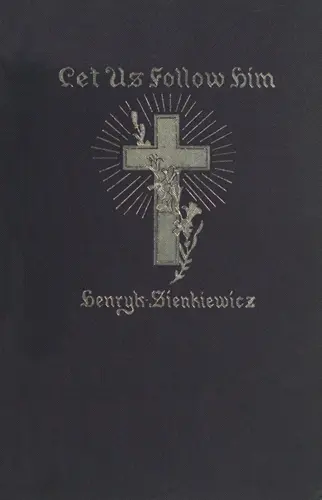
Henryk Sienkiewicz
BEHIND THE BOOK
This eBook is for the use of anyone anywhere in the United States and most other parts of the world at no cost and with almost no restrictions whatsoever. You may copy it, give it away or re-use it under the terms of the Project Gutenberg License included with this eBook or online at www.gutenberg.org. If you are not located in the United States, you will have to check the laws of the country where you are located before using this eBook. Read the source licence.
The original source file, including credits and licence, is retained by this library. Request an original-format copy at no charge. Please include the book title and Project Gutenberg identifier #44939.
KEEP YOUR CURIOSITY GOING
Coulson Kernahan

Maurice Baring
Frances Wright
Cécile Tormay

Frederic Jesup Stimson

W. H. P. (William Henry Pope) Jarvis