
Through the Desert
Henryk Sienkiewicz
THE CLASSIC COLLECTION · 1895
"Children of the Soil" by Henryk Sienkiewicz is a novel written in the late 19th century. It delves into Polish life and societal dynamics, primarily focusing on its main character, Pan Stanislav Polanyetski, as he navigates family ties, financial obligations, and the intricacies of rural relationships. The narrative promises a blend of personal conflict and broader cultural insights, set against the backdrop of a changing Poland. The opening of the novel introduces Pan Stanislav returning to the village of Kremen after years abroad, evoking childhood memories and establishing a connection to his past. As he arrives, he encounters Panna Marynia Plavitski, the daughter of the estate's owner, and they engage in a tentative conversation laden with subtext regarding his visit's true purpose: to collect a debt from her father. This tension sets the stage for both a potential romantic connection and conflict, as Stanislav grapples with feelings for Marynia while confronting the financial demands on their relationship, suggesting a deeper exploration of familial duty versus personal desire moving forward.
Introduction adapted from the source catalogue; source summaries may be automatically generated.
Free to read · English · 262,923 words · No account needed
MAKE TIME FOR A GOOD BOOK
On by default. Untick to stop anonymous reading totals. Each page counts after 10 seconds in view. How this works.
Anonymous counting is on unless you have switched it off.
"You are an evil man; and if anything happens to Lineta, it will be on your conscience. The child doesn't eat, doesn't sleep; she only reads you, and reads."
Pani Aneta added immediately,--
"True! I, too, have cause of complaint: she seized your book, and will not give it to any one for an instant; and when we are angry, do you know what she answers? 'This is mine! this is mine!'"
And Lineta, though she had not the book in her hands at that moment, pressed them to her bosom, as if to defend something, and said in a low, soft voice,--
"For it is mine, mine!"
Zavilovski looked at her and felt that something had, as it were, thrilled in him. But on returning home late he passed by Pan Stanislav's windows, in which light was still shining. After the theatre and conversation at the Osnovskis' he felt a certain turning of the head. Now the sight of those windows brought him to himself; he felt suddenly such a pleasant impression as one experiences on thinking of something very good and very dear. His immense, pure homage for Marynia arose in him with its former power: he was possessed by that kind of mild exaltation in which the desires fall asleep, and a man becomes almost entirely a spirit; and he returned home, muttering passages from the poem "Lilia," the most full of exaltation of any which he had written in his life yet.
There was light at Pan Stanislav's because something had happened, which seemed to Marynia that mercy of God expected and hoped for.
In the evening, after tea, she was sitting breaking her head, as usual, over daily accounts, when she put the pencil down on a sudden. After a while she grew pale, but her face became clear; and she said, with a voice slightly changed,--
"Stas!"
Her voice surprised him somewhat; therefore he approached her, and
asked,--
"What is the matter? Thou art a little pale."
"Come nearer; I'll tell thee something."
And, taking his head with her hands, she whispered into his ear, and he listened; then, kissing her on the forehead, he said,--
"Only be not excited, lest thou hurt thyself."
But in his words emotion was evident. He walked through the room,
looked at her a while, kissed her again on the forehead; at last he
said,--
"Usually people wish a son first, but remember that it be a daughter.
We'll call her Litka."
Neither of them could sleep that night for a long time, and that was why Zavilovski saw light in the windows.
[9] Familiar for Castelli.
Your reading position is saved on this browser. Take it to another device with a library code. Reading pages adapt to text, rather than matching a printed edition.
Henryk Sienkiewicz

Henryk Sienkiewicz

Henryk Sienkiewicz
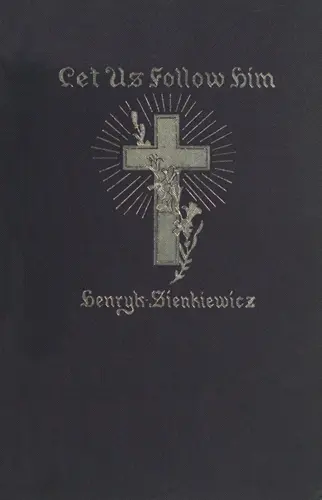
Henryk Sienkiewicz
BEHIND THE BOOK
This eBook is for the use of anyone anywhere in the United States and most other parts of the world at no cost and with almost no restrictions whatsoever. You may copy it, give it away or re-use it under the terms of the Project Gutenberg License included with this eBook or online at www.gutenberg.org. If you are not located in the United States, you will have to check the laws of the country where you are located before using this eBook. Read the source licence.
The original source file, including credits and licence, is retained by this library. Request an original-format copy at no charge. Please include the book title and Project Gutenberg identifier #44939.
KEEP YOUR CURIOSITY GOING
Coulson Kernahan

Maurice Baring
Frances Wright
Cécile Tormay

Frederic Jesup Stimson

W. H. P. (William Henry Pope) Jarvis