
Through the Desert
Henryk Sienkiewicz
THE CLASSIC COLLECTION · 1895
"Children of the Soil" by Henryk Sienkiewicz is a novel written in the late 19th century. It delves into Polish life and societal dynamics, primarily focusing on its main character, Pan Stanislav Polanyetski, as he navigates family ties, financial obligations, and the intricacies of rural relationships. The narrative promises a blend of personal conflict and broader cultural insights, set against the backdrop of a changing Poland. The opening of the novel introduces Pan Stanislav returning to the village of Kremen after years abroad, evoking childhood memories and establishing a connection to his past. As he arrives, he encounters Panna Marynia Plavitski, the daughter of the estate's owner, and they engage in a tentative conversation laden with subtext regarding his visit's true purpose: to collect a debt from her father. This tension sets the stage for both a potential romantic connection and conflict, as Stanislav grapples with feelings for Marynia while confronting the financial demands on their relationship, suggesting a deeper exploration of familial duty versus personal desire moving forward.
Introduction adapted from the source catalogue; source summaries may be automatically generated.
Free to read · English · 262,923 words · No account needed
MAKE TIME FOR A GOOD BOOK
On by default. Untick to stop anonymous reading totals. Each page counts after 10 seconds in view. How this works.
Anonymous counting is on unless you have switched it off.
"She remembers it," answered Marynia, "and we will all help her. If she had not gone to Reichenhall, I should have invited her here."
"And I should have followed Litka without invitation."
"Then I beg you in papa's name, once and for all."
"Do not say that lightly, for I am ready to abuse your kindness. For me it is very pleasant here; and as often as I feel out of sorts in Warsaw, I'll take refuge in Kremen."
Pan Stanislav knew this time that his words were intended to bring them nearer, to establish sympathy between them; and he spoke with design, and sincerely. While speaking, he looked on that mild young face, which, in the light of the setting sun, seemed calmer than usual. Marynia raised to him her blue eyes, in which was the question, "Art speaking by chance, or of purpose?" and she answered in a somewhat lower voice,--
"Do so."
And both were silent, feeling that really a connection between them was
beginning.
"I am astonished that papa is not returning," said she, at last.
The sun had gone down; in the ruddy gloaming, an owl had begun to circle about in slow flight, and frogs were croaking in the pond.
Pan Stanislav made no answer to the young lady's remark, but said, as if sunk in his own thoughts: "I do not analyze life; I have no time. When I enjoy myself,--as at this moment, for instance,--I feel that I enjoy myself; when I suffer, I suffer,--that is all. But five or six years ago it was different. A whole party of us used to meet for discussions on the meaning of life,--a number of scholars, and one writer, rather well known in Belgium at present. We put to ourselves these questions: Whither are we going? What sense has everything, what value, what end? We read the pessimists, and lost ourselves in various baseless inquiries, like one of my acquaintances, an assistant in the chair of astronomy, who, when he began to lose himself in interplanetary spaces, lost his reason; and, after that, it seemed to him that his head was moving in a parabola through infinity. Afterward he recovered, and became a priest. We, in like manner, could come to nothing, rest on nothing,--just like birds flying over the sea without a place to light on. But at last I saw two things: first, that my Belgians were taking all this to heart less than I,--we are more naïve; second, that my desire for labor would be injured, and that I should become an incompetent. I seized myself, then, by the ears, and began to color cottons with all my might. After that, I said in my mind: Life is among the rights of nature; whether wise or foolish, never mind, it is a right. We must live, then; hence it is necessary to get from life what is possible. And I wish to get something. Vaskovski says, it is true, that we Slavs are not able to stop there; but that is mere talk. That we cannot be satisfied with money alone, we will admit. But I said to myself, besides money there are two things: peace and--do you know what, Panna Plavitski?--woman. For a man should have some one with whom to share what he has. Later, there must be death. Granted. But where death begins, man's wit ends. 'That is not my business,' as the English say. Meanwhile, it is needful to have some one to whom a man can give that which he has or acquires, whether money or service or fame. If they are diamonds on the moon, it is all the same, for there is no one to learn what their value is. So a man must have some one to know him. And I think to myself, who will know me, if not a woman, if she is only wonderfully good and wonderfully reliable, greatly mine and greatly beloved? This is all that it is possible to desire; for from this comes repose, and repose is the one thing that has sense. I say this, not as a poet, but as a practical man and a merchant. To have near me a dear one, that is an object. And let come then what may. Here you have my philosophy."
Your reading position is saved on this browser. Take it to another device with a library code. Reading pages adapt to text, rather than matching a printed edition.
Henryk Sienkiewicz

Henryk Sienkiewicz

Henryk Sienkiewicz
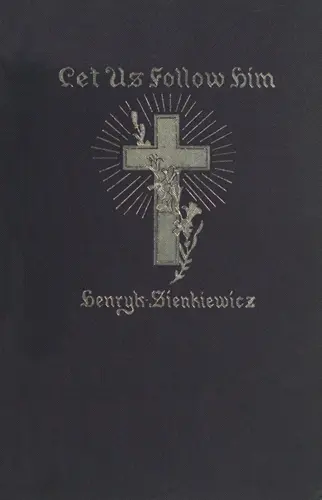
Henryk Sienkiewicz
BEHIND THE BOOK
This eBook is for the use of anyone anywhere in the United States and most other parts of the world at no cost and with almost no restrictions whatsoever. You may copy it, give it away or re-use it under the terms of the Project Gutenberg License included with this eBook or online at www.gutenberg.org. If you are not located in the United States, you will have to check the laws of the country where you are located before using this eBook. Read the source licence.
The original source file, including credits and licence, is retained by this library. Request an original-format copy at no charge. Please include the book title and Project Gutenberg identifier #44939.
KEEP YOUR CURIOSITY GOING
Coulson Kernahan

Maurice Baring
Frances Wright
Cécile Tormay

Frederic Jesup Stimson

W. H. P. (William Henry Pope) Jarvis