
Through the Desert
Henryk Sienkiewicz
THE CLASSIC COLLECTION · 1895
"Children of the Soil" by Henryk Sienkiewicz is a novel written in the late 19th century. It delves into Polish life and societal dynamics, primarily focusing on its main character, Pan Stanislav Polanyetski, as he navigates family ties, financial obligations, and the intricacies of rural relationships. The narrative promises a blend of personal conflict and broader cultural insights, set against the backdrop of a changing Poland. The opening of the novel introduces Pan Stanislav returning to the village of Kremen after years abroad, evoking childhood memories and establishing a connection to his past. As he arrives, he encounters Panna Marynia Plavitski, the daughter of the estate's owner, and they engage in a tentative conversation laden with subtext regarding his visit's true purpose: to collect a debt from her father. This tension sets the stage for both a potential romantic connection and conflict, as Stanislav grapples with feelings for Marynia while confronting the financial demands on their relationship, suggesting a deeper exploration of familial duty versus personal desire moving forward.
Introduction adapted from the source catalogue; source summaries may be automatically generated.
Free to read · English · 262,923 words · No account needed
MAKE TIME FOR A GOOD BOOK
On by default. Untick to stop anonymous reading totals. Each page counts after 10 seconds in view. How this works.
Anonymous counting is on unless you have switched it off.
In general, he had not felt so happy and satisfied at any time in life as then. He had experienced material success, and considered the future as guaranteed; he had married a woman, young, charming, and clever, for whom he had become a dogma,--and the position could not be otherwise, since her lips were not dry for whole days from his kisses,--and whose healthy and honest heart was filled with gratitude for his love. What could be lacking to him? What more could he wish? He was satisfied with himself, for he ascribed in great part to his own cleverness and merit, his success in so arranging life that everything promised, peace and prosperity. He saw that life was bitter for other men, but pleasant for him, and he interpreted the difference to his own advantage. He had thought once that a man wishing peace had to regulate his connection with himself, with mankind, with God. The first two he looked on as regulated. He had a wife, a calling, and a future; hence he had given and secured to himself all that he could give and secure. As to society, he permitted himself sometimes to criticise it, but he felt that in the bottom of his soul he loved it really; that even if he wished, he could not do otherwise; that if in a given case it were necessary to go into water or fire for society, he would go,--hence he considered everything settled on that side too. His relation with God remained. He felt that should that become clear and certain, he might consider all life's problems settled, and say to himself definitely, "I know why I have lived, what I wanted, and why I must die." While not a man of science, he had touched enough on science to know the vanity of seeking in philosophy so-called explanations or answers which are to be sought rather in intuition, and, above all, in feeling, in so far as the one and the other of these are simple,--otherwise they lead to extravagance. At the same time, since he was not devoid of imagination, he saw before him, as it were, the image of an honest, well-balanced man, a good husband, a good father, who labors and prays, who on Sunday takes his children to church, and lives a life wonderfully wholesome from a moral point of view. That picture smiled at him; and in life so much is done for pictures. He thought that a society which had a great number of such citizens would be stronger and healthier than a society which below was composed of boors, and above of sages, dilettanti, decadents, and all those forbidden figures with sprained intellects. One time, soon after his acquaintance with Marynia, he had promised himself and Bigiel that on finishing with his own person, and with people, he would set about this third relation seriously. Now the time had come, or at least was approaching. Pan Stanislav understood that this work needed more repose than is found on a bridal trip, and among the impressions of a new life and a new country, and that hurry of hotels and galleries in which he lived with Marynia. But, in spite of these conditions, in the rare moments when he was with his own thoughts, he turned at once to that problem, which for him was at that time the main one. He was subject meanwhile to various influences, which, small in themselves, exercised a certain action, even because he refrained purposely from opposing them. Of these was the influence of Marynia. Pan Stanislav was not conscious of it, and would not have owned to its existence; still the continual presence of that calm soul, sincerely and simply pious, extremely conscientious in relation to God, gave him an idea of the rest and peace to be found in religion. When he attended his wife to church, he remembered the words which she said to him in Warsaw, "Of course; it is the service of God." And he was drawn into it, for at first he went to church with her always not to let her go alone, and later because it gave him also a certain internal pleasure,--such, for example, as the examination of phenomena gives a scientist specially interested in them. In this way, in spite of unfavorable conditions, in spite of journeys, and a line of thought interrupted by impressions of every sort, he advanced on the new road continually. His thoughts had at times great energy and decisiveness in this direction. "I feel God," said he to himself. "I felt Him at Litka's grave; I felt Him, though I did not acknowledge it, in the words of Vaskovski about death; I felt Him at marriage; I felt Him at home, in the plains, and in this country, in the mountains above the snow; and I only ask yet how I am to glorify Him, to honor and love Him? Is it as pleases me personally, or as my wife does, and as my mother taught me?"
Your reading position is saved on this browser. Take it to another device with a library code. Reading pages adapt to text, rather than matching a printed edition.
Henryk Sienkiewicz

Henryk Sienkiewicz

Henryk Sienkiewicz
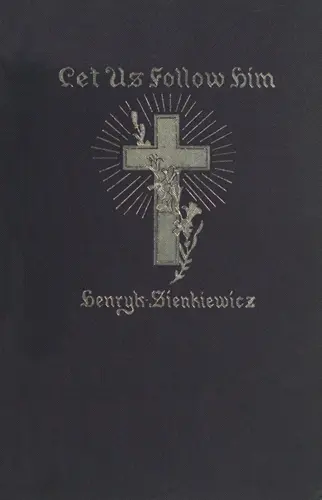
Henryk Sienkiewicz
BEHIND THE BOOK
This eBook is for the use of anyone anywhere in the United States and most other parts of the world at no cost and with almost no restrictions whatsoever. You may copy it, give it away or re-use it under the terms of the Project Gutenberg License included with this eBook or online at www.gutenberg.org. If you are not located in the United States, you will have to check the laws of the country where you are located before using this eBook. Read the source licence.
The original source file, including credits and licence, is retained by this library. Request an original-format copy at no charge. Please include the book title and Project Gutenberg identifier #44939.
KEEP YOUR CURIOSITY GOING
Coulson Kernahan

Maurice Baring
Frances Wright
Cécile Tormay

Frederic Jesup Stimson

W. H. P. (William Henry Pope) Jarvis