
Through the Desert
Henryk Sienkiewicz
THE CLASSIC COLLECTION · 1895
"Children of the Soil" by Henryk Sienkiewicz is a novel written in the late 19th century. It delves into Polish life and societal dynamics, primarily focusing on its main character, Pan Stanislav Polanyetski, as he navigates family ties, financial obligations, and the intricacies of rural relationships. The narrative promises a blend of personal conflict and broader cultural insights, set against the backdrop of a changing Poland. The opening of the novel introduces Pan Stanislav returning to the village of Kremen after years abroad, evoking childhood memories and establishing a connection to his past. As he arrives, he encounters Panna Marynia Plavitski, the daughter of the estate's owner, and they engage in a tentative conversation laden with subtext regarding his visit's true purpose: to collect a debt from her father. This tension sets the stage for both a potential romantic connection and conflict, as Stanislav grapples with feelings for Marynia while confronting the financial demands on their relationship, suggesting a deeper exploration of familial duty versus personal desire moving forward.
Introduction adapted from the source catalogue; source summaries may be automatically generated.
Free to read · English · 262,923 words · No account needed
MAKE TIME FOR A GOOD BOOK
On by default. Untick to stop anonymous reading totals. Each page counts after 10 seconds in view. How this works.
Anonymous counting is on unless you have switched it off.
"Neuralgia in the head; I would bet that it is neuralgia in the head; Gantovski in case of need could gallop for the doctor. That old mope, that councillor without a council, would not send for him surely." And needing evidently to pour out his ill humor on some one, he added, turning to Pan Stanislav, "Thou'lt not believe what a booby that man is."
"Who?"
"Yamish."
"But, papa!" interrupted Marynia.
Plavitski did not let her finish, however, and said with increasing ill humor, "It does not please thee, I know, that she shows me a little friendship and attention. Read Pan Yamish's articles on agriculture, do him homage, raise statues to him; but let me have my sympathies."
Here Pan Stanislav might admire the real sweetness of Marynia, who, instead of being impatient, ran to her father, and putting her forehead under his blackened mustaches, said,--
"They will bring the horses right away, right away, right away! Maybe I ought to go; but let ugly father not be angry, for he will hurt himself."
Plavitski, who was really much attached to his daughter, kissed her on the forehead and said, "I know thou hast a good heart. But what is Gantovski doing?"
And he called through the open gate of the garden to the young man, who returned soon, wearied out, and said,--
"There is water in the boat, and it is drawn up too far; I have tried,
and I cannot--"
"Then take thy cap and let's be off, for I hear the horses have come."
A moment later the young people were alone.
"Papa is accustomed to society a little more elegant than that in the country," said Marynia; "therefore he likes Pani Yamish, but Pan Yamish is a very honorable and sensible man."
"I saw him in the church; to me he seemed as if crushed."
"Yes; for he is sickly, and besides has much care."
"Like you."
"No, Pan Yamish manages his work perfectly; besides, he writes much on agriculture. He is really the light of these parts. Such a worthy man! She too is a good woman, only to me she seems rather pretentious."
"An ex-beauty."
"Yes. And this unbroken country life, through which she has become rather rusty, increases her oddness. I think that in cities oddities of character and their ridiculous sides efface one another; but in the country, people turn into originals more easily, they grow disused to society gradually, a certain old-fashioned way is preserved in intercourse, and it goes to excess. We must all seem rusty to people from great cities, and somewhat ridiculous."
"Not all," answered Pan Stanislav; "you, for example."
Your reading position is saved on this browser. Take it to another device with a library code. Reading pages adapt to text, rather than matching a printed edition.
Henryk Sienkiewicz

Henryk Sienkiewicz

Henryk Sienkiewicz
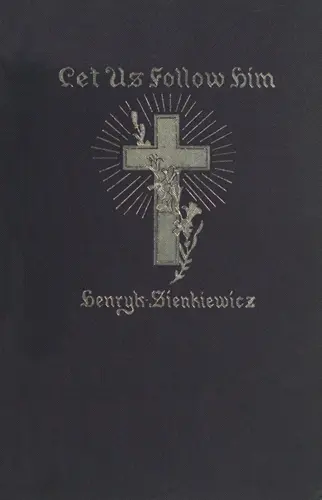
Henryk Sienkiewicz
BEHIND THE BOOK
This eBook is for the use of anyone anywhere in the United States and most other parts of the world at no cost and with almost no restrictions whatsoever. You may copy it, give it away or re-use it under the terms of the Project Gutenberg License included with this eBook or online at www.gutenberg.org. If you are not located in the United States, you will have to check the laws of the country where you are located before using this eBook. Read the source licence.
The original source file, including credits and licence, is retained by this library. Request an original-format copy at no charge. Please include the book title and Project Gutenberg identifier #44939.
KEEP YOUR CURIOSITY GOING
Coulson Kernahan

Maurice Baring
Frances Wright
Cécile Tormay

Frederic Jesup Stimson

W. H. P. (William Henry Pope) Jarvis