
Through the Desert
Henryk Sienkiewicz
THE CLASSIC COLLECTION · 1895
"Children of the Soil" by Henryk Sienkiewicz is a novel written in the late 19th century. It delves into Polish life and societal dynamics, primarily focusing on its main character, Pan Stanislav Polanyetski, as he navigates family ties, financial obligations, and the intricacies of rural relationships. The narrative promises a blend of personal conflict and broader cultural insights, set against the backdrop of a changing Poland. The opening of the novel introduces Pan Stanislav returning to the village of Kremen after years abroad, evoking childhood memories and establishing a connection to his past. As he arrives, he encounters Panna Marynia Plavitski, the daughter of the estate's owner, and they engage in a tentative conversation laden with subtext regarding his visit's true purpose: to collect a debt from her father. This tension sets the stage for both a potential romantic connection and conflict, as Stanislav grapples with feelings for Marynia while confronting the financial demands on their relationship, suggesting a deeper exploration of familial duty versus personal desire moving forward.
Introduction adapted from the source catalogue; source summaries may be automatically generated.
Free to read · English · 262,923 words · No account needed
MAKE TIME FOR A GOOD BOOK
On by default. Untick to stop anonymous reading totals. Each page counts after 10 seconds in view. How this works.
Anonymous counting is on unless you have switched it off.
So it is! School and the world rear sons, and both may make them scoundrels; daughters, in whom the home ingrafts honorableness, can, in the worst case, be only unhappy. Pan Stanislav understood that this was true with regard to Marynia. So that if he analyzed her, his analysis was rather the examination of a jeweller and his admiration for his gems, than a scientific method intended to reach results unknown and unexpected.
Still he quarrelled once with Marynia very seriously, because of a letter from Vaskovski, which Pan Stanislav received from Rome a few weeks after the professor's departure, and which he read in its integrity to Marynia. This letter was as follows:--
MY DEAR,--I am lodging at Via Tritone, Pension Française. Visit my Warsaw lodgings; see if Snopchinski looks after my little boys properly, and if the birds of Saint Francis have seeds and water in plenty. When spring comes, it will be needful to open the windows and cages; whichever bird wishes to stay, let it stay, and whichever one wishes to go, let it fly. The boys of the genus homo sapiens should have good food, since I left money therefor, and besides little moralizing, but much love. Snopchinski is a worthy man, but a hypochondriac. He says this comes from snows. When he is attacked by what he calls "chandra," he looks for whole weeks on his boots, and is silent; but one must talk with little boys, to give them confidence. This is all that touches Warsaw.
I am printing here in French, in the typography of the journal "L'Italie," that work of mine which I discussed with thee. They laugh at my French a little, and at me, but I am used to that. Bukatski came here. He is a good, beloved fellow! he has grown strange to the last degree, and says that he drags his feet after him, though I have not noticed it. He loves both Marynia and thee, and indeed every one, though he denies it. But when he begins to talk, one's ears wither. May the Lord God bless thee, dear boy, and thy honest Marynia! I should like to be at thy wedding, but I know not whether I shall finish my work before Easter; listen, therefore, now to what I tell thee, and know that I write this letter to that end. Do not think that the old man is talking just to talk. Thou knowest, besides, that I have been a teacher; that the inheritance from my brother freed me from that occupation; that I have had experience and have seen things. If ye have children, do not torture them with knowledge; let them grow up as God wills. I might stop here; but thou art fond of figures, hence I will give thee figures. A little child has as many hours of labor as a grown man in office, with this difference, that the man talks during office hours with his colleagues, or smokes cigarettes; the child must strain its attention continually, or lose the clew of lessons, and cease to understand what is said to it. The man goes home when his work is done; the child must prepare for the following day, which takes four hours from a capable child, from one less capable six. Add to this, that poorer pupils give lessons frequently, the rich take them, which, added, gives twelve hours. Twelve hours' labor for a child! Dost understand that, my dear? Canst thou realize what sickly natures must grow up in such conditions,--natures out of joint, inclined to the wildest manias, crooked, wilful? Dost thou understand how we are filling cemeteries with our children, and why the most monstrous ideas find supporters? Ah, at present they are limiting the hours of labor in factories even for grown people, but touching children at school philanthropy is silent. Oh, but that is a field! that is a service to be rendered; that is a coming glory and sainthood. Do not torture thy children with learning, I beg thee--and I beg Marynia; promise me both of you. I do not speak just to speak, as Bukatski says sometimes, but I speak from the heart; and this is the greatest reform for which future ages are waiting, the greatest after the introduction of Christ into history. Something wonderful happened to me in Perugia a few days since, but of that I will tell thee sometime, and now I embrace both of you.
Your reading position is saved on this browser. Take it to another device with a library code. Reading pages adapt to text, rather than matching a printed edition.
Henryk Sienkiewicz

Henryk Sienkiewicz

Henryk Sienkiewicz
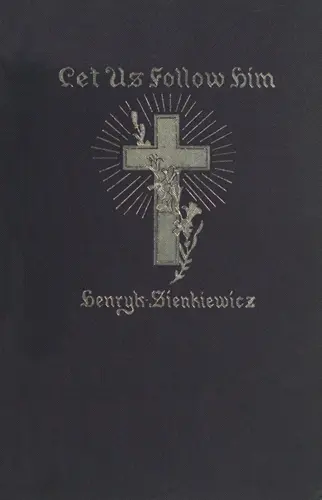
Henryk Sienkiewicz
BEHIND THE BOOK
This eBook is for the use of anyone anywhere in the United States and most other parts of the world at no cost and with almost no restrictions whatsoever. You may copy it, give it away or re-use it under the terms of the Project Gutenberg License included with this eBook or online at www.gutenberg.org. If you are not located in the United States, you will have to check the laws of the country where you are located before using this eBook. Read the source licence.
The original source file, including credits and licence, is retained by this library. Request an original-format copy at no charge. Please include the book title and Project Gutenberg identifier #44939.
KEEP YOUR CURIOSITY GOING
Coulson Kernahan

Maurice Baring
Frances Wright
Cécile Tormay

Frederic Jesup Stimson

W. H. P. (William Henry Pope) Jarvis