
Through the Desert
Henryk Sienkiewicz
THE CLASSIC COLLECTION · 1895
"Children of the Soil" by Henryk Sienkiewicz is a novel written in the late 19th century. It delves into Polish life and societal dynamics, primarily focusing on its main character, Pan Stanislav Polanyetski, as he navigates family ties, financial obligations, and the intricacies of rural relationships. The narrative promises a blend of personal conflict and broader cultural insights, set against the backdrop of a changing Poland. The opening of the novel introduces Pan Stanislav returning to the village of Kremen after years abroad, evoking childhood memories and establishing a connection to his past. As he arrives, he encounters Panna Marynia Plavitski, the daughter of the estate's owner, and they engage in a tentative conversation laden with subtext regarding his visit's true purpose: to collect a debt from her father. This tension sets the stage for both a potential romantic connection and conflict, as Stanislav grapples with feelings for Marynia while confronting the financial demands on their relationship, suggesting a deeper exploration of familial duty versus personal desire moving forward.
Introduction adapted from the source catalogue; source summaries may be automatically generated.
Free to read · English · 262,923 words · No account needed
MAKE TIME FOR A GOOD BOOK
On by default. Untick to stop anonymous reading totals. Each page counts after 10 seconds in view. How this works.
Anonymous counting is on unless you have switched it off.
The moment came, however, when the young men were left alone, for Marynia was occupied with tea in the next room, and Plavitski had gone for cigars to his study; Pan Stanislav turned then to Gantovski,--
"Let us go together after tea," said he; "I wish to speak with you touching your collision with Pan Mashko."
"Of course," answered Gantovski, gloomily, understanding that
Polanyetski was Mashko's second.
Meanwhile they had to remain for tea, and sit long enough after that, for Plavitski did not like to go to bed early, and summoned Gantovski to a game of chess. During the play, Marynia and Pan Stanislav sat apart and conversed with animation, to the heartfelt torment of "the bear."
"The arrival of Gantovski must be pleasing to you," said Pan Stanislav, all at once, "for it brings Kremen to your mind."
Astonishment flashed over Marynia's face that he was the first to mention Kremen. She had supposed that, in virtue of a tacit agreement, he would cover that question with silence.
"I think no more now of Kremen," answered she, after a pause.
This statement was not true, for in her heart's depth she was sorry for the place in which she had been reared,--the place of her labor for years, and of her shattered hopes; but she thought herself forced to speak thus by duty, and by the feeling for Pan Stanislav, which was increasing continually.
"Kremen," added she, with a voice of some emotion, "was the cause of our earliest quarrel; and I wish now for concord, concord forever."
While saying this, she looked into Pan Stanislav's eyes with a coquetry full of sweetness, which a bad woman is able to put on at any time, but an honest woman only when she is beginning to love.
"She is wonderfully kind," thought he. Straightway he added aloud, "You might have a fabulous weapon against me, for you might lead me to perdition with kindness."
"I do not wish to lead you to that," replied she.
And in sign that she did not, she began to shake her dark, shapely head laughingly; and Pan Stanislav looked at her smiling face, and her mouth a trifle too large, and said mentally,--
"Whether I love her, or love her not, no one attracts me as she does."
In fact, she had never occupied him and never pleased him more, even when he felt no shade of doubt that he loved her, and when he was struggling with that feeling. But at last he took farewell of her, for it had grown late; and after a while he and Gantovski found themselves on the street.
Your reading position is saved on this browser. Take it to another device with a library code. Reading pages adapt to text, rather than matching a printed edition.
Henryk Sienkiewicz

Henryk Sienkiewicz

Henryk Sienkiewicz
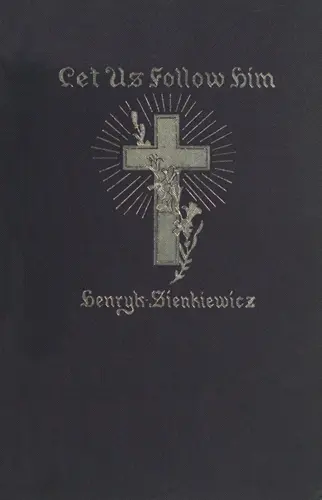
Henryk Sienkiewicz
BEHIND THE BOOK
This eBook is for the use of anyone anywhere in the United States and most other parts of the world at no cost and with almost no restrictions whatsoever. You may copy it, give it away or re-use it under the terms of the Project Gutenberg License included with this eBook or online at www.gutenberg.org. If you are not located in the United States, you will have to check the laws of the country where you are located before using this eBook. Read the source licence.
The original source file, including credits and licence, is retained by this library. Request an original-format copy at no charge. Please include the book title and Project Gutenberg identifier #44939.
KEEP YOUR CURIOSITY GOING
Coulson Kernahan

Maurice Baring
Frances Wright
Cécile Tormay

Frederic Jesup Stimson

W. H. P. (William Henry Pope) Jarvis