
Through the Desert
Henryk Sienkiewicz
THE CLASSIC COLLECTION · 1895
"Children of the Soil" by Henryk Sienkiewicz is a novel written in the late 19th century. It delves into Polish life and societal dynamics, primarily focusing on its main character, Pan Stanislav Polanyetski, as he navigates family ties, financial obligations, and the intricacies of rural relationships. The narrative promises a blend of personal conflict and broader cultural insights, set against the backdrop of a changing Poland. The opening of the novel introduces Pan Stanislav returning to the village of Kremen after years abroad, evoking childhood memories and establishing a connection to his past. As he arrives, he encounters Panna Marynia Plavitski, the daughter of the estate's owner, and they engage in a tentative conversation laden with subtext regarding his visit's true purpose: to collect a debt from her father. This tension sets the stage for both a potential romantic connection and conflict, as Stanislav grapples with feelings for Marynia while confronting the financial demands on their relationship, suggesting a deeper exploration of familial duty versus personal desire moving forward.
Introduction adapted from the source catalogue; source summaries may be automatically generated.
Free to read · English · 262,923 words · No account needed
MAKE TIME FOR A GOOD BOOK
On by default. Untick to stop anonymous reading totals. Each page counts after 10 seconds in view. How this works.
Anonymous counting is on unless you have switched it off.
The procession moved at last with numerous torches, and drew after it a train of carriages, preceded by priests, chanting gloomily, and surrounded by a crowd of the curious, who in modern cities feed their eyes with the sorrow of others, as in ancient times they fed them in the circus with the blood of people.
Pani Emilia, attended by her husband's brother, and having Marynia at her side, walked also behind the caravan with dry and expressionless face. Her eyes saw only one detail, and her mind was occupied with that alone. It had happened that a lock of Litka's flaxen, immensely abundant hair was outside the coffin. Pani Emilia did not take her eyes from it the whole way, repeating again and again, "O God, O God! they have nailed down the child's hair!"
In Pan Stanislav's sorrow, weariness, nervous disturbance, resulting from sleeplessness, became a feeling of such unendurable oppression that at moments he was seized by an invincible desire to turn back when he had gone halfway,--return home, throw himself on a sofa, not think of anything, not wish anything, not love any one, not feel anything. At the same time this revulsion of self-love astounded him, made him indignant at himself: he knew that he would not return; that he would drain that cup to the bottom, that he would go to the end, not only because it would happen so, but because sorrow for Litka, and attachment to her, would be stronger than his selfishness. He felt, too, at that moment, that all his other feelings were contracted and withered, and that for the whole world he had in his heart merely nothing, at least, at that moment. For that matter his thoughts and feelings had fallen into perfect disorder, composed of external impressions received very hastily, observations made, it was unknown why, and mixed all together mechanically with a feeling of sorrow and pain. At times he looked at the houses past which the procession was moving, and he distinguished their colors. At times some shop sign caught his eye; this he read, not knowing why he did so. Then again he thought that the priests had ceased to sing, but would begin directly; and he was waiting for that renewed continuance of sad voices, as if in a kind of dread. At times he reasoned like a man who, waking from sleep, wishes to give himself an account of reality: "Those are houses," said he to himself; "those are signs; that is the odor of pitch from the torches; and there on the bier lies Litka; and we are going to the graveyard." And all at once there rose in him a wave of sorrow for that sweet, beloved child, for that dear face which had smiled so many times at him. He recalled her from remoter and from recent days; remembered her in Reichenhall, where he carried her when returning from Thumsee; and later at Bigiel's, in the country; and in Pani Emilia's house, when she said that she wanted to be a birch-tree; and finally, when, a few hours before her death, she entreated Marynia to marry him. Pan Stanislav did not say directly to himself that Litka loved him as a grown woman loves, and that, in betrothing him to Marynia, she had performed an act of sacrifice, for the feelings of the little girl were not known, and could not be defined with precision; he felt perfectly, however, that there was something like that love in her, and that the sacrifice took place, flowed, in fact, from that deep and exceptional attachment which Litka had felt for him. Since the loss of even those who are dearest is felt most of all through the personal loss which we suffer, Pan Stanislav began to repeat to himself: "That was the one soul that loved me truly; I have no one in the whole world now." And, raising his eyes to the coffin, to that tress of blond hair which was waving in the wind, he cried out in spirit to Litka with all those tender expressions with which he had spoken to her while in life. Finally, he felt that tears were choking him, because that was a call without echo. There is something heart-rending in the indifference of the dead. When the one who reflected every word and glance has become indifferent, when the loving one is icy, the one who was near in daily life, and next the heart, is full of solemnity, and far away, it avails not to repeat to one's self: "Death, death!" In addition to all pain connected with the loss, there is a harrowing deception, as if an injustice to the heart had been wrought by that lifeless body, which remains deaf to our pain and entreaty. Pan Stanislav had, in this manner, at the bottom of his soul, a feeling that Litka, by taking herself from him, and going to the region of death, had done an injustice; and from being one who is near, she had become one remote; from being a confidant, she had become formal, far away, lofty, sacred, and also perfectly indifferent to the despair of her mother and the deep loneliness of her nearest friend. There was much selfishness in those feelings of Pan Stanislav; but were it not for that selfishness, which, first of all, has its own loss and loneliness in mind, people, especially those who believe in life beyond the grave and its happiness, would feel no grief for the dead.
Your reading position is saved on this browser. Take it to another device with a library code. Reading pages adapt to text, rather than matching a printed edition.
Henryk Sienkiewicz

Henryk Sienkiewicz

Henryk Sienkiewicz
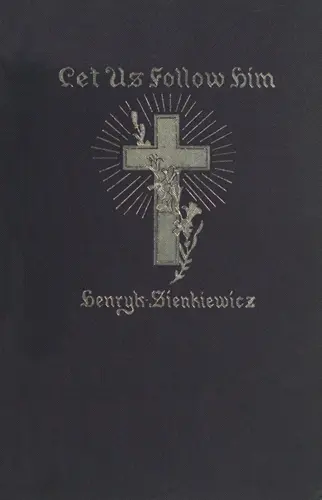
Henryk Sienkiewicz
BEHIND THE BOOK
This eBook is for the use of anyone anywhere in the United States and most other parts of the world at no cost and with almost no restrictions whatsoever. You may copy it, give it away or re-use it under the terms of the Project Gutenberg License included with this eBook or online at www.gutenberg.org. If you are not located in the United States, you will have to check the laws of the country where you are located before using this eBook. Read the source licence.
The original source file, including credits and licence, is retained by this library. Request an original-format copy at no charge. Please include the book title and Project Gutenberg identifier #44939.
KEEP YOUR CURIOSITY GOING
Coulson Kernahan

Maurice Baring
Frances Wright
Cécile Tormay

Frederic Jesup Stimson

W. H. P. (William Henry Pope) Jarvis