
Through the Desert
Henryk Sienkiewicz
THE CLASSIC COLLECTION · 1895
"Children of the Soil" by Henryk Sienkiewicz is a novel written in the late 19th century. It delves into Polish life and societal dynamics, primarily focusing on its main character, Pan Stanislav Polanyetski, as he navigates family ties, financial obligations, and the intricacies of rural relationships. The narrative promises a blend of personal conflict and broader cultural insights, set against the backdrop of a changing Poland. The opening of the novel introduces Pan Stanislav returning to the village of Kremen after years abroad, evoking childhood memories and establishing a connection to his past. As he arrives, he encounters Panna Marynia Plavitski, the daughter of the estate's owner, and they engage in a tentative conversation laden with subtext regarding his visit's true purpose: to collect a debt from her father. This tension sets the stage for both a potential romantic connection and conflict, as Stanislav grapples with feelings for Marynia while confronting the financial demands on their relationship, suggesting a deeper exploration of familial duty versus personal desire moving forward.
Introduction adapted from the source catalogue; source summaries may be automatically generated.
Free to read · English · 262,923 words · No account needed
MAKE TIME FOR A GOOD BOOK
On by default. Untick to stop anonymous reading totals. Each page counts after 10 seconds in view. How this works.
Anonymous counting is on unless you have switched it off.
Indeed, Kremen had come to Mashko in season, for without it he might not have been accepted. But for that very cause the remark was not agreeable; hence he made a wry face, and answered,--
"Thou didst make that purchase easy; sometimes I am thankful to thee, and sometimes I curse thee."
"Why so?"
"For thy dear Uncle Plavitski is the most annoying, the most unendurable figure on earth, omitting thy cousin, who is a charming young lady; but from morning till evening she rings changes on her never to be sufficiently regretted Kremen, through all the seven notes, adding at each one a tear. Thou art seldom at their house; but, believe me, to be there is uncommonly wearisome."
Pan Stanislav looked into his eyes and answered, "Listen, Mashko: against my uncle I have said everything that could hit him; but it does not follow, therefore, that I am to listen patiently if another attacks Plavitski, especially a man who has made profit by him. As to Panna Marynia, she is sorry, I know, for Kremen; but this proves that she is not an empty puppet, or a manikin, but a woman with a heart; dost understand me?"
A moment of silence followed. Mashko understood perfectly whom Pan Stanislav had in mind when he mentioned the empty doll and manikin; hence the freckles on his face became brick-colored, and his lips began to quiver. But he restrained himself. He was in no sense a coward; but even the man who is most daring has usually some one with whom he has no wish to quarrel, and for Mashko Polanyetski was such a one. Therefore, shrugging his shoulders, he said,--
"Why art thou angry? If that is unpleasing to thee--"
But Pan Stanislav interrupted, "I am not angry; but I advise thee to remember my words." And he looked him in the eyes again.
Mashko thought, "If thou wilt have an adventure anyhow, thou canst have
it."
"Thy words," said he, "I can remember; only do thou take counsel also from me. Permit not thyself to speak in that tone to me, else I might forget myself also, and call thee to reckoning."
"What the deuce--?" began Bukatski. "What is the matter with thee?"
But Pan Stanislav, in whom irritation against Mashko has been gathering for a long time, would beyond doubt have pushed matters to extremes had not Pani Emilia's servant rushed into the room at that moment.
"I beg," said he, with a panting voice; "the little lady is dying!"
Pan Stanislav grew pale, and, seizing his hat, sprang to the door. A long, dull silence followed, which Mashko interrupted at last.
Your reading position is saved on this browser. Take it to another device with a library code. Reading pages adapt to text, rather than matching a printed edition.
Henryk Sienkiewicz

Henryk Sienkiewicz

Henryk Sienkiewicz
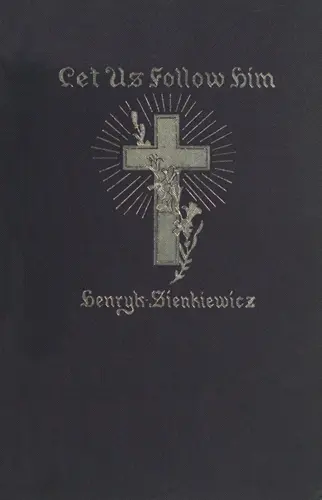
Henryk Sienkiewicz
BEHIND THE BOOK
This eBook is for the use of anyone anywhere in the United States and most other parts of the world at no cost and with almost no restrictions whatsoever. You may copy it, give it away or re-use it under the terms of the Project Gutenberg License included with this eBook or online at www.gutenberg.org. If you are not located in the United States, you will have to check the laws of the country where you are located before using this eBook. Read the source licence.
The original source file, including credits and licence, is retained by this library. Request an original-format copy at no charge. Please include the book title and Project Gutenberg identifier #44939.
KEEP YOUR CURIOSITY GOING
Coulson Kernahan

Maurice Baring
Frances Wright
Cécile Tormay

Frederic Jesup Stimson

W. H. P. (William Henry Pope) Jarvis