THE CLASSIC COLLECTION✦Noah Webster American Men of LettersCLASSIC FREE BOOKS
Noah Webster American Men of Letters
Horace Elisha Scudder

THE CLASSIC COLLECTION · 1894
"Childhood in Literature and Art" by Horace E. Scudder is a study that likely delves into the depiction of childhood across various literary and artistic traditions, written in the late 19th century. The book explores the evolution of childhood as a theme in literature and art, examining its significance from ancient texts to the modern era. Scudder aims to demonstrate how literature for children emerged alongside a growing recognition of childhood as a distinct and vital stage of life. The opening of the work sets the stage for this exploration by suggesting that the acknowledgment of childhood in literature has only been pronounced since the late 18th century. Scudder reflects on how earlier works often overlooked children as significant characters, focusing instead on adults and their experiences. He discusses the gradual shift in perspectives, noting the increasing representation of childhood in literature, especially prominent with poets like Wordsworth. The introduction promises to consider various epochs, from Greek and Roman literature to English and American texts, providing a historical framework to understand the evolving perceptions of childhood.
Introduction adapted from the source catalogue; source summaries may be automatically generated.
Free to read · English · 51,175 words · No account needed
MAKE TIME FOR A GOOD BOOK
On by default. Untick to stop anonymous reading totals. Each page counts after 10 seconds in view. How this works.
Anonymous counting is on unless you have switched it off.
Mary, the Virgin, legends concerning, in the Apocryphal Gospels,
58-60;
her childhood, 65;
her appearance in early art, 83;
her motherhood, 84;
her relation to Jesus, 85.
May Queen, The, 222.
Medea, The, cited, 19.
Menaphon, 117.
Mercurius, 36.
Messiah, Pope’s, 133, 134.
Michelet, 186.
Midsummer Night’s Dream, 124.
Millais, John Everett, 179.
Milton, John, quoted, 46;
the absence of childhood in, 127, 128;
compared with Bunyan, 129;
with Pope, 133.
Moses, 42.
Moth, Shakespeare’s, 118.
Mozley, T. B., quoted, 190, 191, 235.
Musset, Alfred de, 186.
My Lost Youth, 221.
Netherland family life, pictured in the life of our Lord, 89-92.
New Testament, childhood in the, 47-52.
Nicodemus, 50.
Niebuhr, B. G., 28.
Norton, Charles Eliot, translation by, 78.
Note-Books, Hawthorne’s, 228, 229.
Nurse, the, in Greek life, 14;
in the Odyssey, 14, 15.
Ode on the Morning of Christ’s Nativity, 127, 133.
Odysseus and his nurse, 15.
Odyssey, memorable incidents in the, 14, 15.
Œdipus Tyrannus contrasted with the Iliad, 16-18.
Old Testament, childhood in the, 42-46.
Our Old Home, 230.
Overbeck, 88, 199-201.
Palmer, George Herbert, as a translator of Homer, 28.
Parkman, Francis, 226.
Pater, Walter, quoted, 79.
Patient Griselda, 111.
Paul and Virginia, representative of innocent childhood, 180; an escape from the world, 181; an attempt at the preservation of childhood, 183.
Pet Lamb, The, 149.
Pheidias, 26, 28.
Pied Piper, The, 237.
Pilgrim’s Progress, The, 130-133.
Plato, references of, to childhood, 22-26;
compared with artists, 26;
can be read by children, 242.
Pope, Alexander, 133;
compared with Milton, 133, 134;
with Shakespeare, 134.
Prelude, The, 151.
Princess, The, 170.
Puritanism, the attitude of, toward childhood, 128, 129.
Queen’s Marie, the ballad of the, 106.
Raphael, an exponent of the idea of his time, 92;
the Madonnas of, 92;
in the Berlin Museum, 93;
Casa Connestabile, 93;
del Cardellino, 93;
at St. Petersburg, 93;
della Casa Tempi, 94;
at Bridgewater, 95;
del Passegio, 96;
San Sisto, 97, 98;
treatment by, of Amor, 99;
his children, 100.
Reaper and the Flowers, The, 220, 222.
Renaissance, the spirit of the, in Raphael’s work, 98; childhood in its relation to the, 102.
Republic, Plato’s, cited, 23.
Resignation, 220.
Reynolds, Sir Joshua, 141, 142.
Richter, Jean Paul Friedrich, autobiography of, 191;
early birth of consciousness in, 192;
compared with Goethe, 194.
Riverside Magazine for Young People, The, 237, 238.
Roman literature, childhood in, 31-38.
Rousseau, Jean Jacques, 180, 182, 184.
Ruskin, John, 242.
Samuel, 42.
Sanford and Merton, 3.
Sarah, the laugh of, 44.
Scarlet Letter, The, 233, 234.
Schliemann, Dr., 6.
School, great literature in, 242.
Sella, 217.
Sellar, John Y., quoted, 35.
Sentiment, French and German, as seen by the English and American,
188.
Shadow, A, 220.
Shakespeare, childhood in, 117;
limitations of the exhibition, 117, 118;
his Moth, 118;
his Coriolanus, 118, 119;
his King John, 119, 120;
his Titus Andronicus, 120, 121;
his Macbeth, 121;
his Richard III., 122;
random passages in, relating to childhood, 123-125;
reasons for the scanty reference, 125, 126;
compared with Pope, 134.
Shunamite, the, 43.
Simeon, 47.
Simonides, 20;
quoted, 30.
Sketches of the History of Christian Art, 88.
Smith, Goldwin, translation by, 20.
Snow-Bound, 218.
Snow-Image, The, 232.
Solitude, the, of childhood, 160-162.
Songs of Innocence, 164.
Sophocles, the Œdipus Tyrannus of, 16.
Sparrows, the story of the miraculous, 61, 62.
Spectator, The, a writer in, quoted, 38.
Spenser, Edmund, his Faery Queen, 114, 115.
Statius, 33.
Your reading position is saved on this browser. Take it to another device with a library code. Reading pages adapt to text, rather than matching a printed edition.
Horace Elisha Scudder
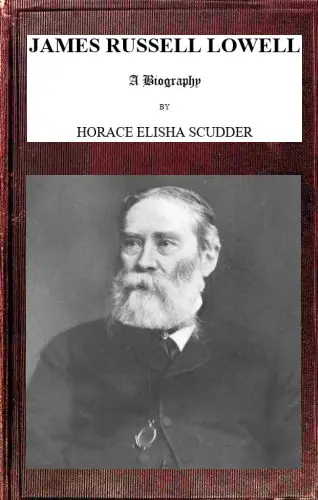
Horace Elisha Scudder
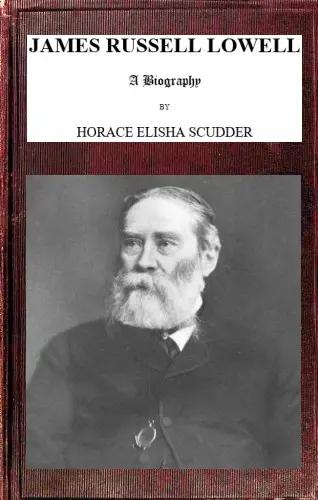
Horace Elisha Scudder
Horace Elisha Scudder
BEHIND THE BOOK
This eBook is for the use of anyone anywhere in the United States and most other parts of the world at no cost and with almost no restrictions whatsoever. You may copy it, give it away or re-use it under the terms of the Project Gutenberg License included with this eBook or online at www.gutenberg.org. If you are not located in the United States, you will have to check the laws of the country where you are located before using this eBook. Read the source licence.
The original source file, including credits and licence, is retained by this library. Request an original-format copy at no charge. Please include the book title and Project Gutenberg identifier #75367.
KEEP YOUR CURIOSITY GOING
Cécile Tormay

Moritz Busch
John L. Ransom
Frances Wright
Cécile Tormay

Mabel Potter Daggett