THE CLASSIC COLLECTION✦Noah Webster American Men of LettersCLASSIC FREE BOOKS
Noah Webster American Men of Letters
Horace Elisha Scudder

THE CLASSIC COLLECTION · 1894
"Childhood in Literature and Art" by Horace E. Scudder is a study that likely delves into the depiction of childhood across various literary and artistic traditions, written in the late 19th century. The book explores the evolution of childhood as a theme in literature and art, examining its significance from ancient texts to the modern era. Scudder aims to demonstrate how literature for children emerged alongside a growing recognition of childhood as a distinct and vital stage of life. The opening of the work sets the stage for this exploration by suggesting that the acknowledgment of childhood in literature has only been pronounced since the late 18th century. Scudder reflects on how earlier works often overlooked children as significant characters, focusing instead on adults and their experiences. He discusses the gradual shift in perspectives, noting the increasing representation of childhood in literature, especially prominent with poets like Wordsworth. The introduction promises to consider various epochs, from Greek and Roman literature to English and American texts, providing a historical framework to understand the evolving perceptions of childhood.
Introduction adapted from the source catalogue; source summaries may be automatically generated.
Free to read · English · 51,175 words · No account needed
MAKE TIME FOR A GOOD BOOK
On by default. Untick to stop anonymous reading totals. Each page counts after 10 seconds in view. How this works.
Anonymous counting is on unless you have switched it off.
Hebrew life, in its influence on modern thought, 39-41;
the child in, 46, 47;
its transformation into Christianity, 47, 48, 53.
Hector parting with Andromache, 11, 12;
face to face with Ajax, 14;
comforts his wife, 16, 17.
Hemans, Felicia, 222.
Hen and chickens, in the Bible and Shakespeare, 122.
Herakles, 36.
Hermes, 36.
Hiawatha, 221.
Hilarion, 67.
Holmes, Oliver Wendell, 218.
Holy Family, the child in the, 83;
character of the early type of the, 83;
emblematic of domesticity, 86, 87.
Homer, authenticity of the legend of, supposed to be proved by
Schliemann, 6;
a better preserver of Greek womanhood than antiquaries, 7;
the value of his similes, 7, 8;
passages in illustration of his indirect reference to childhood,
8-11;
the elemental character of, 12;
the peril of commenting on, 13;
the nurse in, 14;
his view of childhood, 15;
compared with that of the tragedians, 16-18;
with that of Virgil, 31, 32.
Hosea, quoted, 44.
House of the Seven Gables, The, 232, 233.
Hubert, 120.
Hugh of Lincoln, 108.
Hugo, Victor, 187.
Iliad, the swarm of bees in the, 8;
the passage describing the brushing away of a fly, 9;
the ass belabored by a pack of boys, 9;
Achilles chiding Patroclos, 10;
Hector parting with Andromache, 11, 12;
statuesque scenes in, 12.
Imaginary Conversations, quoted, 153.
Imagination, the, abnormal activity of, in early Christianity, 54; the direction of its new force, 56, 57.
Intimations of Immortality, 154, 156, 157.
Irving, Washington, 217.
Isaiah, quoted, 45.
Ishmael, 42.
Ismene, 18.
Jacob, the two wives of, 44.
James, Henry, alluded to, 236.
Jeffrey, Francis, 169.
Jerusalem, the entry into, 49, 52.
John the Baptist, 81.
Jonson, Ben, 37.
Jonson, Ben, Venus’ Runaway of, 116.
Jowett, Benjamin, translation by, 22-26.
Juvenal, 35, 227.
Kenwulf of Wessex, 68.
Kindergarten, the, fortified by reference to Plato, 24; in connection with politics, 197, 198.
King John, 119, 120.
Kriss Kringle, 189.
La Farge, John, 237.
L’Allegro, 127.
Lamartine, Alphonse de, 184-186.
Lamb, Charles, on Mrs. Barbauld’s work, 176, 177;
his and his sister’s books, 177.
Lambdin, George C., 237.
Lamkin, the ballad of, 107, 108.
Landor, Walter Savage, remark of, on children, 153.
Laokoön, 21.
Laws, Plato’s, cited, 22, 24, 25.
Legends of the Madonna, 89.
Leslie, C. R., on Raphael’s children, 100.
Lindsay, Lord, quoted, 88.
Lines on the Receipt of my Mother’s Picture, 141, 142.
Literature for children in the United States, 235, 236;
some of its tendencies, 239, 240;
measures for its enrichment, 240.
Literature, the source of knowledge, 7;
of Christendom, the exposition of the conception of the Christ, 50;
inaction in, 54;
fallacy in the study of the development of, 104;
its bounds enlarged, 163.
Little Annie’s Ramble, 231.
Little Daffydowndilly, 231.
Little Girl’s Lament, The, 222.
Little People of the Snow, 217.
Longfellow, Henry Wadsworth, childhood in the writings of, 219-221.
Love, the figure of, in classic and modern art, 37.
Lowell, James Russell, 217.
Loyola, 91.
Luca della Robbia, the children of, 101.
Lucretius, 34, 35.
Lucy Gray, 3, 148.
Luther, Martin, an exponent of German character, 190;
his treatment of childhood, 190.
Macbeth, 121, 123.
Madonna, development of the, 84-87;
treatment of by Raphael, 92-98;
a domestic subject, 98.
Magnificat, The, 44, 47.
Man of Law’s Tale, The, 110.
Marcius, 118.
Martial, 34.
Martin, Theodore, translation by, 33.
Your reading position is saved on this browser. Take it to another device with a library code. Reading pages adapt to text, rather than matching a printed edition.
Horace Elisha Scudder
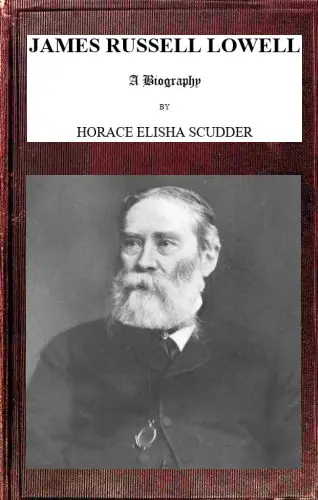
Horace Elisha Scudder
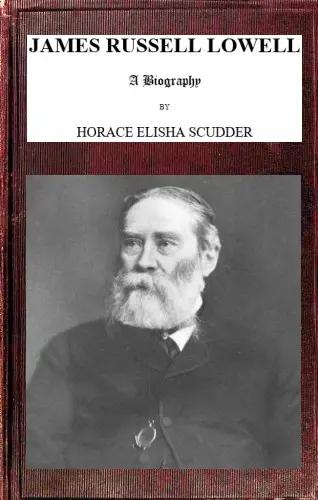
Horace Elisha Scudder
Horace Elisha Scudder
BEHIND THE BOOK
This eBook is for the use of anyone anywhere in the United States and most other parts of the world at no cost and with almost no restrictions whatsoever. You may copy it, give it away or re-use it under the terms of the Project Gutenberg License included with this eBook or online at www.gutenberg.org. If you are not located in the United States, you will have to check the laws of the country where you are located before using this eBook. Read the source licence.
The original source file, including credits and licence, is retained by this library. Request an original-format copy at no charge. Please include the book title and Project Gutenberg identifier #75367.
KEEP YOUR CURIOSITY GOING
Cécile Tormay

Moritz Busch
John L. Ransom
Frances Wright
Cécile Tormay

Mabel Potter Daggett