THE CLASSIC COLLECTION✦Noah Webster American Men of LettersCLASSIC FREE BOOKS
Noah Webster American Men of Letters
Horace Elisha Scudder

THE CLASSIC COLLECTION · 1894
"Childhood in Literature and Art" by Horace E. Scudder is a study that likely delves into the depiction of childhood across various literary and artistic traditions, written in the late 19th century. The book explores the evolution of childhood as a theme in literature and art, examining its significance from ancient texts to the modern era. Scudder aims to demonstrate how literature for children emerged alongside a growing recognition of childhood as a distinct and vital stage of life. The opening of the work sets the stage for this exploration by suggesting that the acknowledgment of childhood in literature has only been pronounced since the late 18th century. Scudder reflects on how earlier works often overlooked children as significant characters, focusing instead on adults and their experiences. He discusses the gradual shift in perspectives, noting the increasing representation of childhood in literature, especially prominent with poets like Wordsworth. The introduction promises to consider various epochs, from Greek and Roman literature to English and American texts, providing a historical framework to understand the evolving perceptions of childhood.
Introduction adapted from the source catalogue; source summaries may be automatically generated.
Free to read · English · 51,175 words · No account needed
MAKE TIME FOR A GOOD BOOK
On by default. Untick to stop anonymous reading totals. Each page counts after 10 seconds in view. How this works.
Anonymous counting is on unless you have switched it off.
Childhood, discovered at the close of the last century, 4;
in literature as related to literature for children, 4;
in Greek life, how attested, 7;
indirect reference to it in Homer, 8-11;
the direct reference, 11, 12;
in the Greek tragedians, 16-21;
in Plato, 22-26;
in the Greek Anthology, 29, 30;
in Virgil, 31, 32;
conception of, in Roman literature, 32, 33;
in Catullus, 33;
in epitaphs, 33, 34;
in Lucretius, 34;
in Juvenal, 35;
in classic conception of the supernatural, 34-36;
in the myth of Amor, 36-38;
in Old Testament literature, 42-46;
in New Testament literature, 48, 49;
attitude of the Saviour toward, 49;
as a sign of history, 52;
in the legends of the Apocryphal Gospels, 57-64;
of saints, 65-71;
under the forming power of Christianity, 73;
in Dante, 75-78;
in the representations of the Holy Family, 83-87;
in the art of the northern peoples, 87-92;
in the Madonnas of Raphael, 92-98;
in Raphael’s Amor, 98, 99;
in his representations of children generally, 100, 101;
in the art of Luca della Robbia, 101, 102;
its elemental force the same in all literatures, 105;
in ballad literature, 106-108;
in Chaucer, 108-111;
its character in early English literature, 112, 113;
in Spenser, 114, 115;
in the lighter strains of Elizabethan literature, 116, 117;
in Shakespeare, 117-126;
its absence in Milton, 127, 128;
how regarded in Puritanism, 128, 129;
in Bunyan, 129-133;
in Pope, 133, 134;
in Fielding, 135;
in Gray, 135-137;
in Goldsmith, 137-140;
in Cowper, 140, 141;
in the art of Reynolds and Gainsborough, 141, 142;
in Wordsworth, 144-157;
in De Quincey, 158-162;
in William Blake, 163-165;
in Dickens, 165-170;
in Paul and Virginia, 181-183;
in Lamartine, 184-186;
in Michelet de Musset, and Victor Hugo, 186, 187;
in German sentiment, 189;
illustrated by Luther, 190, 191;
in Richter, 191, 192;
in Goethe, 194-196;
in Froebel’s system, 197, 198;
in Overbeck’s art, 199, 200;
in Hans Christian Andersen, 201-216;
in Emerson, Bryant, Lowell, and Holmes, 217, 218;
in Whittier, 218, 219;
in Longfellow, 219-222;
mistakenly presented in sentimental verse, 222-225;
in Hawthorne, 225-234.
Child-Life in Poetry, 219.
Child-Life in Prose, 219.
Children, books for, the beginning of, 171, 172;
the characteristics of this beginning, 173;
their revolutionary character, 174;
the sincerity of the early books, 175;
the union of the didactic and artistic in, 177;
a new branch of literature, 177, 178;
art in connection with, 179.
Children’s Hour, The, 220.
Child’s Last Will, The, 106.
Christ, the childhood of, 48;
his scenes with children, 48, 49;
his attitude toward childhood, 49-52;
an efficient cause of the imagination, 55;
legends of, in the Apocryphal Gospels, 57-64;
his symbolic use of the child, 81;
his infancy the subject of art, 82;
especially in Netherlands, 89;
his words illustrative of human history, 102.
Christianity and French sentiment, 182.
Christianity, living and structural, 53;
its supersedure of ancient life, 54;
its germinal truth, 55;
its operative imagination, 56;
its care of children, especially orphans, 73;
its office of organization, 74;
its influence on the family, 75;
its insistence on death, 79;
in what its power consists, 81;
its ideals, 82;
its type in the Madonna, 83;
does not interfere with elemental facts, 105.
Christmas in Germany, 189.
Cimabue, 84.
Your reading position is saved on this browser. Take it to another device with a library code. Reading pages adapt to text, rather than matching a printed edition.
Horace Elisha Scudder
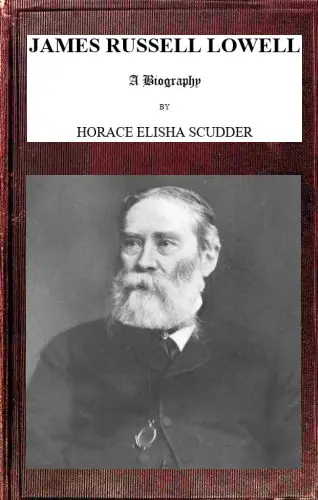
Horace Elisha Scudder
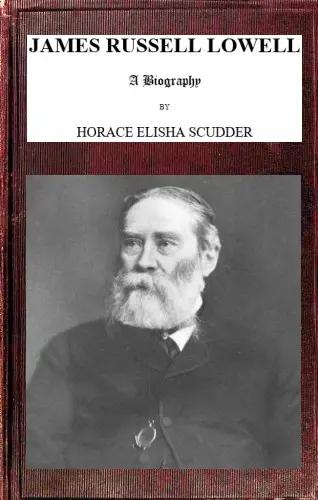
Horace Elisha Scudder
Horace Elisha Scudder
BEHIND THE BOOK
This eBook is for the use of anyone anywhere in the United States and most other parts of the world at no cost and with almost no restrictions whatsoever. You may copy it, give it away or re-use it under the terms of the Project Gutenberg License included with this eBook or online at www.gutenberg.org. If you are not located in the United States, you will have to check the laws of the country where you are located before using this eBook. Read the source licence.
The original source file, including credits and licence, is retained by this library. Request an original-format copy at no charge. Please include the book title and Project Gutenberg identifier #75367.
KEEP YOUR CURIOSITY GOING
Cécile Tormay

Moritz Busch
John L. Ransom
Frances Wright
Cécile Tormay

Mabel Potter Daggett