THE CLASSIC COLLECTION✦Noah Webster American Men of LettersCLASSIC FREE BOOKS
Noah Webster American Men of Letters
Horace Elisha Scudder

THE CLASSIC COLLECTION · 1894
"Childhood in Literature and Art" by Horace E. Scudder is a study that likely delves into the depiction of childhood across various literary and artistic traditions, written in the late 19th century. The book explores the evolution of childhood as a theme in literature and art, examining its significance from ancient texts to the modern era. Scudder aims to demonstrate how literature for children emerged alongside a growing recognition of childhood as a distinct and vital stage of life. The opening of the work sets the stage for this exploration by suggesting that the acknowledgment of childhood in literature has only been pronounced since the late 18th century. Scudder reflects on how earlier works often overlooked children as significant characters, focusing instead on adults and their experiences. He discusses the gradual shift in perspectives, noting the increasing representation of childhood in literature, especially prominent with poets like Wordsworth. The introduction promises to consider various epochs, from Greek and Roman literature to English and American texts, providing a historical framework to understand the evolving perceptions of childhood.
Introduction adapted from the source catalogue; source summaries may be automatically generated.
Free to read · English · 51,175 words · No account needed
MAKE TIME FOR A GOOD BOOK
On by default. Untick to stop anonymous reading totals. Each page counts after 10 seconds in view. How this works.
Anonymous counting is on unless you have switched it off.
[20] See an interesting statement of this Biblical force in the preface to Matthew Arnold’s The Great Prophecy of Israel’s Restoration, London, 1872.
[21] Hosea iv. 6.
[22] Zech. x. 9.
[23] Zech. viii. 4. 5.
[24] Isa. xi. 6-8.
[25] Malachi iv. 6.
[26] This and the other passages from the Apocryphal Gospels here cited are in the translation by Alexander Walker.
[27] Canto xxxii. 7-9, Cayley’s translation.
[28] C. E. Norton’s translation.
[29] Studies in the History of the Renaissance, p. 84.
[30] Sketches of the History of Christian Art, iii. 270.
[31] Legends of the Madonna, Part III.
[32] On Reading Shakespeare Through. The [London] Spectator, August
26, 1882.
[33] Epicurus, Leontion, and Ternissa.
[34] Essays, Historical and Theological. By J. B. Mozley, i. 430, 431.
Admetus, 19, 20.
Æneas, 31, 32.
Æneid, childhood in the, 31, 32.
Agamemnon, belief in, not dependent on the spade, 6.
Alice Fell, 3, 147.
Alkestis, a scene from the, 19, 20.
Amelia, Fielding’s, 135.
Amor, the myth of, 36-38;
as treated by Raphael, 99;
in the Elizabethan lullabies, 116, 117;
in Shakespeare, 124;
in Thorwaldsen’s art, 201.
Anchises, 31.
Ancient Leaves, cited, 31, 33.
Andersen, Hans Christian, the unique contribution of, to literature,
201;
the distinction between his stories and fairy tales, 202;
the basis of his fame, 207;
the life of his creations, 208;
their relation to human beings, 209;
the spring in his stories, 211;
his satires, 212;
the deeper experience in them, 213;
his essential childishness, 214;
his place with novelists, 215;
his interpretation of childhood, 216.
Andromache, the parting of, with Hector, 11, 12; the scene compared with one in the Œdipus Tyrannus, 16-18; and contrasted with Virgil, 31.
Angels of children, 144, 145.
Anna the prophetess, 47.
Anthology, the Greek, 28-30.
Antigone, 18.
Apocryphal Gospels, the legends of the, 57-64.
Art, American, as it relates to children, 237, 238.
Art, modern, the foible of, 38.
Arthur, in King John, 120.
Ascanius, 31, 32.
Askbert, 68, 69.
Astyanax, 11;
a miniature Hector, 14.
Atlantic Monthly, The, cited, 34.
Austin, Alfred, cited, 38.
Ballads relating to children, 106-108;
characteristics of, 113.
Barbauld, Mrs., 173;
her relation to the literature of childhood, 175;
Coleridge and Lamb on, 174.
Bathsheba’s child, 42.
Beatrice, first seen by Dante, 77.
Better Land, The, 222.
Bible, the truth of the, not dependent on external witness, 6; the university to many in modern times, 41, 42.
Blake, William, 163-165.
Boccaccio, 79.
Browning, Robert, as an interpreter of Greek life, 27;
his Pied Piper, 237.
Bryant, William Cullen, 217.
Bunyan, childhood in, 129-133.
Byzantine type of the Madonna, 83, 84.
Catullus, 33.
Chapman’s translation of Homer, quoted, 8, 9, 10, 16;
the quality of his defects, 9, 10.
Chaucer’s treatment of childhood, 108-111;
compared with the Madonna in art, 113.
Your reading position is saved on this browser. Take it to another device with a library code. Reading pages adapt to text, rather than matching a printed edition.
Horace Elisha Scudder
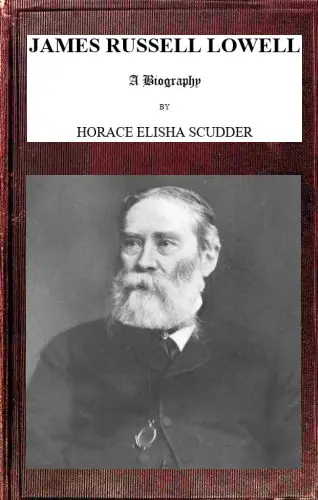
Horace Elisha Scudder
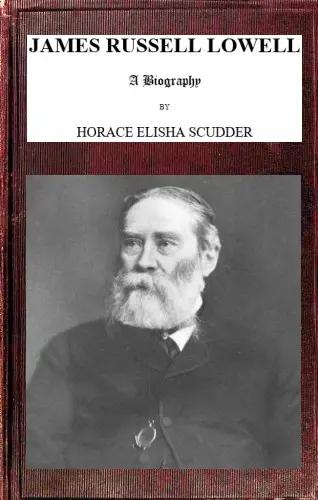
Horace Elisha Scudder
Horace Elisha Scudder
BEHIND THE BOOK
This eBook is for the use of anyone anywhere in the United States and most other parts of the world at no cost and with almost no restrictions whatsoever. You may copy it, give it away or re-use it under the terms of the Project Gutenberg License included with this eBook or online at www.gutenberg.org. If you are not located in the United States, you will have to check the laws of the country where you are located before using this eBook. Read the source licence.
The original source file, including credits and licence, is retained by this library. Request an original-format copy at no charge. Please include the book title and Project Gutenberg identifier #75367.
KEEP YOUR CURIOSITY GOING
Cécile Tormay

Moritz Busch
John L. Ransom
Frances Wright
Cécile Tormay

Mabel Potter Daggett