THE CLASSIC COLLECTION✦My diaries, being a personal narrative of events 1888-1914, Part 2 (1900-1914)CLASSIC FREE BOOKS
My diaries, being a personal narrative of events 1888-1914, Part 2 (1900-1914)
Wilfrid Scawen Blunt
THE CLASSIC COLLECTION · 1892
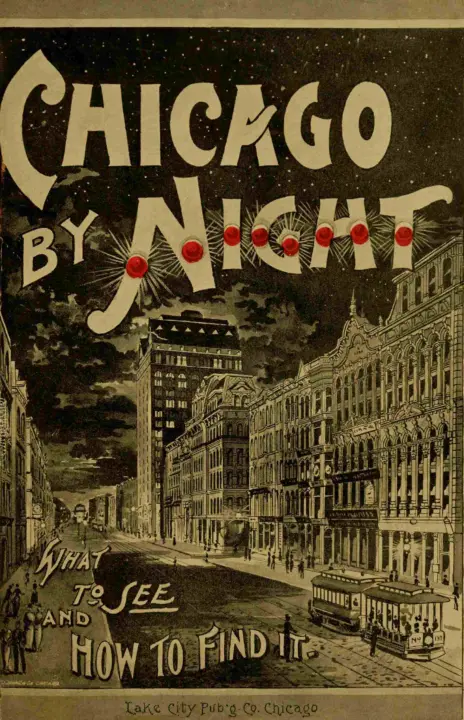
"Chicago by Day and Night: The Pleasure Seeker's Guide to the Paris of America" is a travel guide written in the late 19th century that offers insights into the vibrant social landscape of Chicago during its period of rapid growth and development. This guide serves as a valuable resource for visitors looking to navigate the diverse array of amenities and entertainment options available in the city, which has earned the moniker "Paris of America." At the start of the guide, the author sets the stage for experiencing Chicago, highlighting the multitude of attractions found in the city. The opening chapters introduce key topics such as where to stay, popular theaters, unique playhouses, and various forms of entertainment ranging from luxurious hotels to lively opera houses and music halls. The author's intent is clear: to equip the reader with the know-how to fully indulge in the recreational possibilities that Chicago affords, especially with the upcoming World's Fair that is drawing attention from all over the world. The author's lively descriptions suggest an enticing and bustling city where pleasure seekers can enjoy an exciting urban experience.
Introduction adapted from the source catalogue; source summaries may be automatically generated.
Free to read · English · 51,668 words · No account needed
MAKE TIME FOR A GOOD BOOK
On by default. Untick to stop anonymous reading totals. Each page counts after 10 seconds in view. How this works.
Anonymous counting is on unless you have switched it off.
When Mr. Edwin Lee Brown, a pioneer citizen of Chicago, died in the summer of 1891, there passed away the man who is said to have been the first to suggest the idea of holding a world’s fair in commemoration of the 400th anniversary of the discovery of America. The mind, therefore, which conceived this mighty project, over which all the nations are agog, is now stilled in everlasting sleep, but to those of us who have memories the fair will remain a lasting monument to the greatness of that master mind.
Mr. Brown first proposed his scheme to a meeting of citizens in 1885. His words took root immediately. Like a flash the idea rushed through the land, and met with such a unanimous response that long before the plan had the sanction of Congress the holding of the fair was a certainty. From the time it so became a settled fact in prospect a number of cities waged a strong and at times bitter fight for the honor of having the fair held within their favorite environ. New York was Chicago’s most formidable rival, though various other cities contested determinedly for the honor. Chicago’s campaign was carried on with energy. A stock company was formed and $5,000,000 subscribed--$5,000,000 more being pledged long before it was needed. Headquarters were established and agents sent all over the United States to enlist the national sympathies in behalf of Chicago. When the question of location finally came up before Congress the struggle was sharp, short and decisive. But a few ballots were taken when the decision was made. That night was a happy one in Chicago. Some people celebrated a little uproariously, it is true, but “everything went,” so to speak, on an occasion like that, and nobody complained of the widespread enthusiasm.
Not a day was lost. It seems a long stretch of time since then, but everything considered the progress made has been simply phenomenal. All judges agree on this point. The great nations of the earth, in response to the president’s proclamation, have signified their intention to be fully represented. The following is a list of the countries that will participate, showing the amounts appropriated by their respective governments:
Argentine Republic, $100,000; Austria-Hungary $147,000; Bolivia, $150,000; Brazil, $550,000 Chile, $100,000; Colombia, $100,000; Costa Rica, $100,000; Danish West Indies, $10,000; Ecuador, $125,000; France, $400,000; Germany, $20,000; $215,000; Great Britain, $125,000; British Guiana, British Honduras, $7,000; Cape Colony, $25,000; Ceylon, $40,000; Jamaica, $10,000; New Zealand, $27,500; Trinidad, $15,000; Guatemala, $120,000; Honduras, $20,000; Japan, $700,000; Mexico, $750,000; Dutch Guiana, $6,000; Dutch West Indies, $10,000; Nicaragua, $30,000; Peru, $140,000; Salvador, $30,000; Cuba, $25,000.
Your reading position is saved on this browser. Take it to another device with a library code. Reading pages adapt to text, rather than matching a printed edition.
BEHIND THE BOOK
This eBook is for the use of anyone anywhere in the United States and most other parts of the world at no cost and with almost no restrictions whatsoever. You may copy it, give it away or re-use it under the terms of the Project Gutenberg License included with this eBook or online at www.gutenberg.org. If you are not located in the United States, you will have to check the laws of the country where you are located before using this eBook. Read the source licence.
The original source file, including credits and licence, is retained by this library. Request an original-format copy at no charge. Please include the book title and Project Gutenberg identifier #70675.
KEEP YOUR CURIOSITY GOING
Wilfrid Scawen Blunt
Wilfrid Scawen Blunt

E. W. (Edgar Watson) Howe
Francis Greenleaf Allinson & Anne C. E. (Anne Crosby Emery) Allinson
Cyrenus Cole

John Martineau