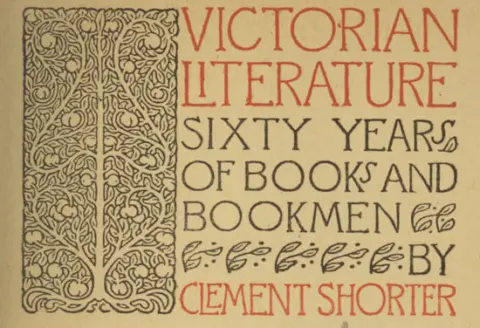
Victorian Literature: Sixty Years of Books and Bookmen
Clement King Shorter
THE CLASSIC COLLECTION · 1896
"Charlotte Brontë and Her Circle" by Clement King Shorter is a biographical account written in the late 19th century. The book explores the life and relationships of Charlotte Brontë, her family, and her contemporaries, adding new insights and letters that have not been previously published. The work seeks to present a more nuanced understanding of Charlotte and her sisters, challenging the notions established by earlier biographies, particularly that of Mrs. Gaskell. The opening of the book begins with a preface where Shorter acknowledges the contributions of various individuals who assisted him in compiling the new material about the Brontës. He expresses gratitude to friends and family who provided letters and information, highlighting the significance of these documents in painting a fuller picture of Charlotte's life. Additionally, the preface transitions smoothly into an overview of key figures in the Brontë family, including an exploration of Patrick Brontë and Maria Branwell, before launching into detailed accounts of Charlotte’s life and literary journey. Overall, the opening establishes the book's ambition to deepen the reader's appreciation of the Brontë sisters' literary legacy and the complexities of their lives, marked by personal struggles and creativity.
Introduction adapted from the source catalogue; source summaries may be automatically generated.
Free to read · English · 178,923 words · No account needed
MAKE TIME FOR A GOOD BOOK
On by default. Untick to stop anonymous reading totals. Each page counts after 10 seconds in view. How this works.
Anonymous counting is on unless you have switched it off.
'I am getting quite to have a regard for the Carter family. At home I should not care for them, but here they are friends. Mr. Carter was at Mirfield yesterday and saw Anne. He says she was looking uncommonly well. Poor girl, she must indeed wish to be at home. As to Mrs. Collins' report that Mrs. Sidgwick intended to keep me permanently, I do not think that such was ever her design. Moreover, I would not stay without some alterations. For instance, this burden of sewing would have to be removed. It is too bad for anything. I never in my whole life had my time so fully taken up. Next week we are going to Swarcliffe, Mr. Greenwood's place near Harrogate, to stay three weeks or a month. After that time I hope Miss Hoby will return. Don't show this letter to papa or aunt, only to Branwell. They will think I am never satisfied wherever I am. I complain to you because it is a relief, and really I have had some unexpected mortifications to put up with. However, things may mend, but Mrs. Sidgwick expects me to do things that I cannot do--to love her children and be entirely devoted to them. I am really very well. I am so sleepy that I can write no more. I must leave off. Love to all.--Good-bye.
'Direct your next dispatch--J. Greenwood, Esq., Swarcliffe, near
Harrogate.
'SWARCLIFFE, June 15th, 1839.
'MY DEAREST ELLEN,--I am writing a letter to you with pencil because I cannot just now procure ink without going into the drawing-room, where I do not wish to go. I only received your letter yesterday, for we are not now residing at Stonegappe but at Swarcliffe, a summer residence of Mr. Greenwood's, Mrs. Sidgwick's father; it is near Harrogate and Ripon. I should have written to you long since, and told you every detail of the utterly new scene into which I have lately been cast, had I not been daily expecting a letter from yourself, and wondering and lamenting that you did not write, for you will remember it was your turn. I must not bother you too much with my sorrows, of which, I fear, you have heard an exaggerated account. If you were near me, perhaps I might be tempted to tell you all, to grow egotistical, and pour out the long history of a private governess's trials and crosses in her first situation. As it is, I will only ask you to imagine the miseries of a reserved wretch like me thrown at once into the midst of a large family, proud as peacocks and wealthy as Jews, at a time when they were particularly gay, when the house was filled with company--all strangers: people whose faces I had never seen before. In this state I had a charge given of a set of horrid children, whom I was expected constantly to amuse, as well as instruct. I soon found that the constant demand on my stock of animal spirits reduced them to the lowest state of exhaustion; at times I felt--and, I suppose seemed--depressed. To my astonishment, I was taken to task on the subject by Mrs. Sidgwick, with a sternness of manner and a harshness of language scarcely credible. Like a fool, I cried most bitterly. I could not help it; my spirits quite failed me at first. I thought I had done my best, strained every nerve to please her; and to be treated in that way, merely because I was shy and sometimes melancholy, was too bad. At first I was for giving all up and going home. But after a little reflection, I determined to summon what energy I had, and to weather the storm. I said to myself, "I had never yet quitted a place without gaining a friend; adversity is a good school; the poor are born to labour, and the dependent to endure." I resolved to be patient, to command my feelings, and to take what came; the ordeal, I reflected, would not last many weeks, and I trusted it would do me good. I recollected the fable of the willow and the oak; I bent quietly, and now I trust the storm is blowing over. Mrs. Sidgwick is generally considered an agreeable woman; so she is, I doubt not, in general society. Her health is sound, her animal spirits good, consequently she is cheerful in company. But oh! does this compensate for the absence of every fine feeling, of every gentle and delicate sentiment? She behaves somewhat more civilly to me now than she did at first, and the children are a little more manageable; but she does not know my character, and she does not wish to know it. I have never had five minutes conversation with her since I came, except when she was scolding me. I have no wish to be pitied, except by yourself. If I were talking to you I could tell you much more. Good-bye, dear, dear Ellen. Write to me again very soon, and tell me how you are.
Your reading position is saved on this browser. Take it to another device with a library code. Reading pages adapt to text, rather than matching a printed edition.
Clement King Shorter
Clement King Shorter
BEHIND THE BOOK
This eBook is for the use of anyone anywhere in the United States and most other parts of the world at no cost and with almost no restrictions whatsoever. You may copy it, give it away or re-use it under the terms of the Project Gutenberg License included with this eBook or online at www.gutenberg.org. If you are not located in the United States, you will have to check the laws of the country where you are located before using this eBook. Read the source licence.
The original source file, including credits and licence, is retained by this library. Request an original-format copy at no charge. Please include the book title and Project Gutenberg identifier #19011.
KEEP YOUR CURIOSITY GOING
Cécile Tormay

Moritz Busch
John L. Ransom
Frances Wright
Cécile Tormay

Mabel Potter Daggett