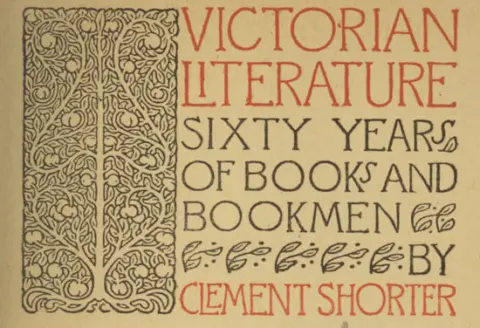
Victorian Literature: Sixty Years of Books and Bookmen
Clement King Shorter
THE CLASSIC COLLECTION · 1896
"Charlotte Brontë and Her Circle" by Clement King Shorter is a biographical account written in the late 19th century. The book explores the life and relationships of Charlotte Brontë, her family, and her contemporaries, adding new insights and letters that have not been previously published. The work seeks to present a more nuanced understanding of Charlotte and her sisters, challenging the notions established by earlier biographies, particularly that of Mrs. Gaskell. The opening of the book begins with a preface where Shorter acknowledges the contributions of various individuals who assisted him in compiling the new material about the Brontës. He expresses gratitude to friends and family who provided letters and information, highlighting the significance of these documents in painting a fuller picture of Charlotte's life. Additionally, the preface transitions smoothly into an overview of key figures in the Brontë family, including an exploration of Patrick Brontë and Maria Branwell, before launching into detailed accounts of Charlotte’s life and literary journey. Overall, the opening establishes the book's ambition to deepen the reader's appreciation of the Brontë sisters' literary legacy and the complexities of their lives, marked by personal struggles and creativity.
Introduction adapted from the source catalogue; source summaries may be automatically generated.
Free to read · English · 178,923 words · No account needed
MAKE TIME FOR A GOOD BOOK
On by default. Untick to stop anonymous reading totals. Each page counts after 10 seconds in view. How this works.
Anonymous counting is on unless you have switched it off.
'Deepest slumbers followed raving,
Yet, methought, I brooded still;
Still I saw my country bleeding,
Dying for a Tyrant's will.
'Not because my bliss was blasted,
Burned within the avenging flame;
Not because my scattered kindred
Died in woe or lived in shame.
'God doth know I would have given
Every bosom dear to me,
Could that sacrifice have purchased
Tortured Gondal's liberty!
'But that at Ambition's bidding
All her cherished hopes should wane,
That her noblest sons should muster,
Strive and fight and fall in vain.
'Hut and castle, hall and cottage,
Roofless, crumbling to the ground,
Mighty Heaven, a glad Avenger
Thy eternal Justice found.
'Yes, the arm that once would shudder
Even to grieve a wounded deer,
I beheld it, unrelenting,
Clothe in blood its sovereign's prayer.
'Glorious Dream! I saw the city
Blazing in Imperial shine,
And among adoring thousands
Stood a man of form divine.
'None need point the princely victim--
Now he smiles with royal pride!
Now his glance is bright as lightning,
Now the knife is in his side!
'Ah! I saw how death could darken,
Darken that triumphant eye!
His red heart's blood drenched my dagger;
My ear drank his dying sigh!
'Shadows come! what means this midnight?
O my God, I know it all!
Know the fever dream is over,
Unavenged, the Avengers fall!'
There are, indeed, a few fragments, all written in that tiny handwriting which the girls affected, and bearing various dates from 1833 to 1840. A new edition of Emily's poems, will, by virtue of these verses, have a singular interest for her admirers. With all her gifts as a poet, however, it is by Wuthering Heights that Emily Bronte is best known to the world; and the weirdness and force of that book suggest an inquiry concerning the influences which produced it. Dr. Wright, in his entertaining book, The Brontes in Ireland, recounts the story of Patrick Bronte's origin, and insists that it was in listening to her father's anecdotes of his own Irish experiences that Emily obtained the weird material of Wuthering Heights. It is not, of course, enough to point out that Dr. Wright's story of the Irish Brontes is full of contradictions. A number of tales picked up at random from an illiterate peasantry might very well abound in inconsistencies, and yet contain some measure of truth. But nothing in Dr. Wright's narrative is confirmed, save only the fact that Patrick Bronte continued throughout his life in some slight measure of correspondence with his brothers and sisters--a fact rendered sufficiently evident by a perusal of his will. Dr. Wright tells of many visits to Ireland in order to trace the Bronte traditions to their source; and yet he had not--in his first edition--marked the elementary fact that the registry of births in County Down records the existence of innumerable Bruntys and of not a single Bronte. Dr. Wright probably made his inquiries with the stories of Emily and Charlotte well in mind. He sought for similar traditions, and the quick-witted Irish peasantry gave him all that he wanted. They served up and embellished the current traditions of the neighbourhood for his benefit, as the peasantry do everywhere for folklore enthusiasts. Charlotte Bronte's uncle Hugh, we are told, read the Quarterly Review article upon Jane Eyre, and, armed with a shillelagh, came to England, in order to wreak vengeance upon the writer of the bitter attack. He landed at Liverpool, walked from Liverpool to Haworth, saw his nieces, who 'gathered round him,' and listened to his account of his mission. He then went to London and made abundant inquiries--but why pursue this ludicrous story further? In the first place, the Quarterly Review article was published in December 1848--after Emily was dead, and while Anne was dying. Very soon after the review appeared Charlotte was informed of its authorship, and references to Miss Rigby and the Quarterly are found more than once in her correspondence with Mr. Williams. {158}
Your reading position is saved on this browser. Take it to another device with a library code. Reading pages adapt to text, rather than matching a printed edition.
Clement King Shorter
Clement King Shorter
BEHIND THE BOOK
This eBook is for the use of anyone anywhere in the United States and most other parts of the world at no cost and with almost no restrictions whatsoever. You may copy it, give it away or re-use it under the terms of the Project Gutenberg License included with this eBook or online at www.gutenberg.org. If you are not located in the United States, you will have to check the laws of the country where you are located before using this eBook. Read the source licence.
The original source file, including credits and licence, is retained by this library. Request an original-format copy at no charge. Please include the book title and Project Gutenberg identifier #19011.
KEEP YOUR CURIOSITY GOING
Cécile Tormay

Moritz Busch
John L. Ransom
Frances Wright
Cécile Tormay

Mabel Potter Daggett