THE CLASSIC COLLECTION✦An outlaw’s diary: the CommuneCLASSIC FREE BOOKS
An outlaw’s diary: the Commune
Cécile Tormay
THE CLASSIC COLLECTION · 1890
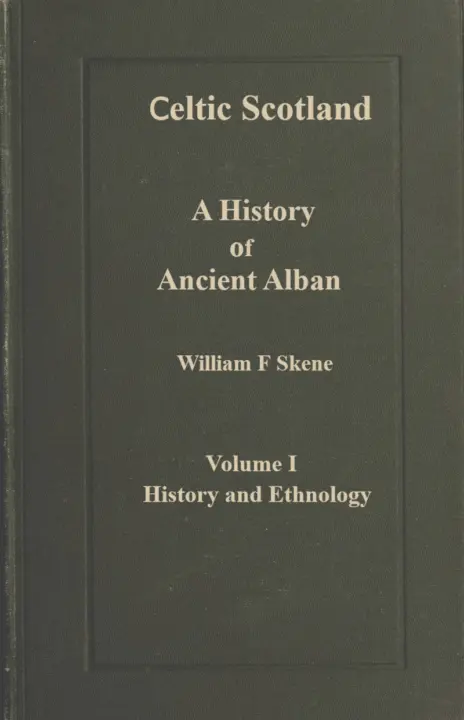
"Celtic Scotland: A History of Ancient Alban" by William F. Skene is a historical account written in the late 19th century. The work delves into the early civil history, ethnology, and the complex cultural landscape of ancient Scotland, known as Alban, during the Celtic period. This meticulous exploration aims to sift through historical inaccuracies to present a clearer picture of Scotland's early historical narratives. At the start of the book, the author outlines the challenging task of revisiting early Scottish history by critically evaluating the sources and narratives that have long been accepted. He expresses a desire to discard the elaborate but often inaccurate histories constructed by earlier writers, such as John of Fordun, in favor of a more authentic representation based on trustworthy authorities. The initial chapters introduce key historical events such as the Roman invasions and the political landscape of ancient Britain, establishing the groundwork for a nuanced discussion of the various tribes and their interactions with one another and with invading forces.
Introduction adapted from the source catalogue; source summaries may be automatically generated.
Free to read · English · 191,540 words · No account needed
MAKE TIME FOR A GOOD BOOK
On by default. Untick to stop anonymous reading totals. Each page counts after 10 seconds in view. How this works.
Anonymous counting is on unless you have switched it off.
Quid attexam Britannias interfuso mari toto orbe divisas, a Romanis in orbem terrarum redactas? Tremuit hos Scotia, quae terris nihil debet.
SECUNDA VITA S. PATRICII, ap. Colgan.
Causa haec erat primae peregrinationis atque adventus ejus in
Scotiam.—Tr. Th. p. 12.
QUINTA VITA S. PATRICII, ap. Colgan.
Scotiam atque Britanniam, Angliam et Normanniam caeterasque gentes insulanorum baptizabis.—Tr. Th. p. 51.
NOTKERUS BALBULUS, in Martyrologio.
v. Id. Junias. In Scotia insula Hibernia depositio S. Columbae, cognomento apud suos Columbkilli.
To which it may be added that King Alfred, in his translation of Orosius, translates the passage, ‘Hibernia, quae a gentibus Scotorum colitur,’ by ‘Ighernia, which we call Scotland.’
For the second proposition we have the following:—
In the Pictish Chronicle the name of Scotia is still applied to Ireland. ‘Scotti in quarta etate Scociam sive Hiberniam obtinuerunt,’ and the only names used for Scotland are Albania and Pictavia. ‘xxx. Brude regnaverunt Hiberniam et Albaniam.’ ‘Danari vastaverunt Pictaviam ad Cluanan et Duncalden.’ ‘Normanni predaverunt Duncalden, omnemque Albaniam.’—Chron. Picts and Scots, pp. 3, 5, 8, 9.
In the following century we have
‘Regnum Scotorum fuit, inter cetera regna Terrarum, quondam nobile, forte, potens.... Ex Albanacto, trinepote potentis Enee, Dicitur Albania: littera prisca probat. A Scota, nata Pharaonis regis Egypti, Ut veteres tradunt, Scotia nomen habet.’ Chron. Picts and Scots, p. 117.
Illa regio, quae nunc corrupte vocatur Scotia, antiquitus appellabatur Albania.... Nunc vero corrupte vocatur Scotia.—Ib. p. 135.
Albania est, quae modo Scotia vocatur.—Ib. p. 153.
Albania tota, quae modo Scotia vocatur.—Ib. p. 154.
Monarchia totius Albaniae quae nunc Scotia dicitur.—Chron. Picts and
Scots, p. 209.
That part of the Saxon Chronicle which precedes the death of King Alfred in 901, and according to the best authorities was compiled in his reign, nowhere applies the name of Scotland to North Britain; but in that part of the Chronicle which extends from 925 to 975, and which, if not contemporary, was at least compiled in the latter year, has, in 933, ‘In this year King Æthelstan went into Scotland;’ and in 937, in the contemporary poem on the battle of Brunanburg, Constantine’s people are called Sceotta, and the name applied to Ireland is Yraland.—Saxon Chron., ad an.
The transference of the name of Scotia from Ireland to Scotland seems to have been completed in the eleventh century, for Marianus Scotus, who lived from 1028 to 1081, calls Malcolm the Second, who died 1034, ‘rex Scotiae’ (Chron. Picts and Scots, p. 65), and Brian, King of Ireland, ‘rex Hiberniae.’ The author of the Life of St. Cadroë, in the same century, applies the name of Scotia to North Britain (ib. p. 113); while Adam of Bremen, who wrote in 1080, has ‘Hibernia Scottorum patria, quae nunc Irland dicitur’ (De situ Daniae, c. 247).
Your reading position is saved on this browser. Take it to another device with a library code. Reading pages adapt to text, rather than matching a printed edition.
BEHIND THE BOOK
This eBook is for the use of anyone anywhere in the United States and most other parts of the world at no cost and with almost no restrictions whatsoever. You may copy it, give it away or re-use it under the terms of the Project Gutenberg License included with this eBook or online at www.gutenberg.org. If you are not located in the United States, you will have to check the laws of the country where you are located before using this eBook. Read the source licence.
The original source file, including credits and licence, is retained by this library. Request an original-format copy at no charge. Please include the book title and Project Gutenberg identifier #71258.
KEEP YOUR CURIOSITY GOING
Cécile Tormay

Moritz Busch
John L. Ransom
Frances Wright
Cécile Tormay

Mabel Potter Daggett