THE CLASSIC COLLECTION✦An outlaw’s diary: the CommuneCLASSIC FREE BOOKS
An outlaw’s diary: the Commune
Cécile Tormay
THE CLASSIC COLLECTION · 1890
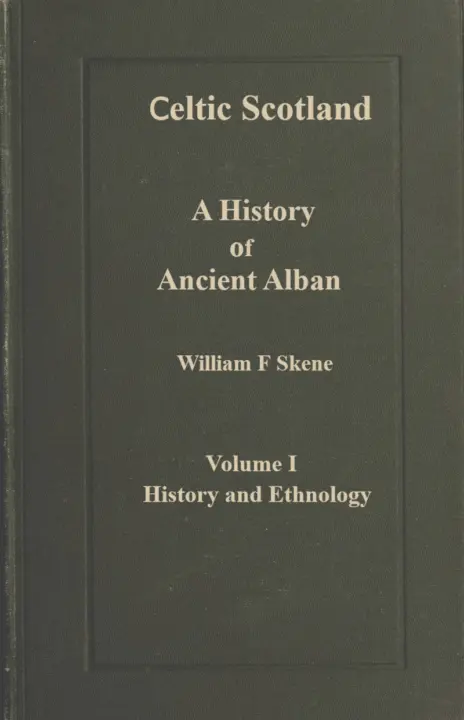
"Celtic Scotland: A History of Ancient Alban" by William F. Skene is a historical account written in the late 19th century. The work delves into the early civil history, ethnology, and the complex cultural landscape of ancient Scotland, known as Alban, during the Celtic period. This meticulous exploration aims to sift through historical inaccuracies to present a clearer picture of Scotland's early historical narratives. At the start of the book, the author outlines the challenging task of revisiting early Scottish history by critically evaluating the sources and narratives that have long been accepted. He expresses a desire to discard the elaborate but often inaccurate histories constructed by earlier writers, such as John of Fordun, in favor of a more authentic representation based on trustworthy authorities. The initial chapters introduce key historical events such as the Roman invasions and the political landscape of ancient Britain, establishing the groundwork for a nuanced discussion of the various tribes and their interactions with one another and with invading forces.
Introduction adapted from the source catalogue; source summaries may be automatically generated.
Free to read · English · 191,540 words · No account needed
MAKE TIME FOR A GOOD BOOK
On by default. Untick to stop anonymous reading totals. Each page counts after 10 seconds in view. How this works.
Anonymous counting is on unless you have switched it off.
The name of Alban occurs in this form in the nominative also in the Prophecy of St. Berchan throughout, as ‘Dia mo lan Alban is Eire’ (Chron. Picts and Scots, p. 79); Ba ard Albain chathair bhinn (ib. p. 87); Mescfaidh Albain ima chenn (ib. p. 89); Ba lomlan Albain o a la (ib. p. 91, etc.).
So also the form of Alban appears as the name of Scotland in all the Welsh documents, and the Pictish Chronicle, which is evidently translated from a Gaelic original, has Albania, which must have been formed from Alban.
The affectation of using the form Alba in the English rendering of the name was first introduced by the late Dr. O’Donovan, and has been adopted without much consideration by some Scottish writers; but the late Professor O’Curry, an equally accurate Irish scholar, invariably used the form Alban, and the author prefers retaining this conventional form.
Footnote 3:
Haec autem (Hibernia) proprie patria Scotorum est.—Bede, Hist. Ec.
B. i. c. i.
Footnote 4:
The first proposition is clearly established by the following catena
of authorities:—
ISIDORUS HISPALENSIS. Origines.
Scotia eadem et Ibernia, proxima Britanniae insula.... Unde et Ibernia dicta. Scotia autem quod ab Scotorum gentibus colitur appellata.—Lib. xiv. c. vi.
THEODORIC. Vita S. Rumoldi, 1st July.—Surius, tom. vii. p. 563.
Movit hoc ab ortu Ægyptus et India ad occasum alter pene orbis Britannia cum adjacente Scotia. Tota insula Scotiae mirabatur.
RAVENNATIS ANONYMI Cosmographia.
Finitur autem ipsa Britannia a facie septentrionalis (habet) insulam
Scotiam.
Iterum in eodem oceano occidentali post ipsam magnam Britanniam ... est insula maxima quae dicitur Ibernia, quae, ut dictum est, et Scotia appellatur.
ADAMNANUS in vita S. Columbae.
De Scotia ad Britanniam ... enavigavit.—Pref. sec.
In Scotia et in Britannia.—Lib. i. cap. i.
De Scotia ad Britanniam ... adduxit.—Lib. i. cap. xxix.
Per totam nostram Scotiam et omnium totius orbis insularum maximam Britanniam.—Lib. iii. cap. xxiv.
BÆDA. Historia Ecclesiastica Gentis Anglorum.
Haec autem (Hibernia) proprie patria Scottorum est.—Lib. i. cap. i.
Dominis carissimis fratribus episcopis, vel abbatibus per universam Scottiam, Laurentius, Mellitus, et Justus episcopi.—(Letter addressed to ‘Scotti qui Hiberniam insulam Britanniae proximam incolunt.’)—Lib. ii. cap. iv.
Columba presbyter de Scottia venit Brittaniam.—Lib. v. cap. xxiv.
Martyrologium. De Scotia insula venientes. 13th November.
HUCBALDUS, in vita S. Lebuini.
Britannia oceani insula, interfuso mari a toto orbe divisa ... cui adjacet Scotia sive Hybernia.—Surius, tom. iii. p. 27.
Scotia fertilis Sanctorum virorum insula.—Surius, tom. iii. p. 114.
Scotia quae et Hibernia dicitur, insula est maris oceani, foecunda quidem glebis, sed viris Sanctissimis clarior.—Surius, tom. iii. p. 132.
HEGESIPPUS. De excidio Hierosolymitano.
Your reading position is saved on this browser. Take it to another device with a library code. Reading pages adapt to text, rather than matching a printed edition.
BEHIND THE BOOK
This eBook is for the use of anyone anywhere in the United States and most other parts of the world at no cost and with almost no restrictions whatsoever. You may copy it, give it away or re-use it under the terms of the Project Gutenberg License included with this eBook or online at www.gutenberg.org. If you are not located in the United States, you will have to check the laws of the country where you are located before using this eBook. Read the source licence.
The original source file, including credits and licence, is retained by this library. Request an original-format copy at no charge. Please include the book title and Project Gutenberg identifier #71258.
KEEP YOUR CURIOSITY GOING
Cécile Tormay

Moritz Busch
John L. Ransom
Frances Wright
Cécile Tormay

Mabel Potter Daggett