Natalie Page
Katharine Haviland-Taylor
THE CLASSIC COLLECTION · 1917
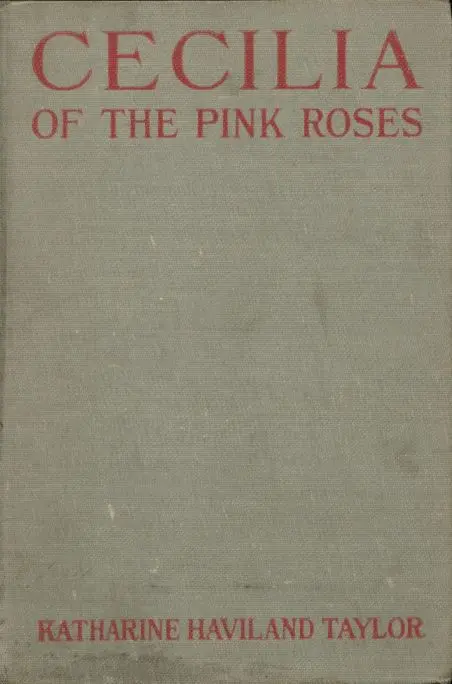
"Cecilia of the Pink Roses" by Katharine Haviland Taylor is a novel written in the early 20th century. The story follows a young girl named Cecilia Madden, who grapples with her humble beginnings in a working-class family while trying to uphold her dreams of becoming a 'lady.' As she navigates her responsibilities as a caretaker for her siblings amidst family struggles, the narrative delves into themes of love, sacrifice, and the pursuit of social acceptance. The opening of the novel introduces Cecilia's challenging home life, characterized by the oppressive heat of their flat and her mother's illness. Cecilia, a seven-year-old girl, takes care of her younger brother Johnny while managing household duties in a setting filled with the chaos of daily life. The chapter reveals Cecilia’s deep emotional connection with her family, particularly her mother, and juxtaposes her youthful innocence against the burdens she carries. As her father, Jeremiah, leaves for the doctor, the gravity of their situation unfolds, laying the groundwork for Cecilia’s character development throughout the novel. The beginning encapsulates the raw struggles of a working-class family while highlighting Cecilia's resilience and nurturing spirit.
Introduction adapted from the source catalogue; source summaries may be automatically generated.
Free to read · English · 47,430 words · No account needed
MAKE TIME FOR A GOOD BOOK
On by default. Untick to stop anonymous reading totals. Each page counts after 10 seconds in view. How this works.
Anonymous counting is on unless you have switched it off.
"My children," said Cecilia, "are gentle, white ghosts, and they play and do only what I dream. They would never do that, I would send them from my arms first, and I do--love them. My arms would be empty. Am I going to be a sentimental old maid, Father McGowan-dear?"
Father McGowan said he thought not. Then he turned and again quite brazenly kissed Cecilia's small palm.
"Cecilia," he said, "to-day seems like the end of the world to me.... My soul is on wings. Dear child, I wish you could know what you have always been to me. But you do, don't you?"
"Yes, Father McGowan-dear," answered Cecilia. "I have known. I have always brought my worst hurts to you, and one does that only to one who loves."
"Well, well," said Father McGowan, unused to personal sentiment and awkward from it, "now we understand. How's John?"
"Wonderful," answered Cecilia. She smiled mischievously. "Almost a boy again," she added in explanation.
"Twombly responsible?" asked Father McGowan.
"Yes," she answered, "entirely. His ideals when transplanted are unusually good. However, they do not seem to take root in him."
"Well, well," said Father McGowan. He stretched in a tired way and said he must go. No, he couldn't stay for dinner, for he was to take the night turn at nursing a burned iron moulder. "Won't he be thirsty when he sniffs my lemonade?" said Father McGowan.
Cecilia rang; the lofty person appeared. "Just a minute," said Father McGowan. "I want one more word with you." The person faded.
"Cecilia," said Father McGowan, "there's a doctor to whom your father is playing God. I don't want to bother you about it, but to-day, coming here, I somehow felt as if I ought to." Father McGowan settled on the edge of a chair, and he told Cecilia the dry facts of the ruin of Doctor Van Dorn. "Try to make your father see that it's better not to tamper with the works," he ended; "to leave that to whoever or whatever is pushing the old ball around.... Well, good-bye, dear child. Oh, I can get out without the help of his Royal Buttons, thank you."
After he left Cecilia again settled in front of the fire to think of her new problem. Her brain eluded it with a maddening persistency. She thought of a new frock, the Girls' Club, a dance. Then again of the really horrible revelation, and the unexpected obstinacy of her father.
She looked up at a softly coloured painting above the mantel, which she'd had painted in Paris. It had been marvellously done, and especially since the only model had been a small tintype.
Your reading position is saved on this browser. Take it to another device with a library code. Reading pages adapt to text, rather than matching a printed edition.
Katharine Haviland-Taylor
BEHIND THE BOOK
This eBook is for the use of anyone anywhere in the United States and most other parts of the world at no cost and with almost no restrictions whatsoever. You may copy it, give it away or re-use it under the terms of the Project Gutenberg License included with this eBook or online at www.gutenberg.org. If you are not located in the United States, you will have to check the laws of the country where you are located before using this eBook. Read the source licence.
The original source file, including credits and licence, is retained by this library. Request an original-format copy at no charge. Please include the book title and Project Gutenberg identifier #60099.
KEEP YOUR CURIOSITY GOING
Coulson Kernahan

Maurice Baring
Frances Wright
Cécile Tormay

Frederic Jesup Stimson

W. H. P. (William Henry Pope) Jarvis