
Natalie Page
Katharine Haviland-Taylor
THE CLASSIC COLLECTION · 1917
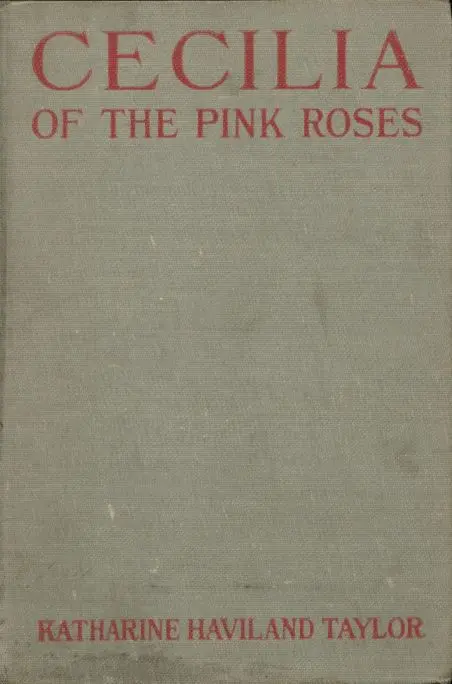
"Cecilia of the Pink Roses" by Katharine Haviland Taylor is a novel written in the early 20th century. The story follows a young girl named Cecilia Madden, who grapples with her humble beginnings in a working-class family while trying to uphold her dreams of becoming a 'lady.' As she navigates her responsibilities as a caretaker for her siblings amidst family struggles, the narrative delves into themes of love, sacrifice, and the pursuit of social acceptance. The opening of the novel introduces Cecilia's challenging home life, characterized by the oppressive heat of their flat and her mother's illness. Cecilia, a seven-year-old girl, takes care of her younger brother Johnny while managing household duties in a setting filled with the chaos of daily life. The chapter reveals Cecilia’s deep emotional connection with her family, particularly her mother, and juxtaposes her youthful innocence against the burdens she carries. As her father, Jeremiah, leaves for the doctor, the gravity of their situation unfolds, laying the groundwork for Cecilia’s character development throughout the novel. The beginning encapsulates the raw struggles of a working-class family while highlighting Cecilia's resilience and nurturing spirit.
Introduction adapted from the source catalogue; source summaries may be automatically generated.
Free to read · English · 47,430 words · No account needed
MAKE TIME FOR A GOOD BOOK
On by default. Untick to stop anonymous reading totals. Each page counts after 10 seconds in view. How this works.
Anonymous counting is on unless you have switched it off.
"Miss Cecilia----" said Stuyvesant Twombly into the telephone which stood on his desk. His heart hammered so that his ears ached, and the furniture in the room swayed and bent.
"I want to ask you a favour," he heard. "It matters a great deal to me, and, well, to----" she stopped.
"Yes?" he said, aware that his voice was crisp. He had not meant to have it so, but his voice, when Cecilia was near, did as it pleased.
"It's about John," he heard her say very quickly. "He--you know he cares a great deal about you, and that you influence him greatly. You did more than any one else ever has for him."
"I'm sure," interrupted K. Stuyvesant, "I'm glad. I don't mean that," he blurted out; "I mean----"
"I understand," said Cecilia; "I telephoned you to ask you if you wouldn't come to the house sometimes because of him? I--I'm not home very much. The--the little incident of the boat is quite forgotten----"
K. Stuyvesant coughed.
"I understand you," said Cecilia. "I hope you do me?"
"Yes," answered K. Stuyvesant miserably.
"You will help him?" she questioned further.
"I will," he answered. "I told Miss Marjory I'd do----
"Yes," broke in Cecilia, unable to bear more; "she told me what you said. I'll be more grateful than you can ever know, too."
K. Stuyvesant swallowed convulsively.
"Good-bye," she said in a small voice. "Good-bye," he answered gruffly. He hung up the receiver and stared across the room. His teeth were set with cruel tightness on his lower lip.... He remembered how her little hand had crept into his beneath a blue and green checked steamer blanket. He almost wished he could forget it.... And that distance at which she'd kept him had not been what he'd thought, her proving of his sudden love, but only her inclination. Lord, how he'd dreamed, and still dreamed! ... He'd do what he could for John. He believed much was possible.
And how even the sound of her voice left him! Shaking, and aching with his want. First hot, then cold.... He stared, unseeingly, across his office. He recalled his first evening at the country house when he'd stood by the white wall with a Greek relief, worshipping a little Irish maid.
Then Marjory had come. He wished she hadn't. He almost hated her, and found no reason why he should, except for her telling him something which haunted his long nights.... "Cecilia, Cecilia!" ran through his head,--and heart.... For her, he'd do what he could for John. He reached for the telephone and called a number he knew too well. After an interval, and a request, John answered.
Your reading position is saved on this browser. Take it to another device with a library code. Reading pages adapt to text, rather than matching a printed edition.
Katharine Haviland-Taylor
BEHIND THE BOOK
This eBook is for the use of anyone anywhere in the United States and most other parts of the world at no cost and with almost no restrictions whatsoever. You may copy it, give it away or re-use it under the terms of the Project Gutenberg License included with this eBook or online at www.gutenberg.org. If you are not located in the United States, you will have to check the laws of the country where you are located before using this eBook. Read the source licence.
The original source file, including credits and licence, is retained by this library. Request an original-format copy at no charge. Please include the book title and Project Gutenberg identifier #60099.
KEEP YOUR CURIOSITY GOING
Coulson Kernahan

Maurice Baring
Frances Wright
Cécile Tormay

Frederic Jesup Stimson

W. H. P. (William Henry Pope) Jarvis