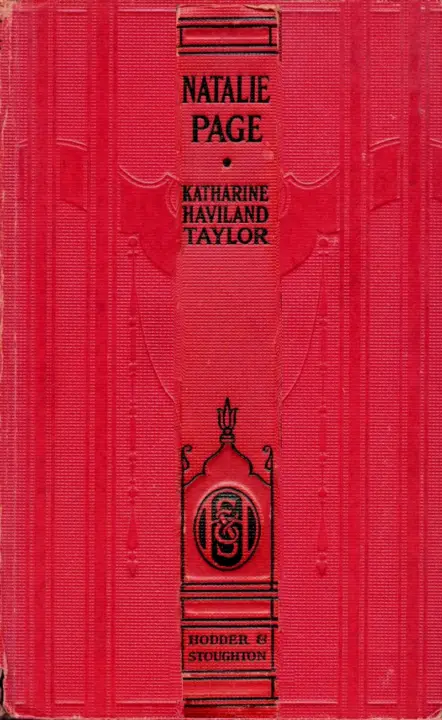
Natalie Page
Katharine Haviland-Taylor
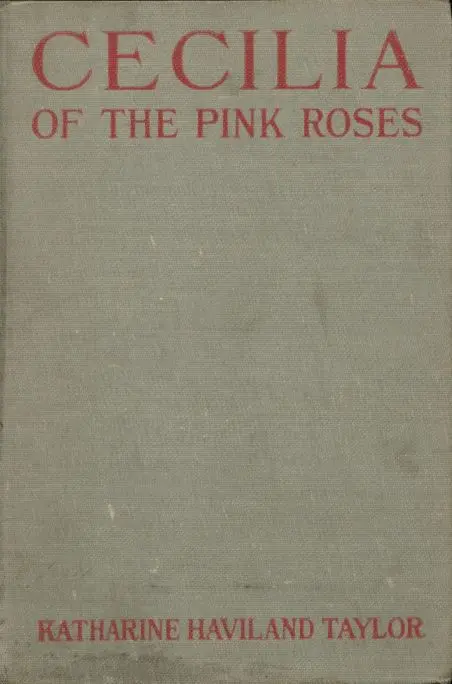
THE CLASSIC COLLECTION · 1917
"Cecilia of the Pink Roses" by Katharine Haviland Taylor is a novel written in the early 20th century. The story follows a young girl named Cecilia Madden, who grapples with her humble beginnings in a working-class family while trying to uphold her dreams of becoming a 'lady.' As she navigates her responsibilities as a caretaker for her siblings amidst family struggles, the narrative delves into themes of love, sacrifice, and the pursuit of social acceptance. The opening of the novel introduces Cecilia's challenging home life, characterized by the oppressive heat of their flat and her mother's illness. Cecilia, a seven-year-old girl, takes care of her younger brother Johnny while managing household duties in a setting filled with the chaos of daily life. The chapter reveals Cecilia’s deep emotional connection with her family, particularly her mother, and juxtaposes her youthful innocence against the burdens she carries. As her father, Jeremiah, leaves for the doctor, the gravity of their situation unfolds, laying the groundwork for Cecilia’s character development throughout the novel. The beginning encapsulates the raw struggles of a working-class family while highlighting Cecilia's resilience and nurturing spirit.
Introduction adapted from the source catalogue; source summaries may be automatically generated.
Free to read · English · 47,430 words · No account needed
MAKE TIME FOR A GOOD BOOK
On by default. Untick to stop anonymous reading totals. Each page counts after 10 seconds in view. How this works.
Anonymous counting is on unless you have switched it off.
A maid came in the room with a froth of lacy frills falling over her arm. She disposed of the froth, then bent above the seated Cecilia, and began taking the pins from her yellow hair. It fell loosely, with the soft, slow motion of waves, about her shoulders and well below her hips....
"Tres joli!" said the true worshipper of beauty, as she always did.
"Nonsense!" replied Cecilia, absently, as she always did. This was the rite, frowned on by the jealous Norah.
"I mended yer skirt," said Norah crossly. "It was tore fierce."
"Thank you, dear," said Cecilia, and then: "Josephine, which is my
most pretty dress?"
Norah left, shutting the door with decision. She muttered of people who talked Eyetalian, and other Heathen languages. Then she decided it was her duty to tell Cecilia of Josephine's outrageous flirting with Mr. 'Iggens. After this lofty resolve her face cleared, and her expression, became pleasant.
She passed a heavy-eyed boy in the hall. In the early days he had often shed his tears against her shoulder.... He had found love, and understanding, exhibited by doughnuts, and bread spread thickly with brown sugar.
"Mr. John----" said Norah timidly as they were opposite.
"Huh?" he responded, with a cool look. Norah swallowed with a gulp, and went on. Her heart was heavy. Her spirit ached.
"We give him too many doughnuts," she said. Then again her face
cleared.
"I'll tell Celie how they go on!" she reflected. "Then I guess she won't be so smart! Winkin' and carryin' on!" The dwelling on the iniquities of Josephine was vastly cheering. Norah almost forgot a heavy-eyed and overgrown boy, who, when little, had sobbed his troubles out against her thin shoulder, and had turned to her for soothing sugar cookies.
At the pretty little station, K. Stuyvesant was met by Cecilia.
"How'd do?" he said gruffly.
"How do you do?" said Cecilia. She had on her prettiest dress, but K. Stuyvesant Twombly didn't notice it. They disposed of the baggage question and then he settled, stiff and conscious, by her side in a small grey car.
"Pretty day," said K. Stuyvesant at last. Then he looked at Cecilia. "Gosh! I love----" He stopped suddenly and shook his head.
"Wh-what have you been doing since I saw you?" asked Cecilia.
"Thinking of you," answered K. Stuyvesant gruffly. Cecilia didn't answer. He was afraid she hadn't liked his telling her the truth, so he described a futurist exhibition, while horribly conscious that the quick beating of his heart made his voice shake.
"I'm glad you came," said Cecilia after the futurist exhibition had been described. "I wanted to see you."
Your reading position is saved on this browser. Take it to another device with a library code. Reading pages adapt to text, rather than matching a printed edition.
Katharine Haviland-Taylor
BEHIND THE BOOK
This eBook is for the use of anyone anywhere in the United States and most other parts of the world at no cost and with almost no restrictions whatsoever. You may copy it, give it away or re-use it under the terms of the Project Gutenberg License included with this eBook or online at www.gutenberg.org. If you are not located in the United States, you will have to check the laws of the country where you are located before using this eBook. Read the source licence.
The original source file, including credits and licence, is retained by this library. Request an original-format copy at no charge. Please include the book title and Project Gutenberg identifier #60099.
KEEP YOUR CURIOSITY GOING
Coulson Kernahan

Maurice Baring
Frances Wright
Cécile Tormay

Frederic Jesup Stimson

W. H. P. (William Henry Pope) Jarvis