
Natalie Page
Katharine Haviland-Taylor
THE CLASSIC COLLECTION · 1917
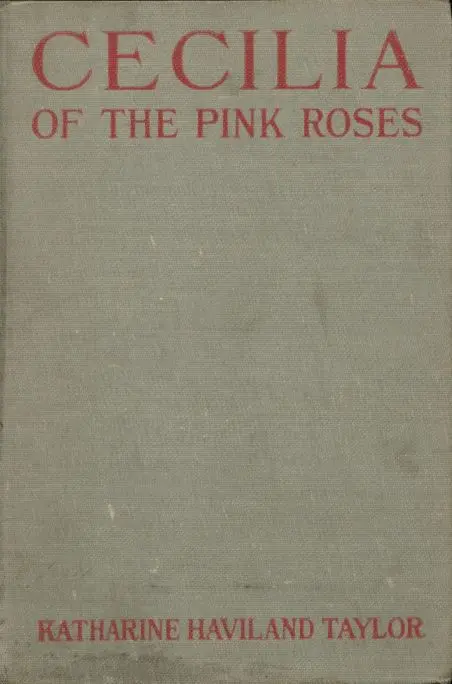
"Cecilia of the Pink Roses" by Katharine Haviland Taylor is a novel written in the early 20th century. The story follows a young girl named Cecilia Madden, who grapples with her humble beginnings in a working-class family while trying to uphold her dreams of becoming a 'lady.' As she navigates her responsibilities as a caretaker for her siblings amidst family struggles, the narrative delves into themes of love, sacrifice, and the pursuit of social acceptance. The opening of the novel introduces Cecilia's challenging home life, characterized by the oppressive heat of their flat and her mother's illness. Cecilia, a seven-year-old girl, takes care of her younger brother Johnny while managing household duties in a setting filled with the chaos of daily life. The chapter reveals Cecilia’s deep emotional connection with her family, particularly her mother, and juxtaposes her youthful innocence against the burdens she carries. As her father, Jeremiah, leaves for the doctor, the gravity of their situation unfolds, laying the groundwork for Cecilia’s character development throughout the novel. The beginning encapsulates the raw struggles of a working-class family while highlighting Cecilia's resilience and nurturing spirit.
Introduction adapted from the source catalogue; source summaries may be automatically generated.
Free to read · English · 47,430 words · No account needed
MAKE TIME FOR A GOOD BOOK
On by default. Untick to stop anonymous reading totals. Each page counts after 10 seconds in view. How this works.
Anonymous counting is on unless you have switched it off.
John suddenly leaned well across the table. "Look here, Stuyv," he said, "is this a bluff? Damned if I understand you! I was lying in the hammock on the porch last summer when Marjory and Cecilia came from the courts. They didn't see me, and I thought I'd hear about some beau and have a joke. I heard Marjory say that you said the old man should be kept in the garage. Not just those words, but smooth--Marjory's way. I never saw Celie so mad! She turned white as----"
"Did she say that?" shouted Stuyvesant.
"Lord, Stuyv!" said John, "everybody's lookin' at you. Yes, of course she said that. What's the matter with you?"
"What else did she say?" asked Stuyvesant. He was somewhat breathless, but for the sake of John more restrained.
"Well, Marjory told Cecilia what a hell of a case you had on her, talking about her eyes, and all that kind of stuff. Trust girls--they blab everything. Gimme the salt, will you?"
Stuyvesant shoved his glass of water toward John. "The salt, man!" said John, and then as he surveyed Stuyvesant with sad eyes, he added, "I hope it isn't catching."
"You go telephone her that we're coming out," said Stuyvesant.
"Who?"
"Your sister, of course. Tell her not to have any one else there. I've got to see her, John,--got to! Honestly, John, I've got to. I've got to see her a little while alone. I really must."
"I think you've made it plain," replied John. "You say you must see Cecilia. You did mention that, didn't you?"
There was no room for anything but heaven in Stuyvesant. He nodded seriously. "Yes," lie answered, "I must! Really, I've got to, John!"
John howled. "The heat!" he explained, then he sobered.
"Look here, Stuyv," he said, "did you say that?"
"What?" asked Stuyvesant, then he remembered, and for the first and last time made a certain utterance. "She lied," he said quietly, and then, "Oh, my gosh, I'm happy! I believe I'm going crazy."
"Oh, no!" replied John, "impossible."
"Yes, John?" said Cecilia.
"Stuyv's coming out with me," she heard him say.
"Yes, dear," she answered.
"Any one coming to dinner?"
"No, dear. Shall I ask one of the Welsh twins? They're always so
sweet about coming."
"No," said John; "Stuyv and I were talking about dad, rather Marjory, and he's got a hunch that he's got to see you alone. Got to,--got to,--got to!" Cecilia did not understand, and was rather bewildered at John's laughter.
"Certainly he shall, John," she replied. Her heart beat in her
voice. "Good-bye, dear," she ended, and heard the click of his
receiver.
Your reading position is saved on this browser. Take it to another device with a library code. Reading pages adapt to text, rather than matching a printed edition.
Katharine Haviland-Taylor
BEHIND THE BOOK
This eBook is for the use of anyone anywhere in the United States and most other parts of the world at no cost and with almost no restrictions whatsoever. You may copy it, give it away or re-use it under the terms of the Project Gutenberg License included with this eBook or online at www.gutenberg.org. If you are not located in the United States, you will have to check the laws of the country where you are located before using this eBook. Read the source licence.
The original source file, including credits and licence, is retained by this library. Request an original-format copy at no charge. Please include the book title and Project Gutenberg identifier #60099.
KEEP YOUR CURIOSITY GOING
Coulson Kernahan

Maurice Baring
Frances Wright
Cécile Tormay

Frederic Jesup Stimson

W. H. P. (William Henry Pope) Jarvis